 Save
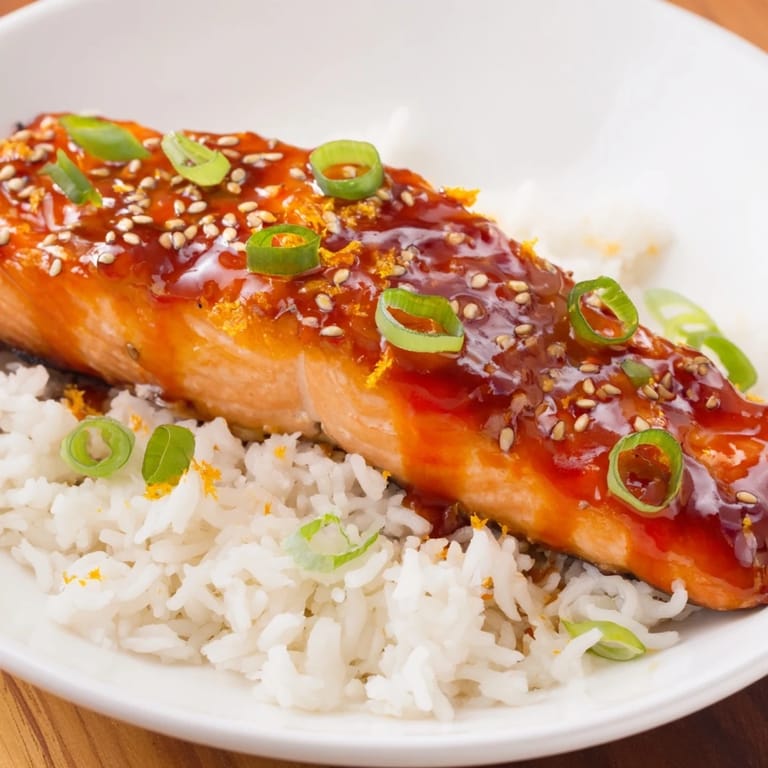
Save There's a particular moment in cooking when you realize a dish has become your go-to—not because you planned it that way, but because it kept working, kept impressing, and somehow made weeknight dinners feel intentional. That's what this sticky orange salmon did for me. The first time I made it, I was standing in my kitchen on a Tuesday evening, the late sun streaming through the window, wondering how to use up both a beautiful salmon fillet and that jar of gochujang I'd been meaning to crack open. The glaze came together almost by accident, but the way the orange juice and chili paste played against each other felt like discovering something I should have known all along.
I made this for my partner on an evening when everything felt a little hectic, and somehow watching the salmon caramelize under the broiler became a small moment of calm. The kitchen smelled incredible—citrus and gochujang mingling in a way that seemed almost impossible—and by the time we sat down with our bowls of buttery rice and glazed salmon, the day had completely shifted. Simple food, good timing, that's when meals become memories.
Ingredients
- Salmon fillets (4, about 150g each): Buy them skin-on and ask the fishmonger to check for pin bones, then remove any you find with tweezers before cooking. The skin crisps beautifully when it touches direct heat.
- Gochujang: This Korean chili paste is savory and slightly funky, which sounds odd until it hits the orange juice and honey—then it becomes something special. Keep it in your fridge; it lasts forever.
- Fresh orange juice and zest: Freshly squeezed makes a difference, but bottled works in a pinch. The zest adds a bright finish that ties everything together.
- Soy sauce: Use regular, not low-sodium, unless you really need to. The saltiness is part of the glaze's backbone.
- Honey: Balances the heat and helps the glaze caramelize. Don't skip it thinking you can use sugar—honey matters here.
- Rice vinegar: A small amount adds tang without overpowering; it's the backbone that keeps the glaze from being one-note.
- Fresh ginger and garlic: Minced fresh, not ground. They brighten the entire glaze with a clean heat that takes it from good to crave-worthy.
- Sesame oil: Just a teaspoon, drizzled in at the end of the glaze. It adds nuttiness and richness that feels luxurious without heaviness.
- Jasmine rice: Its delicate fragrance complements the bold glaze beautifully, but any white rice works if that's what you have.
- Butter: Two tablespoons stirred into the rice makes it silky and forgiving, absorbing the salmon's glaze like it was meant for this.
- Scallions: Raw, sliced thin, they add a sharp bite and color that makes the dish sing. Don't skip them thinking you're saving time.
- Sesame seeds and orange zest (optional): These garnishes are optional but absolutely worth the thirty seconds they take, adding texture and aroma that finish the dish properly.
Tired of Takeout? 🥡
Get 10 meals you can make faster than delivery arrives. Seriously.
One email. No spam. Unsubscribe anytime.
Instructions
- Make the glaze first:
- Whisk together gochujang, fresh orange juice, soy sauce, honey, rice vinegar, grated ginger, minced garlic, and sesame oil in a medium bowl. The mixture will look thick at first, but that's exactly right—it should smell simultaneously spicy, tangy, and a little sweet. Taste it if you want; it's meant to be assertive because it's going to mellow slightly on the salmon.
- Prepare and marinate the salmon:
- Pat your salmon fillets completely dry with paper towels—this matters more than you'd think for getting crispy skin. Place them skin-side up in a shallow dish, spoon about 2 tablespoons of glaze over them, and turn to coat both sides. Let them sit for 10 minutes while you get everything else ready.
- Cook the rice:
- Rinse jasmine rice under cold running water, stirring gently with your fingers until the water runs clear—this removes excess starch and prevents gumminess. In a medium saucepan with a lid, combine the rinsed rice, 3 cups of water, butter, and salt. Bring to a boil over high heat, then reduce to the lowest setting, cover, and let it simmer undisturbed for 15 minutes.
- Set up for broiling:
- While rice cooks, preheat your broiler to high and line a baking sheet with foil, lightly oiling it so the salmon doesn't stick. Position the oven rack about 5 to 7 inches from the heat source—close enough to caramelize the salmon, far enough that it cooks through before burning.
- Broil the salmon:
- Remove salmon from its marinade and arrange on the prepared sheet, skin-side down. Brush generously with additional glaze, then slide under the broiler. Cook for 6 to 8 minutes, brushing with more glaze halfway through, until the top is caramelized and glazed, and a thermometer inserted into the thickest part reads 125 to 130°F for medium doneness—it should be barely opaque in the center.
- Finish the glaze:
- While salmon broils, pour any remaining glaze into a small saucepan and simmer over medium heat for 2 to 3 minutes until slightly thickened and glossy. This concentration of flavor is what ties everything together.
- Bring it all together:
- Once rice is done, remove from heat, let it stand covered for 5 minutes, then fluff gently with a fork. Divide buttery rice among bowls, top with a glazed salmon fillet, drizzle with the thickened sauce, and finish with a scatter of sliced scallions, toasted sesame seeds if you have them, and perhaps a whisper of orange zest.
 Save
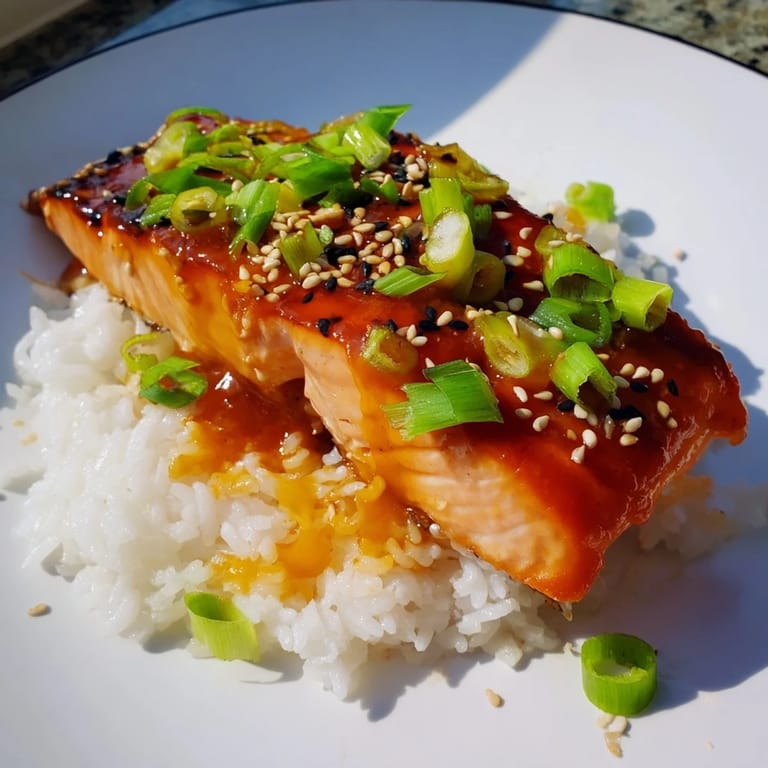
Save There's something quietly satisfying about a meal that looks like you spent hours on it but came together in under 40 minutes. This became one of those dishes I'd make when I wanted to feel like I'd actually cooked something, but didn't want stress or cleanup drama. It's become the dinner I reach for when friends are coming over on short notice, or when I just want to prove to myself that weeknights don't have to be ordinary.
Why This Combination Works
The magic of sticky orange salmon isn't complicated—it's about contrast. Heat meets sweetness, acidity cuts through richness, and fresh citrus brightness lifts the earthiness of gochujang. The broiler does something crucial too: it caramelizes the glaze into something almost candy-like on the outside while keeping the inside of the salmon tender and buttery. Jasmine rice, with its gentle fragrance, doesn't fight for attention but rather soaks up every bit of sauce that drips from the fish, making every spoonful count.
The Science of Getting It Right
Broiling is faster and more forgiving than pan-searing if you're cooking for more than one person at a time. The high, direct heat caramelizes the glaze's sugars while the salmon cooks through gently from the residual heat, so you don't end up with a burnt outside and a raw center. Temperature matters—125 to 130°F is medium doneness, when the salmon still has a whisper of translucence in the very center. This is when it's most luxurious; go much past that and it starts to dry out. If you're nervous about precision, a meat thermometer takes the guesswork out entirely.
Small Techniques That Matter
There are a few seemingly tiny things that shift this from okay to crave-worthy. Pat the salmon dry before marinating so the glaze actually adheres instead of sitting on a layer of water. Brush glaze onto the fish halfway through broiling—the second coating deepens the caramelization and ensures every bite tastes intentional. Simmer the extra glaze in the pan; this concentration of flavor becomes a sauce that's worth drizzling deliberately. And please don't skip the fresh scallions at the end; that raw sharpness is the garnish that makes you notice how well everything works together.
- Consider doubling the glaze if you're feeling generous with the drizzle and sauce.
- If your broiler runs hot, start checking the salmon at the 5-minute mark—ovens vary wildly.
- Leftovers, if you have them, are stunning flaked over greens the next day for lunch.
 Save
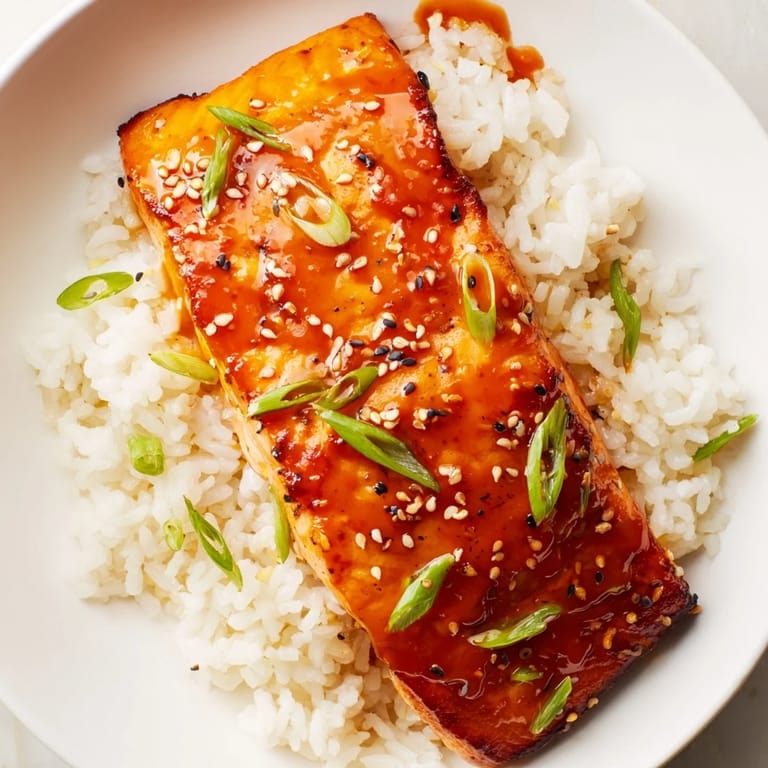
Save This dish became special not because it's complicated, but because it consistently delivers moments of genuine satisfaction. It's the kind of meal that makes you feel taken care of, even when you're the one doing the cooking.
Recipe Questions & Answers
- → How do I prevent the salmon from drying out?
Marinate the salmon briefly and broil it skin-side down. Watch cooking time closely to keep it moist and tender.
- → Can I substitute jasmine rice with another grain?
Yes, brown rice or quinoa can be used for a heartier, healthful alternative.
- → What can I use if I don’t have gochujang?
A mix of chili paste blended with miso or a mild chili sauce can offer a similar flavor profile.
- → Is there a way to make the glaze spicier?
Add a pinch of chili flakes to the glaze to increase heat without overpowering the citrus notes.
- → How should the rice be cooked for the best texture?
Rinse jasmine rice well until water runs clear, then cook covered on low heat for 15 minutes before letting it rest off heat to finish fluffing.