 Save
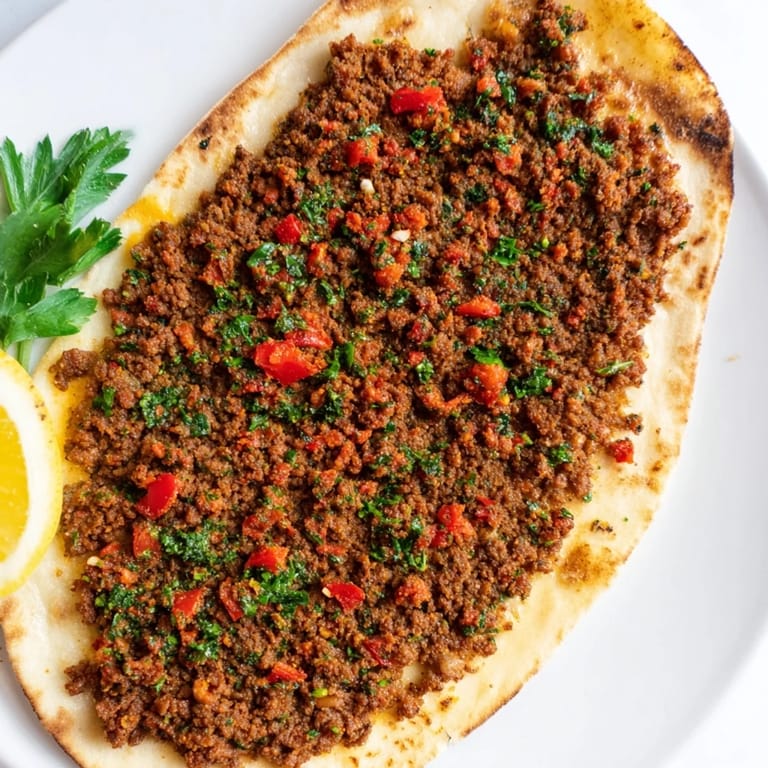
Save The first time I made lahmacun, I was standing in a cramped Istanbul kitchen at two in the morning with a friend's grandmother, both of us dusted in flour and laughing at how thin I'd rolled the dough. She kept saying "thinner, thinner" while the smell of cumin and fresh tomato paste filled that tiny space, and I realized this wasn't just food—it was the kind of thing that brought people together in that raw, unpretentious way. Now whenever I make it at home, I chase that same feeling: the heat of the oven, the sizzle of meat hitting the stone, and that moment when someone bites into one and their eyes light up.
I remember making a batch for a casual dinner party and watching people reach for a third one before the first plate even cleared the table. My partner's friend, who claims to be too busy to cook, asked for the recipe and actually made it the next week. That's when I knew this dish had something special—it bridges the gap between homemade and impressive without any pretense.
Ingredients
- All-purpose flour: The foundation that gets stretched paper-thin; don't skip the kneading step or your dough will tear when you try to roll it out.
- Instant yeast: A small amount is all you need since lahmacun dough doesn't require a long rise like bread does.
- Warm water: Should feel like a comfortable bath temperature—too hot kills the yeast, too cool and it won't activate.
- Ground lamb or beef: Lamb gives the traditional flavor, but beef works beautifully if that's what you have.
- Onion, garlic, and fresh tomato: The holy trinity that keeps the topping moist and alive with flavor rather than dry and dense.
- Tomato paste: Concentrate the flavor, but use it sparingly so it doesn't overpower the meat and vegetables.
- Cumin and paprika: These spices are what make lahmacun taste like itself; they can't be substituted or skipped.
- Fresh parsley: Stirred into the topping and sprinkled after baking, it brings a brightness that makes everything taste fresher.
- Lemon wedges and sumac: Serve alongside so people can adjust the brightness and tang to their taste.
Tired of Takeout? 🥡
Get 10 meals you can make faster than delivery arrives. Seriously.
One email. No spam. Unsubscribe anytime.
Instructions
- Mix and knead your dough:
- Dissolve the yeast in warm water with a pinch of sugar and let it sit for a minute until foamy, then combine with flour and salt. Knead for 5 to 7 minutes until the dough becomes smooth and elastic, and resists tearing when you stretch it gently.
- Let it rise in a warm spot:
- Cover the dough and set it somewhere warm for 30 minutes—a sunny windowsill, above your stove, or even inside a turned-off oven works beautifully. You're looking for it to roughly double in size.
- Prepare your topping while dough rests:
- Mix the ground meat, finely chopped vegetables, spices, and herbs together until everything is evenly distributed. Taste it raw (safe to do with cooked meat ingredients) and adjust seasoning—it should be flavorful and slightly wet from the tomato and oil.
- Get your oven screaming hot:
- Preheat to the highest setting (usually 250°C/480°F) and place a pizza stone or baking tray inside so it's piping hot when you slide the lahmacun onto it.
- Divide and roll thin:
- Divide the risen dough into 8 equal pieces, then roll each one on a lightly floured surface into a thin oval or round about 20 cm across. If the dough springs back, let it rest a minute before rolling further.
- Spread the topping with restraint:
- Distribute an even, thin layer of the meat mixture across each dough round, leaving a small border around the edge. Thick toppings weigh the dough down and prevent crispness.
- Bake until the edges char and the topping sets:
- Transfer lahmacun to the hot stone or tray and bake for 6 to 8 minutes until the edges are crisp and slightly charred, and the meat topping is cooked through.
- Serve immediately with brightness:
- While still warm, top with fresh parsley and a squeeze of fresh lemon juice, then add sliced onions and sumac if you'd like extra tang and visual drama.
 Save
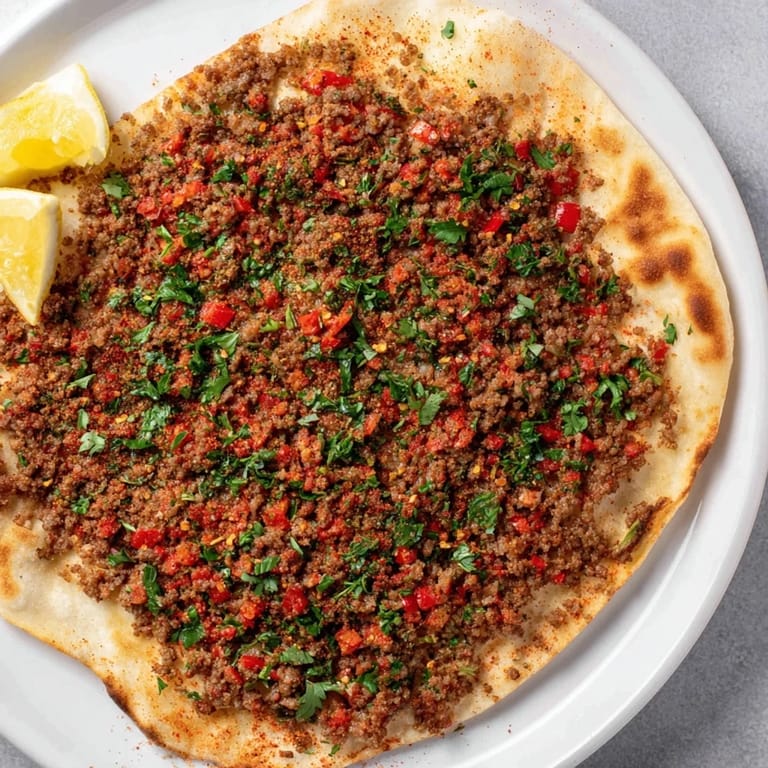
Save There's a moment when lahmacun comes out of the oven that never gets old—the way the kitchen fills with spice and warmth, and how people instinctively gather around, ready to eat. It's one of those dishes that reminds you why cooking for others matters so much.
Rolling the Dough Thin
The hardest part of making lahmacun is stretching the dough thin enough without tearing it. I used to fight with the dough, pressing hard and getting frustrated, until a cook showed me to use my hands more than a rolling pin—gently stretching from the center outward, rotating as I go. The dough becomes almost translucent in places, which sounds fragile but actually creates that crispy, delicate texture that makes lahmacun irreplaceable. If a small tear happens, don't stress; just patch it with a small piece of dough or work around it.
The Meat Topping Matters More Than It Seems
I learned the hard way that a dry meat topping makes for a disappointing lahmacun. The moisture from fresh tomato, the oil, and the finely diced vegetables is what keeps the filling tender and flavorful rather than becoming a dense, overcooked puck. Mix everything thoroughly so the spices are evenly distributed, and don't be shy with the olive oil—it's not excess, it's essential. The better mixed your topping, the better each bite tastes.
Serving and Storage
Lahmacun is best eaten immediately while the dough is still warm and crispy, but you can reheat it gently in a warm oven if needed. The beauty of this dish is how it transforms with different accompaniments—some people love rolling it with fresh herbs and vegetables for an informal eating experience, while others serve it flat with sides.
- Roll lahmacun around fresh lettuce, parsley, mint, and sliced onions for a wrap-style meal that feels even more interactive.
- Pair it with ayran or a light red wine to balance the richness of the meat and spices.
- Make the dough and topping ahead, then assemble and bake when guests arrive for impressive last-minute entertaining.
 Save
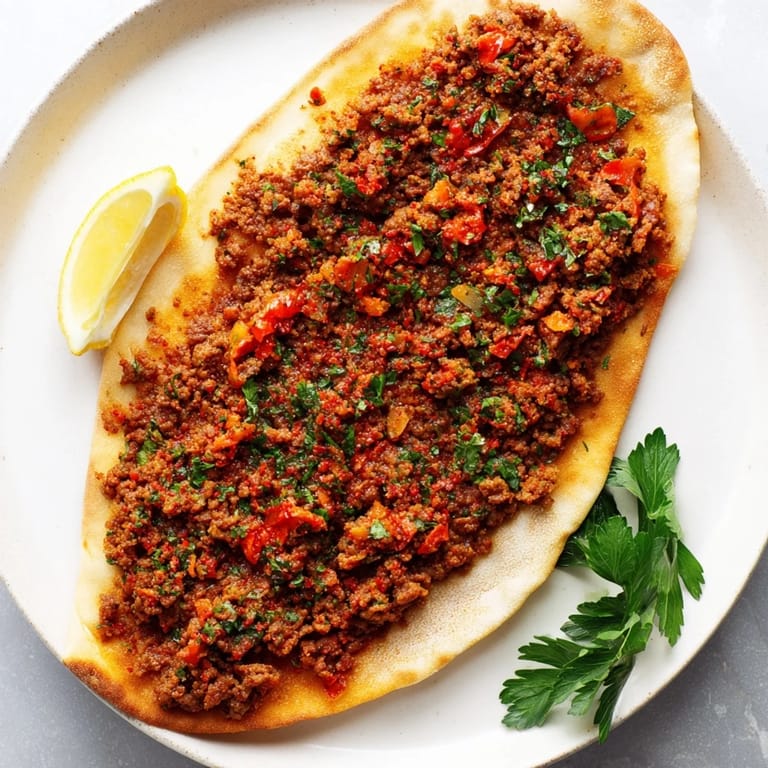
Save Making lahmacun is a small act of generosity that people remember. There's something about standing together over warm, crispy flatbread that breaks down formality and brings people closer.
Recipe Questions & Answers
- → What type of meat is used for the topping?
Ground lamb or beef is used, combined with spices and fresh vegetables to create a flavorful topping.
- → How is the dough prepared to achieve crispness?
The dough is kneaded well, allowed to rise until doubled, then rolled out very thinly before baking at a high temperature for a crisp texture.
- → Can this be made vegetarian?
Yes, the meat can be replaced with a minced mushroom and walnut mixture for a vegetarian version.
- → What spices enhance the meat mixture?
Cumin, paprika, black pepper, and optionally chili flakes provide warmth and depth to the topping.
- → How should it be served for best flavor?
Serve immediately after baking with fresh parsley, a squeeze of lemon, and optionally sliced onions and sumac for added brightness.