 Save
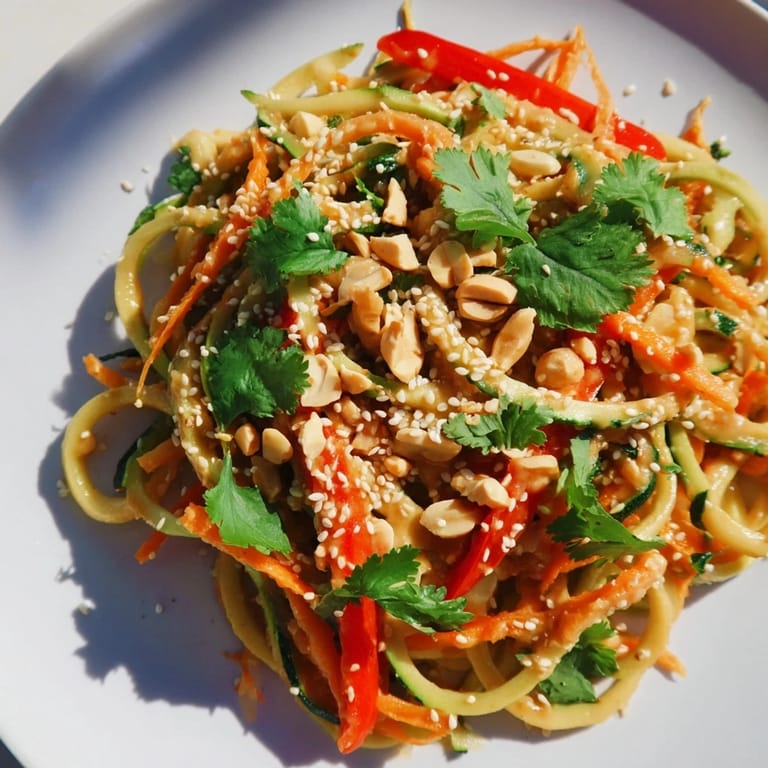
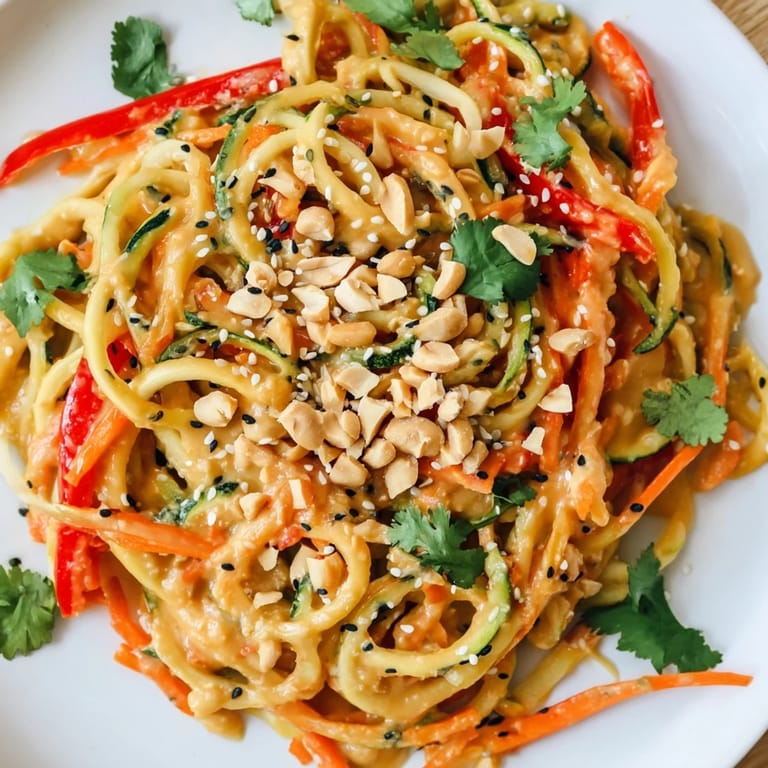
Save There's something about summer heat that makes you crave dishes that taste bright and punchy without heating up your kitchen. My neighbor handed me a spiralizer one afternoon after mentioning I always complained about heavy lunches, and honestly, I thought it was a gadget I'd use once and forget. But then I started playing with zucchini noodles and a peanut sauce that felt both comforting and unexpectedly zesty, and suddenly I was making this salad three times a week. The combination of creamy sauce against crisp, cool vegetables just clicked in a way that felt effortless.
I first made this for a potluck where everyone seemed stressed about ingredients and restrictions, and I realized how rare it is to bring something that's simultaneously fancy-looking and genuinely easy. Watching people go back for seconds, asking for the recipe, made me understand that sometimes the simplest dishes hit hardest because they don't pretend to be something they're not.
Ingredients
- Zucchini, spiralized (4 medium): This is your noodle base, and the key is not to spiral them too far ahead or they'll weep water and get mushy.
- Shredded carrots (1 cup): The slight sweetness balances the savory sauce and adds a gentle crunch that keeps the whole bowl interesting.
- Red bell pepper, thinly sliced (1): Choose peppers that feel firm and glossy; they'll stay crisp longer and taste brighter.
- Scallions, thinly sliced (2): These add an allium bite that ties everything together and shouldn't be skipped.
- Fresh cilantro, chopped (1/2 cup): If you don't love cilantro, swap in fresh mint or basil and the dish transforms into something entirely new.
- Roasted peanuts, chopped (1/4 cup plus extra): Toast them yourself if you have time; the difference in flavor is worth those extra two minutes.
- Creamy peanut butter (1/3 cup): Natural, unsweetened is genuinely better here because it lets the other flavors sing instead of fighting added sugar.
- Soy sauce or tamari (2 tablespoons): Tamari is your gluten-free friend and honestly tastes slightly cleaner, though either works beautifully.
- Rice vinegar (1 tablespoon): This is what keeps the sauce from feeling heavy; it brightens everything it touches.
- Honey or maple syrup (1 tablespoon): A touch of sweetness that makes sense with peanut and balances the acid.
- Toasted sesame oil (1 tablespoon): A little goes a long way; this ingredient is why the dish tastes like it came from someone who knows what they're doing.
- Lime juice, fresh (1 tablespoon): Bottled works, but fresh lime makes you taste the difference immediately.
- Sriracha or chili garlic sauce (1 teaspoon optional): This is your heat control; start with a tiny amount and taste as you go.
- Warm water (2-4 tablespoons): Add gradually so your sauce reaches the right pour consistency without becoming thin.
- Sesame seeds (1 tablespoon): A final shower that adds toasted depth and visual appeal.
Tired of Takeout? 🥡
Get 10 meals you can make faster than delivery arrives. Seriously.
One email. No spam. Unsubscribe anytime.
Instructions
- Spiralize and slice:
- Run your zucchini through the spiralizer with a steady hand, letting the long strands pile up in your bowl. Slice your bell pepper thin enough to bite through without effort, and mince your scallions so they distribute throughout every forkful.
- Build your sauce:
- Combine the peanut butter, soy sauce, rice vinegar, honey, sesame oil, and lime juice in a bowl, whisking with intention so you break down any peanut butter clumps and create something smooth and emulsified. Add warm water a tablespoon at a time, whisking between each addition until you reach that perfect pourable consistency—thick enough to coat but thin enough to flow.
- Combine and toss:
- Pour the sauce over your vegetables and toss with two forks or salad spoons, making sure every noodle gets coated. This is satisfying work, and you'll know you're done when everything glistens the same color.
- Finish with flavor:
- Scatter the chopped peanuts across the top, sprinkle sesame seeds with a gentle hand, and add more cilantro if it makes you happy. Taste a bite raw and adjust—needs more salt, more heat, more brightness?
- Chill or serve:
- Eat immediately while the vegetables are at their crispest, or cover and refrigerate for up to 30 minutes so the flavors get friendlier with time. Both versions are correct; it depends on your mood.
 Save
Save There's a quiet moment when you first taste this salad where you realize how little it asks of you and how much it gives back. That's when it stops being a recipe and becomes something you reach for without thinking.
Making It More Filling
On nights when I'm genuinely hungry, I add a handful of crumbled pan-fried tofu or shredded rotisserie chicken right into the mix, and suddenly this is dinner instead of a side. Edamame works too if you have frozen ones sitting around—they don't need cooking, just a quick thaw under warm water. The salad absorbs these additions without losing its character; it just becomes more substantial without getting heavy.
Sauce Variations That Actually Work
Once you understand how this sauce balances creamy, salty, sour, and sweet, you can pivot it in different directions. I've made it with almond butter when peanuts weren't available, swapped rice vinegar for apple cider vinegar, and even used a touch of ginger paste for a completely different vibe. Each version tells its own story, but they all work because the proportions remain honest.
Storage and Longevity
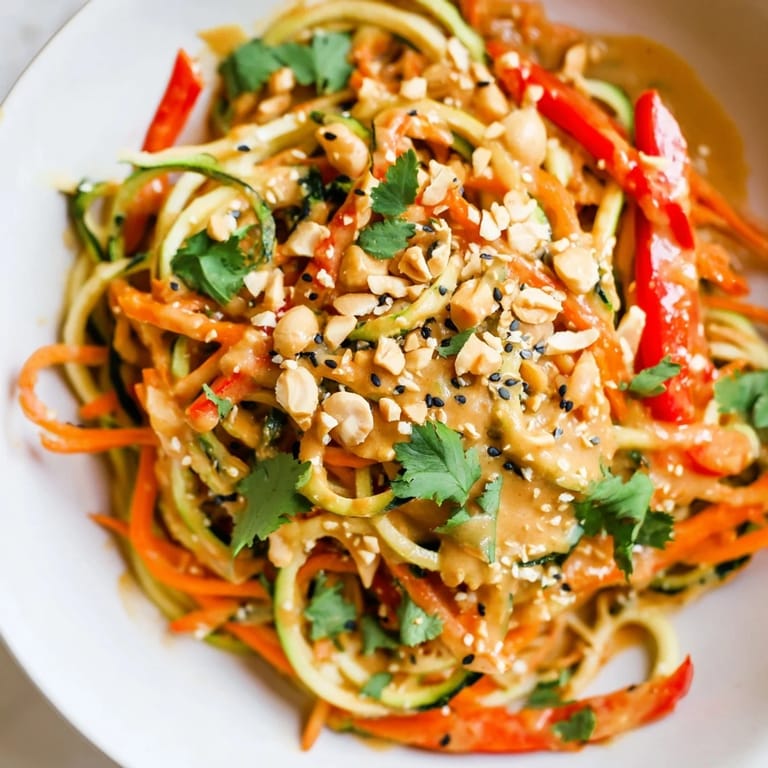
This salad keeps beautifully in the refrigerator for up to two days, though the zucchini noodles will soften slightly as they sit in the sauce—which honestly some people prefer. Pack the sauce separate from the vegetables if you want them at their crispest, then toss when you're ready to eat. The sesame seeds and peanuts are best added just before serving so they maintain their crunch and presence.
- Store in an airtight container and let come almost to room temperature before eating for the cleanest, brightest flavor.
- Double or triple the sauce and keep it refrigerated; it's perfect drizzled over roasted vegetables or grain bowls.
- If the salad looks dry when you open the container, add a splash more warm water to the sauce and toss again.
 Save
Save This recipe has become my shortcut for looking like I spent more time cooking than I actually did, and that's its greatest gift. Come back to it whenever you need something that tastes intentional and feels kind to your body.
Recipe Questions & Answers
- → Can I substitute the peanut butter for allergies?
Yes, sunflower seed butter works well as a nut-free alternative without compromising the creamy texture.
- → How do I achieve the best texture for the noodles?
Use a spiralizer or julienne peeler to create uniform zucchini strands and toss immediately with sauce to prevent sogginess.
- → Is it possible to make this dish spicy?
Absolutely, adding sriracha or chili garlic sauce into the peanut dressing provides a customizable heat level.
- → What are some suggested protein additions?
Grilled tofu, shredded chicken, or edamame enhance the dish’s protein content while complementing the flavors.
- → How long can leftovers be stored?
Store in an airtight container in the refrigerator for up to 2 days; toss gently before serving to redistribute the sauce.
- → Can other vegetables be used instead of zucchini?
Yes, spiralized cucumber or carrot makes a fresh alternative and keeps the dish light and refreshing.