 Save
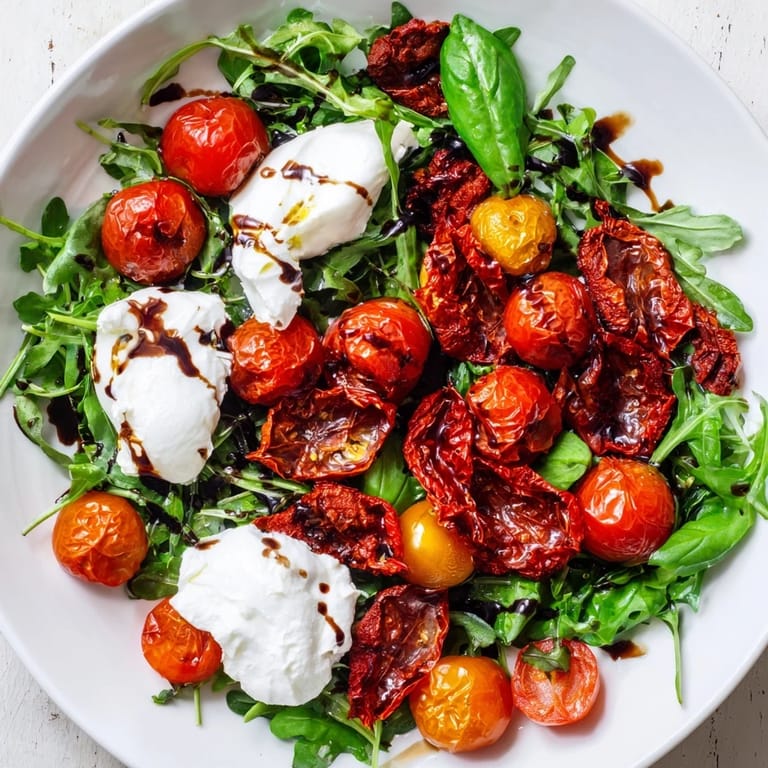
Save There's a moment in summer when tomatoes taste like they've been sitting in the sun for hours, and you realize you need to do something worthy of them. That's when I started playing with textures one lazy afternoon—fresh and bright, roasted and concentrated, sun-dried and intense—all on one plate with creamy burrata melting into the warm spots. The salad was born from refusing to choose just one way to eat a tomato.
I made this for friends who showed up on my doorstep at 6 p.m. on a Wednesday, and somehow it felt like the fanciest thing I could offer without turning on the oven for hours. The roasted tomatoes were still warm when we ate, and everyone kept circling back to the plate, asking what made it taste so alive. That's when I knew it was the kind of recipe worth repeating.
Ingredients
- Fresh cherry or grape tomatoes, halved: These bring brightness and are the salad's cheerful backbone—raw, they stay crisp and remind you why summer matters.
- Cherry or grape tomatoes for roasting: Whole tomatoes concentrate into jammy little flavor bombs, and roasting draws out sweetness you didn't know was hiding.
- Sun-dried tomatoes in oil, sliced: These are the umami anchor, chewy and intense, tying everything together with depth.
- Mixed salad greens: Arugula, spinach, or mesclun create a soft bed that won't wilt under warm roasted tomatoes if you build it right.
- Fresh burrata cheese: The star ingredient—creamy, delicate, and essential because it adds richness without heaviness.
- Extra virgin olive oil: Use good oil here because it's doing half the talking in the dressing.
- Balsamic glaze or vinegar: A small amount goes far; the glaze is sweeter and more forgiving if you're nervous about balance.
- Honey: Just a touch rounds out the acidity and hints at the sweetness of roasted tomatoes.
- Garlic clove, minced: One small clove stays in the background, adding whisper-soft pungency that makes the dressing memorable.
- Fresh basil leaves, torn: Never cut basil with a knife if you can help it—tearing releases oils and keeps the flavor clean and herbaceous.
- Flaky sea salt: The optional finish that makes people notice and ask what you did differently.
Tired of Takeout? 🥡
Get 10 meals you can make faster than delivery arrives. Seriously.
One email. No spam. Unsubscribe anytime.
Instructions
- Roast the tomatoes for concentrated sweetness:
- Heat your oven to 400°F and spread whole cherry tomatoes on a baking sheet in a single layer. Drizzle lightly with olive oil, season generously, and let them blister for 12–15 minutes until the skins just start to split. You'll smell when they're done—that warm, caramelized sweetness fills the kitchen.
- Build your dressing with balance:
- In a small bowl, whisk together the remaining olive oil, balsamic, honey, and minced garlic until the honey dissolves into the oil. Taste and adjust—if it feels too sharp, add another drop of honey; if too sweet, a pinch of salt or extra vinegar pulls it back.
- Layer greens as your foundation:
- Spread mixed greens across your serving platter or individual plates, creating a base that cradles everything else. This distributes the weight and keeps the greens from wilting all at once.
- Arrange tomatoes in three textures:
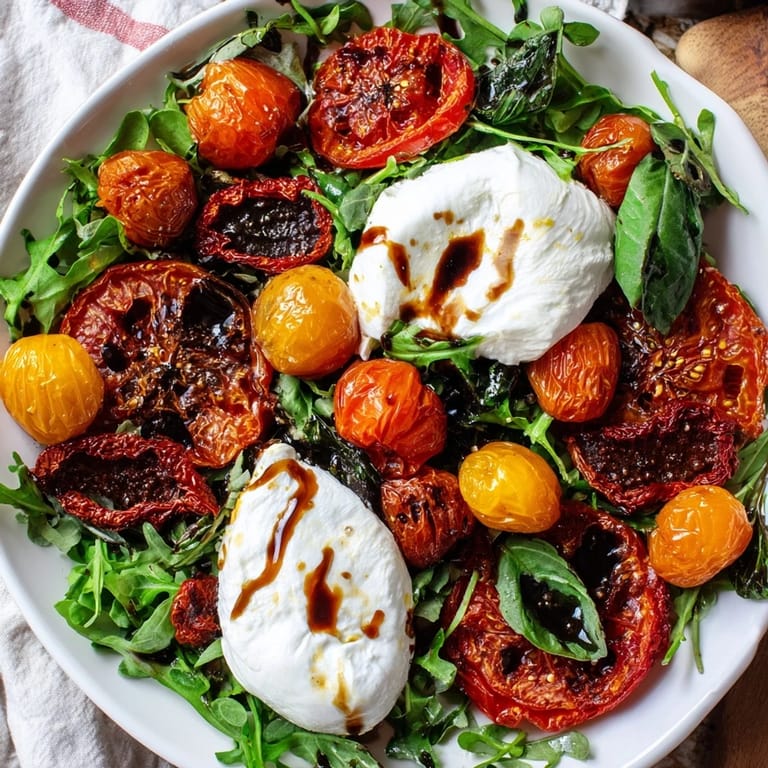
- Over the greens, scatter fresh halved tomatoes first, then add the warm roasted ones, then tuck in sliced sun-dried tomatoes. The three forms create visual interest and ensure every bite has complexity.
- Nestle burrata among the tomatoes:
- Tear the burrata into irregular pieces—don't be neat about it—and scatter them where they can warm slightly from the roasted tomatoes. The contrast between cold cheese and warm fruit is the whole point.
- Dress lightly and finish:
- Drizzle dressing over everything, not all on one spot, and scatter torn basil across the top. If you have flaky sea salt, a small pinch right before serving makes the whole salad feel intentional.
- Serve while warmth lingers:
- Eat immediately while the roasted tomatoes still have heat—that warmth transforms the burrata and dressing into something almost soup-like and luxurious.
 Save
Save There's something almost meditative about standing in the kitchen while tomatoes roast, basil in one hand and scissors in the other, knowing you're about to feed people something that tastes like care. That moment matters more than the salad itself, even though the salad is delicious.
Why Roasted Tomatoes Change Everything
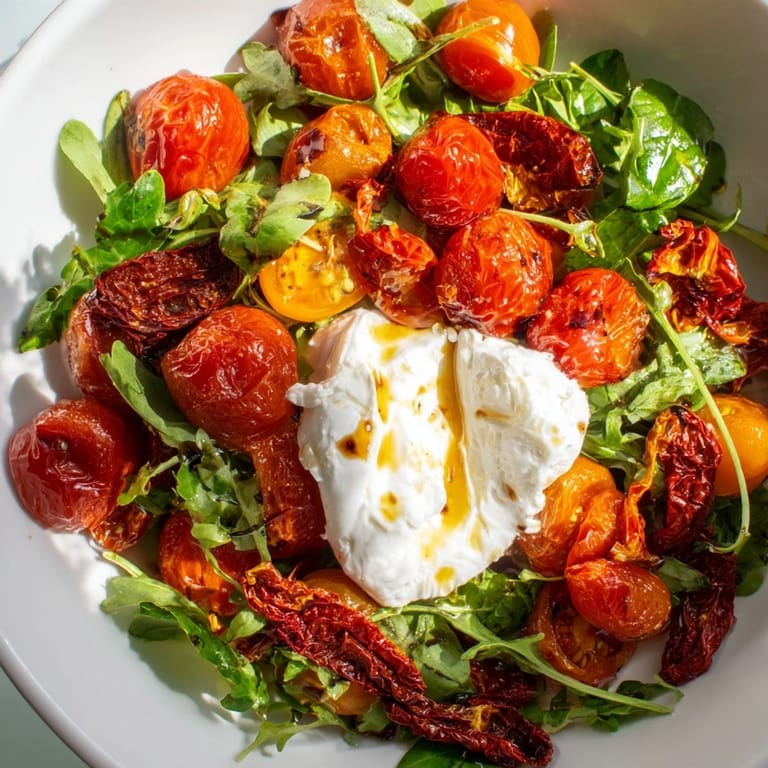
Roasting tomatoes feels counterintuitive when the recipe is called a salad, but heat concentrates sugars and draws out flavors that raw tomatoes can't reach. The slight scorch and blister on the skin creates a contrast against the crisp greens and creamy cheese. Even if you skip everything else in this recipe, understanding that one vegetable can transform across cooking methods will stay with you.
Building Flavor Through Texture
Each form of tomato contributes something different: fresh brings crispness, roasted brings warmth and concentration, and sun-dried brings umami and chew. The three together on one plate aren't redundant—they're a conversation. Your mouth never gets bored, and the salad never feels one-dimensional.
Timing and Temperature in Salad
Cold salad and warm burrata don't have to be separate courses—they live together here, each one softening the other into something new. The dressing emulsifies slightly against the heat, the cheese relaxes, and everything tastes more expensive than it is. There's also an honesty to eating this salad while warmth still matters.
- If you make this ahead, roast the tomatoes but keep everything else separate until the last possible moment.
- Leftover roasted tomatoes keep in the fridge for three days and transform scrambled eggs or pasta into something special.
- This salad pairs with almost any white wine or even a light beer on a warm evening.
 Save
Save This salad taught me that sometimes the most elegant meals come from simple layering and restraint, not complexity. It's the kind of dish that reminds you why cooking for others matters.
Recipe Questions & Answers
- → How do I roast the tomatoes for best flavor?
Arrange whole cherry tomatoes on a baking sheet, drizzle with olive oil, season with salt and pepper, then roast at 400°F for 12-15 minutes until blistered and tender.
- → Can I substitute burrata with another cheese?
Yes, mozzarella di bufala or fresh ricotta can be used as alternatives to maintain a creamy texture.
- → What greens work best in this dish?
Mixed salad greens such as arugula, baby spinach, or mesclun add a fresh, crisp contrast to the tomatoes and cheese.
- → Is this dish suitable for a gluten-free diet?
Yes, all main ingredients are naturally gluten-free. Just ensure any added toppings like croutons are avoided or substituted.
- → How should the dressing be prepared?
Whisk together olive oil, balsamic glaze or vinegar, honey, minced garlic, salt, and black pepper to create a balanced, flavorful dressing.
- → Can I add nuts or seeds for texture?
Toasted pine nuts or croutons can add crunch and complement the flavors well if desired.