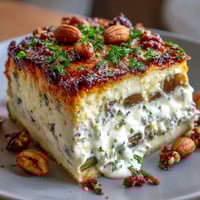
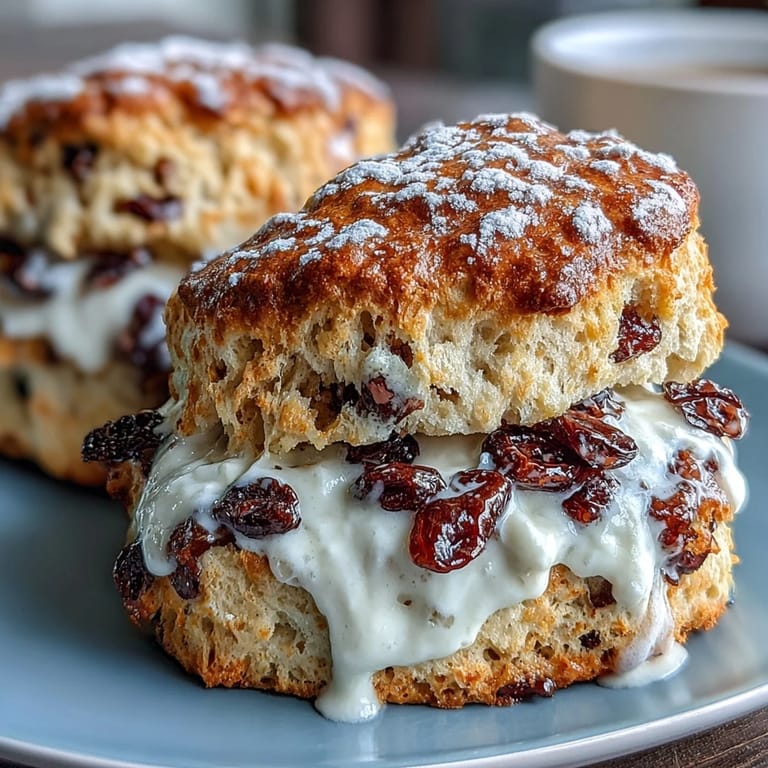
 Save
Save My sourdough starter was threatening to overflow one Tuesday morning when I realized I had far too much discard and absolutely no use for it. Rather than toss it, I grabbed some blueberries from the fridge and wondered aloud if those tangy, bubbling scraps could somehow transform into something worth eating. Three hours later, my kitchen smelled like a British bakery, and I understood why people guard their scone recipes like family heirlooms.
A friend stopped by unexpectedly one Saturday morning, just as these scones emerged from the oven golden and steaming. Watching her eyes widen at that first bite—that moment when someone discovers that blueberries and sourdough belong together—made me realize this recipe was worth repeating. She left with half the batch and a request for the recipe, which felt like the highest compliment a baker could receive.
Ingredients
- All-purpose flour (2 cups): This is your structure; don't sift it unless your flour feels compacted, and measure by spooning and leveling to avoid adding too much.
- Granulated sugar (1/4 cup): Just enough sweetness to balance the sourdough's tang without making these taste like dessert for breakfast.
- Baking powder and baking soda (2 tsp and 1/2 tsp): These two work together to lift the scones; using both matters more than you'd think, so don't skip the soda.
- Fine sea salt (1/2 tsp): This highlights everything else and keeps the sweetness from becoming cloying.
- Cold unsalted butter (1/2 cup, cubed): The cold butter creates those tender, flaky layers everyone dreams about; warm butter ruins the texture before you even mix it.
- Sourdough discard (1 cup, cold): Use unfed, straight-from-the-fridge discard for the best tang and moisture balance; fed discard is too active and will make your dough rise unevenly.
- Heavy cream (1/3 cup, plus more for brushing): This adds richness and keeps the crumb tender even with all that sourdough moisture.
- Egg (1 large): Your binder and the reason these scones hold together without becoming tough.
- Vanilla extract (1.5 tsp): A subtle note that makes people wonder what your secret ingredient is.
- Fresh blueberries (1 cup): Toss them in a tiny bit of flour before folding them in to prevent sinking, though some settling is natural and creates lovely pockets.
- Coarse sugar (2 tbsp, optional): This gives a gentle crunch and catches the light, making them look bakery-worthy.
Tired of Takeout? 🥡
Get 10 meals you can make faster than delivery arrives. Seriously.
One email. No spam. Unsubscribe anytime.
Instructions
- Heat your oven and prepare:
- Set the oven to 400°F and line a baking sheet with parchment paper while it preheats; this keeps you from rushing and burning the bottoms.
- Build your dry base:
- Whisk flour, sugar, baking powder, baking soda, and salt together in a large bowl, making sure everything is evenly distributed so you don't bite into a pocket of baking soda later.
- Cut in the butter:
- Add your cold butter cubes and use a pastry cutter, two knives, or your fingertips to break them into the flour until it looks like coarse breadcrumbs; the tiny butter pieces create steam and lift, which is how you get that tender crumb. Don't be timid about this step, and don't let the butter warm up.
- Combine the wet ingredients:
- Whisk together sourdough discard, heavy cream, egg, and vanilla in a separate bowl until smooth and well blended.
- Bring dough together gently:
- Pour the wet mixture into the dry ingredients and stir with a spatula just until everything comes together—this is where most people fail by overmixing. You want a shaggy dough that barely holds together; it's okay if there are a few streaks of flour hiding in there.
- Fold in the blueberries with care:
- Add the blueberries and fold them in using as few strokes as possible so they stay whole and don't bleed into the dough.
- Shape the dough:
- Turn the dough onto a lightly floured surface and pat it gently into a 7-inch circle about 1 inch thick; resist the urge to knead or overwork it, which will make them tough instead of tender.
- Cut into wedges:
- Use a sharp knife or bench scraper to cut the circle into 8 equal wedges, wiping the blade between cuts so you don't drag the dough.
- Arrange on the baking sheet:
- Place the wedges on your prepared sheet with a little space between each one so they can expand slightly without touching.
- Brush and top:
- Brush the tops lightly with heavy cream and sprinkle coarse sugar over them if you're using it; this creates a subtle sparkle and gentle crunch.
- Bake until golden:
- Bake for 20 to 22 minutes until the tops are deep golden brown and a toothpick inserted into the center comes out clean.
- Cool before serving:
- Let them rest on the baking sheet for 10 minutes so they set slightly, then transfer to a wire rack; they can be eaten warm or at room temperature, and both ways are equally worth your time.
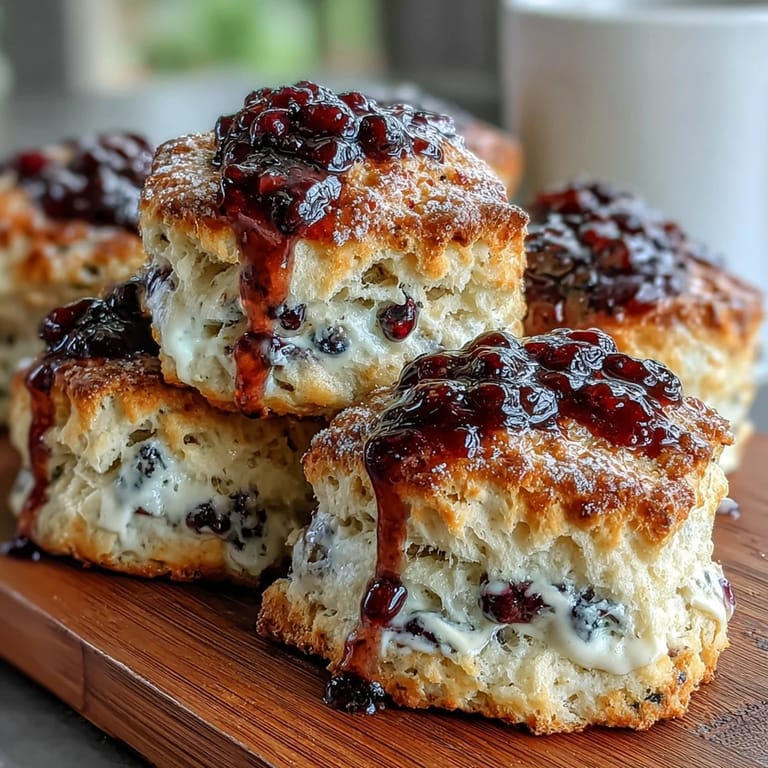 Save
Save One afternoon, my daughter dunked a warm scone in honey while I made tea, and something shifted about how I thought of this recipe. It wasn't fancy or complicated, yet it created a moment worth repeating, which is really what cooking is about.
Why Sourdough Discard Works Here
Sourdough discard brings a subtle tanginess and natural moisture that makes these scones taste more interesting than their plain cousins. The wild yeast and bacteria in the discard add depth without overwhelming the blueberries, and it means you're using something that would otherwise go down the drain. I've tried these with regular buttermilk out of curiosity, and while they work, they taste flatter and less memorable.
The Blueberry Question
Fresh blueberries are wonderful here because they burst slightly during baking and release their juice into the crumb, creating little flavor surprises. Frozen blueberries work equally well and actually have an advantage—since they're denser when frozen, they sink less and stay more visible in the finished scone. The one thing I learned the hard way is that thawed blueberries leak everywhere and turn your dough purple-grey, which tastes fine but looks sad.
Storage and Making Ahead
These scones taste best on the day they're made, when they're still slightly tender and the blueberries taste bright. If you have leftovers, they keep in an airtight container for up to two days, and you can refresh them by wrapping in a damp paper towel and warming gently in the microwave for 15 seconds.
- For a citrus twist that catches people off guard, add 1 teaspoon of lemon zest to the dry ingredients.
- Serve them warm with clotted cream or lemon curd, and watch how quickly they disappear.
- You can freeze baked scones for up to a month and thaw them gently at room temperature whenever the craving hits.
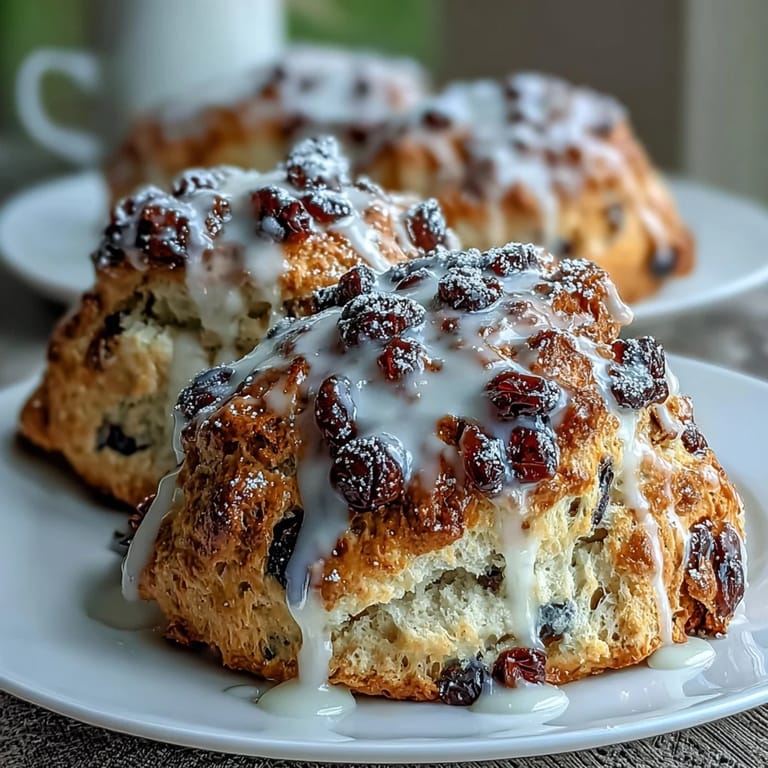 Save
Save These scones have become my answer when someone asks what to do with their sourdough discard, and now half my friends are baking them too. There's something satisfying about turning something meant for composting into something people actually fight over at breakfast.
Recipe Questions & Answers
- → Can frozen blueberries be used?
Yes, frozen blueberries can be added directly without thawing to preserve their shape and prevent excess moisture.
- → What gives these scones their tender texture?
Cold cubed butter cut into the dry ingredients creates flaky layers, while minimal mixing prevents gluten overdevelopment, ensuring tenderness.
- → How does sourdough discard affect the scones?
The sourdough discard adds a subtle tang and depth of flavor, enhancing the overall taste without overpowering the blueberries.
- → Can I add a citrus flavor to the scones?
Yes, adding a teaspoon of lemon zest to the dough provides a refreshing citrus brightness that complements the blueberries.
- → What is the best way to serve these scones?
Serve warm or at room temperature with clotted cream, lemon curd, or butter for an indulgent treat.
- → How long do the scones stay fresh?
They are best enjoyed the day they are baked but can be stored in an airtight container for up to two days.