 Save
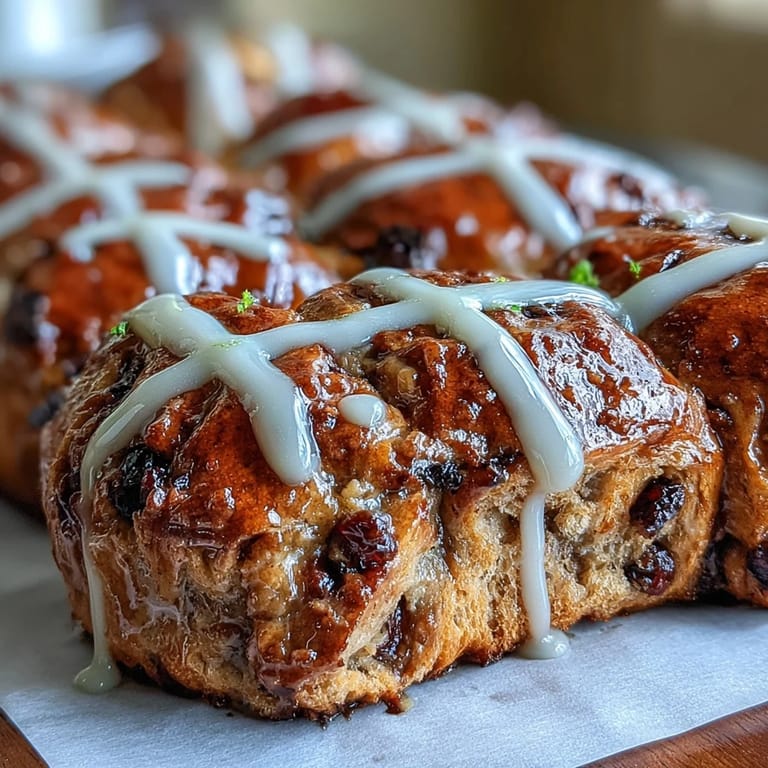
Save The first time the scent of orange and spice drifted from my oven, I was surprised how much it lifted the mood in my kitchen. As I watched these hot cross buns slowly rise, the morning grew brighter—not from sunlight but from anticipation. Currants always remind me of bakeries, yet swirling them into the dough at home felt like discovering a secret. I remember how the glaze splattered a little as I brushed it on, making the buns look lopsided (in a charming way). It may be a British Easter tradition, but I’ve found reasons to bake these all year whenever I need a touch of warmth.
Last Easter, these buns were a centerpiece for brunch with friends. We giggled as piping the cross turned into a collective effort, with flour on our noses and zest sticking to our fingers. The table became a maze of cooling racks, mugs, and crumbs, and somehow someone managed to eat theirs before the glaze even dried. Sharing that batch felt more like passing a bit of sunshine around than following a recipe. Every bun seemed to bring a small toast to spring, and that’s the moment I started baking them for more than just holidays.
Ingredients
- Bread flour: Using bread flour gives these buns their structure, making them soft yet sturdy.
- Granulated sugar: A bit sweetens the dough without overpowering the spices—fine sugar works best for an even mix.
- Active dry yeast: Give it time to bloom if you’re unsure about freshness, and always use lukewarm milk to activate it.
- Fine sea salt: Balances the sweetness and keeps the flavors from tasting flat.
- Ground cinnamon, allspice, nutmeg: Warming spices are the secret—measure them precisely to avoid one dominating the others.
- Zest of 1 large orange: The zest infuses the dough with brightness; I grate it directly over the bowl to catch every fragrant oil.
- Whole milk, lukewarm: Temperature matters here, as cold milk will stall the yeast.
- Unsalted butter, melted: Melted butter keeps the crumb tender, and a little in the dough goes a long way.
- Eggs, room temperature: Always crack eggs into a separate bowl first—shell bits are easier to fish out when mistakes happen.
- Currants or raisins: Don’t overload the dough or they’ll cluster—tossing them with a little flour helps even distribution.
- All-purpose flour (cross paste): Simple flour creates the piping paste; don’t skip sifting for a lump-free cross.
- Water (cross paste): Add slowly to reach the right consistency—it should be thick but flow easily when piped.
- Powdered sugar (glaze): Sift the sugar before mixing so the glaze isn’t gritty.
- Freshly squeezed orange juice (glaze): Tastes fresher than bottled, and a little acidity balances the sweetness.
- Orange zest (glaze): Stir in at the end for flavor bursts on each bun bite.
Tired of Takeout? 🥡
Get 10 meals you can make faster than delivery arrives. Seriously.
One email. No spam. Unsubscribe anytime.
Instructions
- Mix the dry ingredients:
- Whisk bread flour, sugar, yeast, salt, cinnamon, allspice, nutmeg, and orange zest in a big bowl until the aromas start mingling.
- Combine wet ingredients:
- In a separate bowl, gently beat lukewarm milk, melted butter, and eggs together—listen for the soft splash as everything blends.
- Form the dough:
- Pour the wet ingredients into the dry mixture; stir until a shaggy dough forms and the spoon meets resistance.
- Knead thoroughly:
- Knead by hand or mixer, watching the dough become smooth and elastic—about 8–10 minutes should do it.
- Fold in fruit:
- Add currants or raisins; knead briefly, enjoying how each one tucks neatly into the dough's folds.
- First rise:
- Shape into a ball, place in an oiled bowl, cover, and let rise in a warm spot until doubled—peek after an hour and be patient if you need extra time.
- Shape buns:
- Punch the dough down, divide into 12 equal pieces, then shape each into a smooth ball and line them up closely on a parchment tray.
- Second rise:
- Cover loosely with a towel; let the buns puff up for 30–40 minutes—they should look plump but not pressed together.
- Prepare for baking:
- Set your oven to 375°F (190°C) as the buns finish rising.
- Pipe crosses:
- Mix flour and water for the paste, transfer to a piping bag, and pipe a neat cross on each bun—embrace imperfect lines, they’ll crisp up nicely.
- Bake:
- Slide the tray into the oven for 22–25 minutes, until the tops turn golden and a gentle tap sounds hollow.
- Make glaze:
- As the buns bake, whisk powdered sugar, orange juice, and zest; the aroma will announce it’s nearly time to eat.
- Brush and cool:
- As soon as buns are out, brush generously with orange glaze—watch it sink into every crevice. Let them cool slightly before serving.
 Save
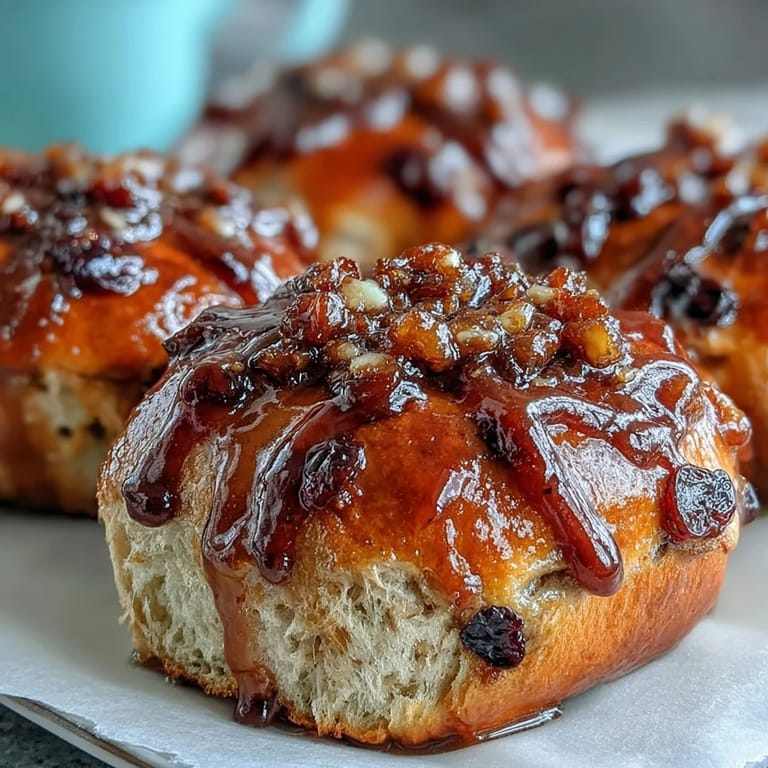
Save One rainy afternoon, baking these turned into a little celebration—the glaze dripped onto the sides and every bun picked up a pattern of shine. It was more than just bread; with laughter and sticky fingers, sharing a batch felt like inviting everyone into a circle of comfort.
Glaze Secrets for Extra Shine
Brushing the glaze on while the buns are hot makes them gleam and keeps the crust soft. I used to wait until they cooled, but a warm bun absorbs the citrusy sweetness better, making each bite a little juicier and more fragrant.
Getting the Cross Just Right
After a few wobbly attempts, I found piping the paste slowly and confidently gave the best results. If your cross paste comes out too runny, just add a touch more flour and practice a test line on parchment before the real thing.
Serving Ideas and Storage
Fresh out of the oven, the buns are best served with salted butter or a spoonful of marmalade. If you have leftovers, store them in an airtight container and reheat gently for a soft crumb and revived scent.
- Don’t slice until they cool a bit so they hold their shape.
- You can freeze extras—wrap tightly and rewarm to serve.
- If you add candied orange peel, try folding it in with the currants for pockets of flavor.
 Save
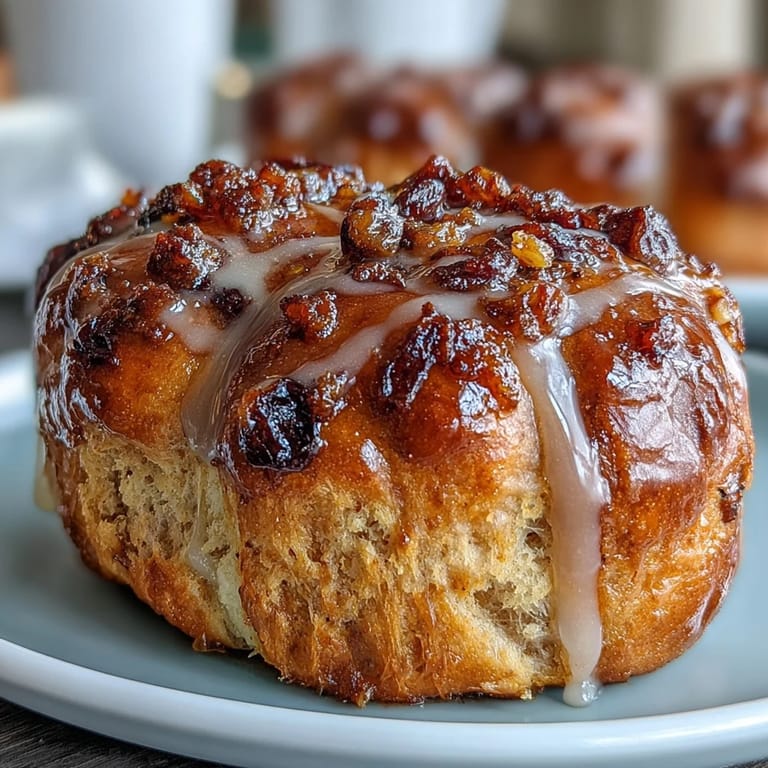
Save Sharing these buns always adds a gentle note to any gathering. Let the aroma fill your kitchen, and enjoy the simple act of baking for someone else.
Recipe Questions & Answers
- → What spices give hot cross buns their flavor?
Cinnamon, allspice, nutmeg, and citrus zest provide classic warmth and aromatic depth.
- → Can I use raisins instead of currants?
Yes, raisins, dried cranberries, or chopped dried apricots are ideal substitutes and add variety.
- → How is the orange glaze prepared?
Whisk powdered sugar, orange juice, and zest until smooth, then brush buns immediately after baking.
- → What makes the buns soft and fluffy?
Proper kneading, two rises, and using bread flour contribute to a tender, pillowy crumb.
- → Are these buns suitable for vegetarians?
Yes, they contain no meat—just dairy, eggs, and wheat. Check dried fruit packaging for allergens.