 Save
Save My grandmother's kitchen in Belgrade always smelled like butter and phyllo when she was making gibanica. I didn't inherit her hands—mine were clumsy with the delicate sheets—but I inherited her conviction that this pie could solve almost anything. Years later, watching the golden layers emerge from the oven, I finally understood why she'd make it on ordinary Sundays, not just for celebrations.
I made this for a potluck where everyone brought store-bought everything, and I watched three people ask for the recipe before they'd even finished their first piece. One person took a photo. That's when I realized this wasn't just comfort food—it was a conversation starter, a little piece of tradition that made people sit up and pay attention.
Ingredients
- Cottage cheese (300 g): This is your base—it provides a light, fluffy texture that feta alone would never give you. Use full-fat if you can find it, and don't worry if it's a bit lumpy; it smooths out when you mix.
- Feta cheese (200 g): Crumble it by hand so you can feel the texture; it breaks down better and distributes more evenly than pre-crumbled versions.
- Eggs (4 large): They're the binder that holds everything together and gives the filling that custardy quality that makes people close their eyes when they bite in.
- Plain yogurt (100 ml): This adds tang and keeps the filling moist—use the full-fat kind if you have it, as it contributes richness without heaviness.
- Sunflower oil (50 ml in filling plus 2 tbsp for brushing): It's neutral enough not to fight the cheese flavors, and it creates those crispy, golden layers.
- Sparkling water (50 ml): This is the secret—it adds air and creates a lighter texture than still water ever could, making the filling almost cloud-like.
- Salt and black pepper: Taste as you go; feta is already salty, so you're usually adding less than you'd expect.
- Phyllo dough (500 g, about 12 sheets): Let it thaw completely at room temperature before you start—rushing this step means torn sheets and frustration.
Tired of Takeout? 🥡
Get 10 meals you can make faster than delivery arrives. Seriously.
One email. No spam. Unsubscribe anytime.
Instructions
- Set your stage:
- Preheat the oven to 180°C and grease your baking dish generously. You want the oil coating every corner so nothing sticks when it comes out golden and bubbling.
- Make the filling:
- In a large bowl, whisk cottage cheese, crumbled feta, eggs, yogurt, oil, and sparkling water until it's smooth and creamy. Season with salt and pepper, tasting as you go—remember, the feta brings its own saltiness to the party.
- Layer your first foundation:
- Place one phyllo sheet in the baking dish and brush it with oil until it glistens. Repeat with two more sheets, brushing each one. This creates a cushion so your pie won't stick.
- Begin the rhythm:
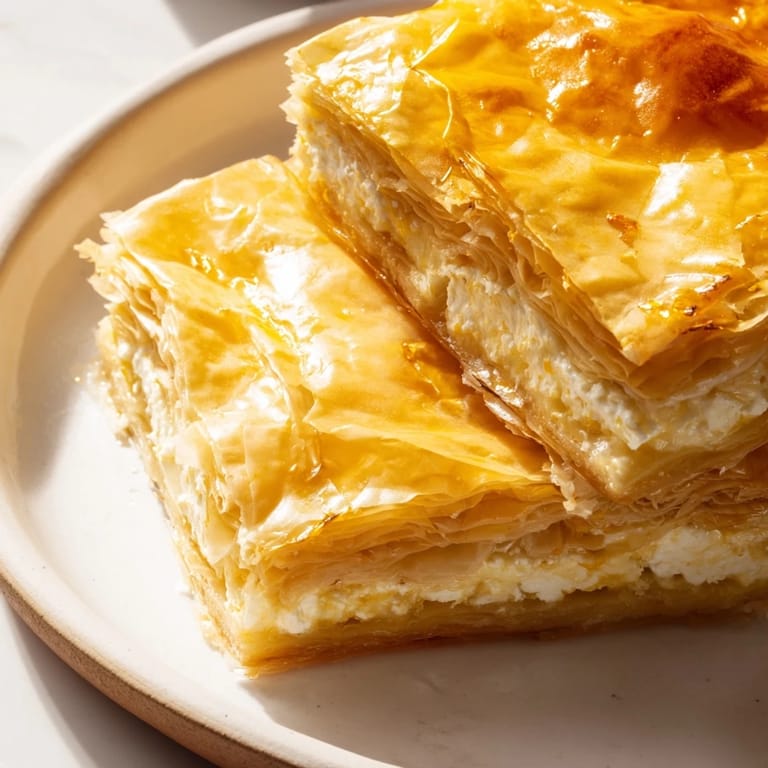
- Spread 3-4 tablespoons of filling over the phyllo, then add 2-3 more oiled sheets, then more filling. You're building something that looks almost like a lasagna, but lighter, more delicate. Keep going until you've used all your filling and phyllo, finishing with 2 sheets on top.
- Prepare for the oven:
- Brush the top layer with a generous coat of oil so it turns deep golden. If you want an extra sheen, beat an egg yolk with a teaspoon of water and brush that on too. Cut the whole thing into squares or diamonds with a sharp knife—this prevents cracking as it cooks.
- Watch it transform:
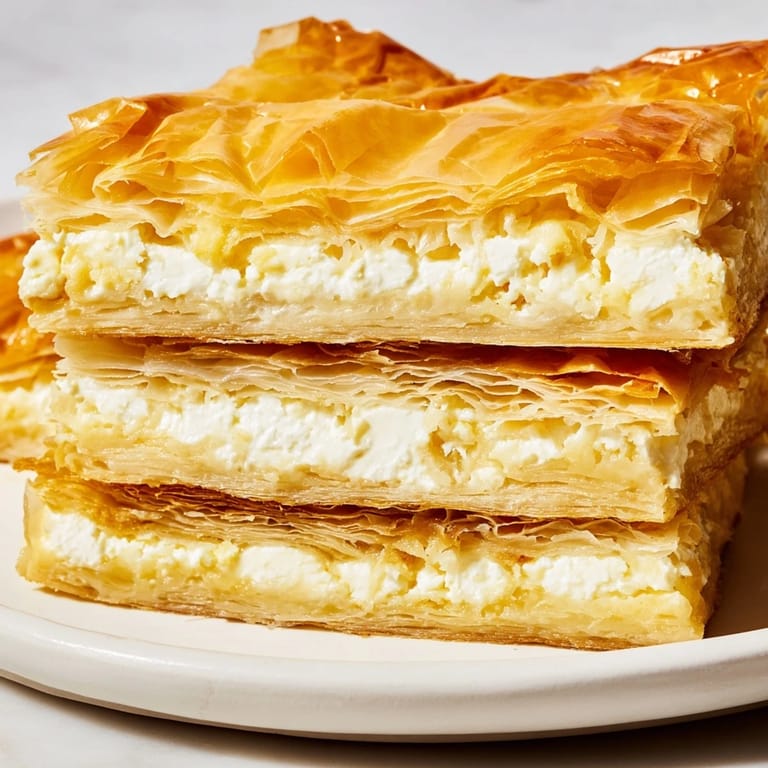
- Bake for 35-40 minutes until the top is golden and crispy. You'll know it's done when the edges pull slightly away from the pan and the smell fills your kitchen so completely you can't think about anything else.
- Rest and serve:
- Let it cool for 10 minutes—this sets the filling slightly so each slice holds together. Serve warm or at room temperature with something bright alongside it.
 Save
Save My cousin Marko visited from Serbia and watched me make this, and halfway through he just started talking about his mother making it while he and his brothers played cards in the kitchen. That's when food stops being a recipe and becomes a bridge—something that holds memory and connection and tastes like home to someone, even if they're ten thousand miles away from it.
The Magic of Layering
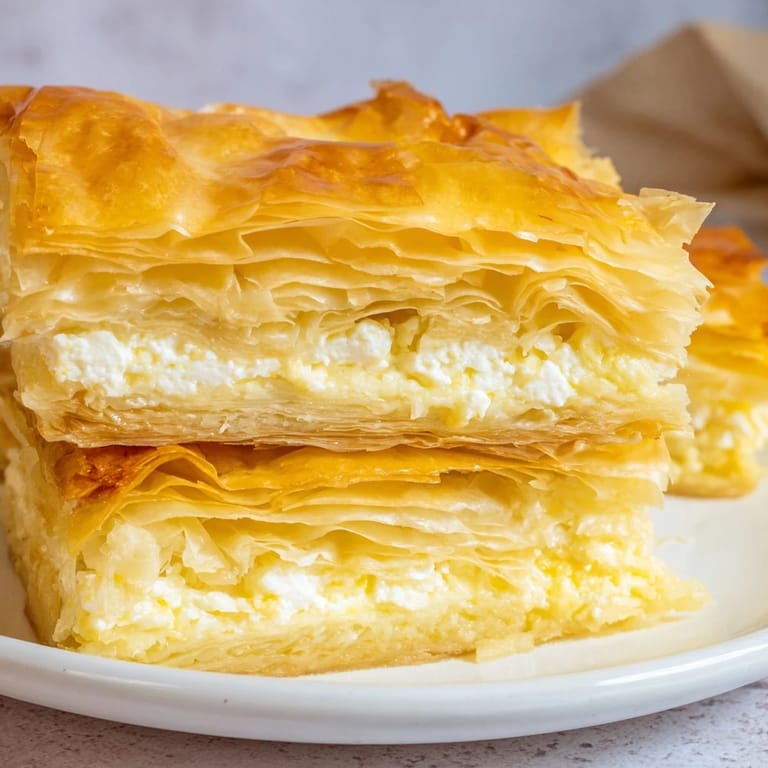
Gibanica works because of patience, not speed. Each layer of phyllo gets kissed with oil, creating those crispy, shattering textures that make the first bite so satisfying. The cheese filling sits quietly between them, slowly warming and setting, never rushing. There's something meditative about the process once you stop expecting it to be fast. It teaches you that some things actually need the time you're taking.
Serving and Pairing
Serve this warm with a bright tomato and cucumber salad on the side—the coolness and acidity cut through the richness perfectly, making you want to go back for another slice. It's equally good at room temperature, which makes it perfect for picnics, potlucks, or those moments when you're standing in front of the refrigerator and need something satisfying. A small side of sour cream isn't traditional, but it's not not Serbian either, and some people will love dunking their slice in it.
Making It Your Own
The filling is forgiving enough for experimentation. Some people add a tablespoon of sour cream for extra tang, others swear by a pinch of nutmeg or dill. I've seen versions with spinach mixed in, though that's not traditional. The beauty of this recipe is that it's old enough to be flexible, established enough to never fail completely.
- Try adding a tablespoon of sour cream to the filling if you want deeper, more complex flavor.
- For a gluten-free version, use gluten-free phyllo sheets and follow the same layering method.
- Leftovers keep in the fridge for three days and reheat beautifully—just cover loosely with foil to keep the top from browning further.
 Save
Save This recipe is a reminder that the most satisfying food doesn't come from complexity—it comes from respecting simple ingredients and giving yourself time. Every time you make it, you're part of a quiet tradition that stretches back through kitchens and across borders.
Recipe Questions & Answers
- → What cheeses are used in this pie?
The filling blends cottage cheese and crumbled feta for a creamy and tangy flavor combination.
- → How should the phyllo dough be prepared?
Use thawed phyllo sheets, layering them with a light brush of sunflower oil to achieve a crispy texture during baking.
- → Can this dish be made gluten-free?
Yes, by substituting regular phyllo with gluten-free phyllo sheets, the dish can accommodate gluten-free diets.
- → Is an egg yolk necessary for topping?
Brushing the top with beaten egg yolk is optional but adds a golden, glossy finish to the baked pie.
- → How long does the baking process take?
Bake the pie at 180°C for 35 to 40 minutes until the top turns golden and crisp.
- → What serving suggestions complement this dish?
It pairs well with fresh tomato and cucumber salad or can be enjoyed warm or at room temperature as a snack or light meal.