 Save
Save The smell of charcoal heating up always reminds me why I keep coming back to this steak. There's something about the anticipation, the way the grill grates start to shimmer, that makes everything else fall away. I used to overthink it, obsess over temperatures and timings, until one Saturday I just decided to trust the process. The bone-in rib eye doesn't need fussing, it needs heat, salt, and a little patience. That day, with smoke curling up and rosemary crackling on the meat, I finally understood what grilling was supposed to feel like.
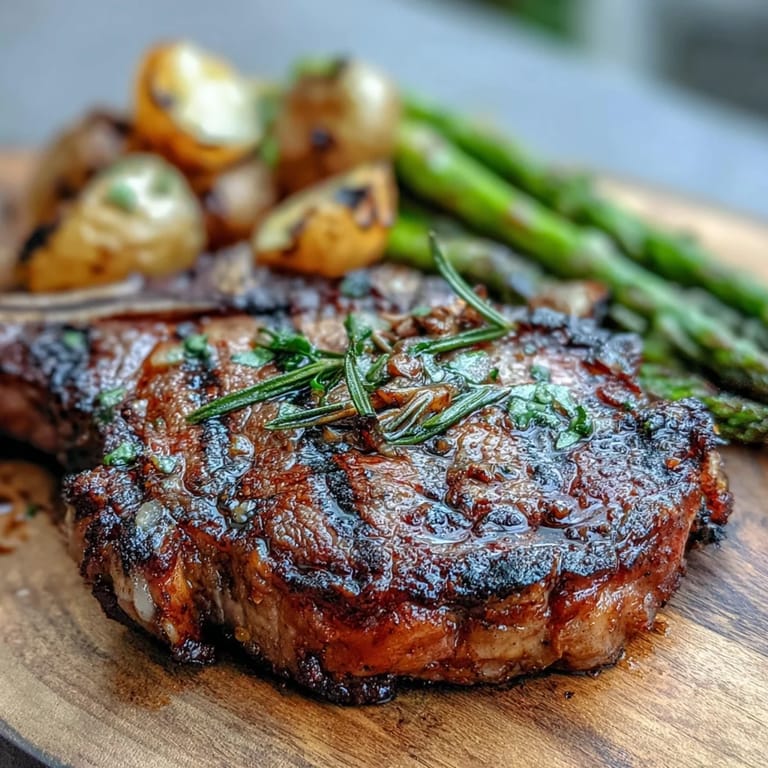
I made this for my brother's birthday last summer, and he still talks about it. He's the kind of person who orders steak everywhere but never makes it at home, convinced it's too hard to get right. Watching him take that first bite, seeing his face light up, I knew I'd converted him. The potatoes were creamy, the asparagus had those beautiful grill marks, and the steak was blushing pink in the center. We sat outside until the citronella candles burned out, and he asked me to write down every step.
Ingredients
- Bone-in rib eye steaks: The bone keeps the meat juicy and adds a deeper, richer flavor during grilling, plus it makes for a stunning presentation.
- Olive oil: This helps the seasoning stick and promotes a gorgeous crust without burning, I've learned not to skip this step.
- Kosher salt: The larger crystals season more evenly than table salt and give you better control over the crust.
- Freshly ground black pepper: Freshly cracked makes all the difference, the aroma alone tells you it's worth the extra moment.
- Fresh rosemary: Tossing these sprigs directly on the steak while grilling infuses a subtle woodsy note that feels elegant and effortless.
- Garlic cloves, smashed: Smashing releases the oils, and placing them on the steak as it grills adds a mellow, roasted garlic flavor.
- Baby potatoes: They cook quickly, hold their shape, and their creamy texture balances the richness of the steak beautifully.
- Unsalted butter: This lets you control the salt level and adds a silky finish to the potatoes that olive oil just can't match.
- Fresh parsley: A handful of chopped parsley brightens everything and makes the potatoes look and taste fresher.
- Asparagus: Grilling these spears brings out their natural sweetness and adds a slight char that plays well with the steak's smokiness.
- Lemon wedges: A squeeze of lemon cuts through the richness and wakes up every bite, I never serve steak without them anymore.
Tired of Takeout? 🥡
Get 10 meals you can make faster than delivery arrives. Seriously.
One email. No spam. Unsubscribe anytime.
Instructions
- Bring the steaks to room temperature:
- Pull them out of the fridge 30 minutes before you plan to grill, then pat them completely dry with paper towels. Rub each steak with olive oil, then season generously with salt and pepper on both sides.
- Preheat your grill:
- Get it screaming hot, around 450 to 500 degrees Fahrenheit, so the grates are ready to sear. This high heat is what creates that caramelized crust we're after.
- Grill the steaks:
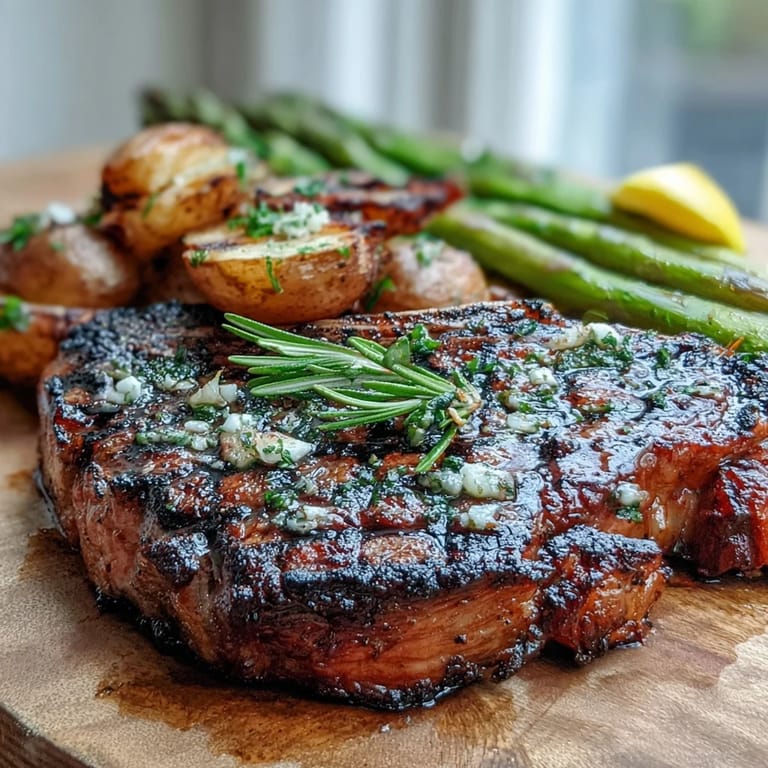
- Place the steaks on the grill and lay the rosemary sprigs and smashed garlic cloves right on top of each one. Grill for 4 to 5 minutes per side for medium rare, then pull them off and let them rest loosely tented with foil for 8 minutes.
- Boil the potatoes:
- While the steaks are grilling, put the halved baby potatoes in a pot of salted water and bring it to a boil. Cook until they're fork tender, about 10 to 12 minutes, then drain and toss them with butter and chopped parsley.
- Grill the asparagus:
- Toss the trimmed asparagus with olive oil, salt, and pepper, then place them on the grill during the last 5 minutes of the steak's cooking time. Turn them once until they're tender and have light char marks.
- Serve and enjoy:
- Arrange the rested steaks on a platter with the grilled asparagus and buttered potatoes alongside. Finish with lemon wedges for squeezing over everything.
 Save
Save There's a moment right after you plate everything, when the steak is still steaming and the butter on the potatoes is melting into little glossy pools, that makes all the prep worth it. I remember standing there with a friend who'd had a terrible week, watching her shoulders drop as she took her first bite. She didn't say much, just closed her eyes and smiled, and I realized this dish had become my way of saying I care without having to find the words. It's more than dinner, it's the pause we all need sometimes.
Choosing Your Steak
Not all rib eyes are created equal, and I learned this the expensive way. Look for steaks with good marbling, those white streaks of fat running through the meat, because that's where the flavor lives. The bone should be clean and the meat should be bright red, not brown or dull. I usually ask the butcher for steaks that are at least an inch and a half thick, anything thinner cooks too fast and you lose control over the doneness. If you can, let them age in your fridge uncovered on a rack for a day or two, it concentrates the flavor and dries out the surface for an even better crust.
Getting the Grill Right
I used to think my grill was hot enough, and then I started using a thermometer and realized I'd been guessing wrong for years. You want the grill grates so hot that a drop of water sizzles and evaporates instantly. If you're using charcoal, let the coals burn until they're covered in white ash and glowing red underneath. For gas grills, preheat on high for at least 10 minutes with the lid closed. Clean the grates well with a wire brush right before you put the steaks on, old residue can cause sticking and uneven cooking.
Sides That Work
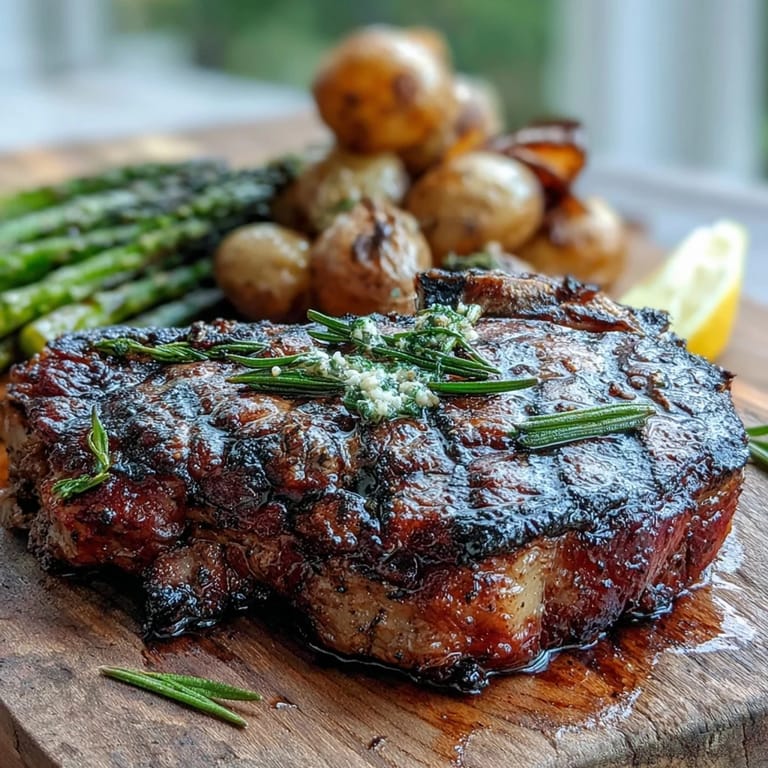
The beauty of this meal is that the sides cook while the steak rests, so everything comes together without juggling five pans at once. Baby potatoes are forgiving, they stay creamy inside even if you boil them a minute too long, and they soak up butter like little sponges. Asparagus on the grill gets this sweet, slightly smoky flavor that's worlds away from steamed, and it only takes five minutes. If asparagus isn't in season, try broccolini or even thick slices of zucchini, anything that can handle the heat and pick up some char.
- You can roast the potatoes in the oven instead if your stovetop is busy, just toss them with olive oil and salt and roast at 425 degrees Fahrenheit for about 25 minutes.
- Grilled lemon halves instead of wedges add a caramelized sweetness that's really special, just place them cut side down on the grill for the last two minutes.
- Leftover steak makes incredible sandwiches the next day, slice it thin and pile it on crusty bread with arugula and a little horseradish mayo.
 Save
Save This is the kind of meal that makes you slow down and actually taste your food, and in a world that moves too fast, that feels like a small rebellion. I hope it brings you as much joy as it's brought me.
Recipe Questions & Answers
- → How do I know when the rib eye is done?
Use a meat thermometer to check internal temperature: 130°F for medium-rare, 140°F for medium, or 150°F for medium-well. The steak will continue cooking during the resting period.
- → Why should I bring the steak to room temperature first?
Allowing the meat to rest at room temperature for 30 minutes ensures even cooking throughout. Cold steaks can char on the outside while remaining cold in the center.
- → Can I cook this indoors without a grill?
Yes, use a cast iron skillet or grill pan over high heat. Sear the steaks for 4-5 minutes per side, then finish in a 400°F oven if needed to reach desired doneness.
- → What makes bone-in rib eye different from boneless?
The bone adds flavor during cooking and helps insulate the meat, promoting even heat distribution. It also creates an impressive presentation on the plate.
- → How should I store leftover steak?
Wrap tightly in aluminum foil or place in an airtight container. Refrigerate for up to 3 days. Reheat gently in a low oven or slice thin for sandwiches and salads.
- → What wine pairs best with this dish?
Bold red wines like Cabernet Sauvignon, Malbec, or Syrah complement the rich, beefy flavors. The wine's tannins balance the fat content of the rib eye beautifully.