 Save
Save My first spanakopita arrived on a ceramic plate at a tiny taverna near Plaka, and I remember the sound of it—that satisfying crackle when my fork broke through the phyllo. Years later, I found myself in my own kitchen on a rainy Sunday, determined to recreate that moment. The smell of butter and dill filling the air reminded me exactly why I'd been chasing this recipe.
I made this for my neighbor once when she brought over her newborn, and she ate three pieces while we sat on the porch talking about life. That's when I realized spanakopita isn't just food—it's the kind of dish that invites people to slow down and stay a little longer.
Ingredients
- Fresh spinach (2 lbs): If you're using fresh, wash it well and chop it roughly—the water content matters more than perfect pieces. Frozen works beautifully too, just squeeze it dry or the filling becomes soggy.
- Yellow onion and scallions: These build the savory backbone; the scallions add a bright note that keeps everything from feeling heavy.
- Fresh dill and parsley: Non-negotiable for that authentic Greek flavor—dried dill works in a pinch, but fresh makes all the difference.
- Feta cheese (8 oz): Choose a good quality feta; crumbly is fine, and don't skip the draining step or your filling drowns in liquid.
- Ricotta or cottage cheese (optional): This is my secret for a creamier texture that makes each bite feel luxurious.
- Eggs (2 large): They bind everything together and help the filling stay intact as it bakes.
- Nutmeg, black pepper, and salt: The nutmeg is subtle but crucial—it echoes through every bite with warmth.
- Phyllo dough (1 lb): Thaw it completely or it'll crack and frustrate you; keep unused sheets under a barely damp towel so they don't dry out.
- Olive oil or melted butter (1/2 cup): Butter gives richer color, but olive oil keeps it more authentically Greek—either works beautifully.
Tired of Takeout? 🥡
Get 10 meals you can make faster than delivery arrives. Seriously.
One email. No spam. Unsubscribe anytime.
Instructions
- Set yourself up for success:
- Preheat your oven to 350°F and grease a 9x13-inch baking dish lightly. Having everything ready before you start is the difference between a relaxed cooking experience and a frantic one.
- Build your flavor base:
- Heat 2 tablespoons of olive oil in a large skillet over medium heat and add your chopped onion and scallions. Let them soften for about 5 minutes, until they're translucent and fragrant—this is when your kitchen will smell absolutely incredible.
- Wilt the spinach:
- Add your chopped spinach in batches if using fresh, stirring until it collapses into the pan. You'll notice the liquid releasing; keep cooking until most of it has evaporated, which takes about 8-10 minutes. This step prevents a watery filling.
- Cool and combine:
- Remove the spinach mixture from heat and let it cool for a few minutes. In a large bowl, combine the cooled spinach with dill, parsley, crumbled feta, ricotta (if using), beaten eggs, black pepper, nutmeg, and salt to taste.
- Layer the phyllo base:
- Lay one sheet of phyllo in your prepared dish, allowing the edges to hang over the sides, and brush it lightly with oil or butter. Repeat with 6-7 more sheets, brushing each one—this is meditative work, and worth taking your time.
- Add the filling:
- Spread your spinach-feta mixture evenly over the phyllo base in one generous layer.
- Create the top crust:
- Layer the remaining phyllo sheets on top, brushing each with oil or butter as you go. Tuck the overhanging edges into the dish so everything is sealed.
- Score before baking:
- Using a sharp knife, score the top layers into squares or diamonds—don't cut all the way through, just enough to guide where people will naturally cut.
- Bake until golden:
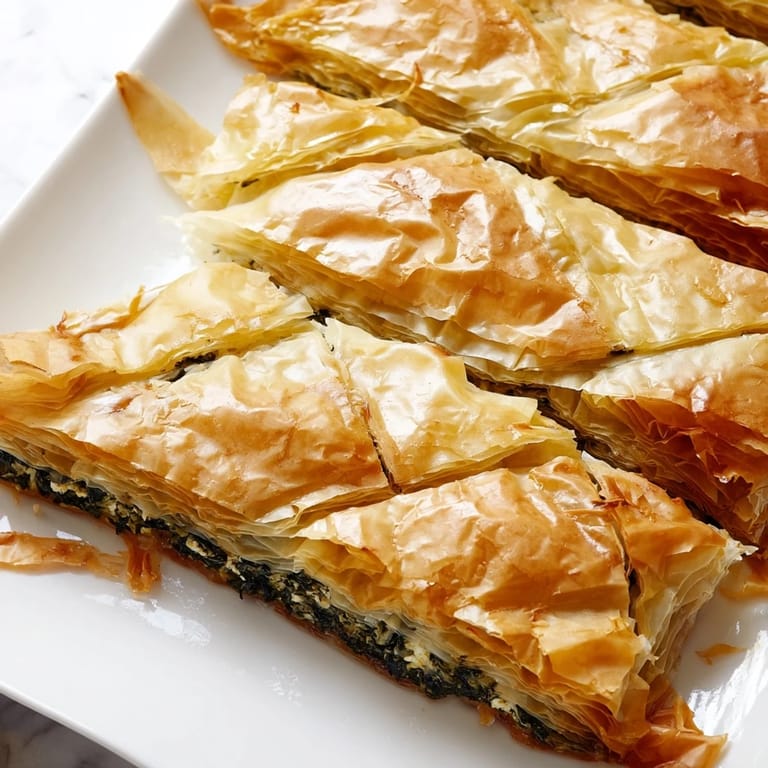
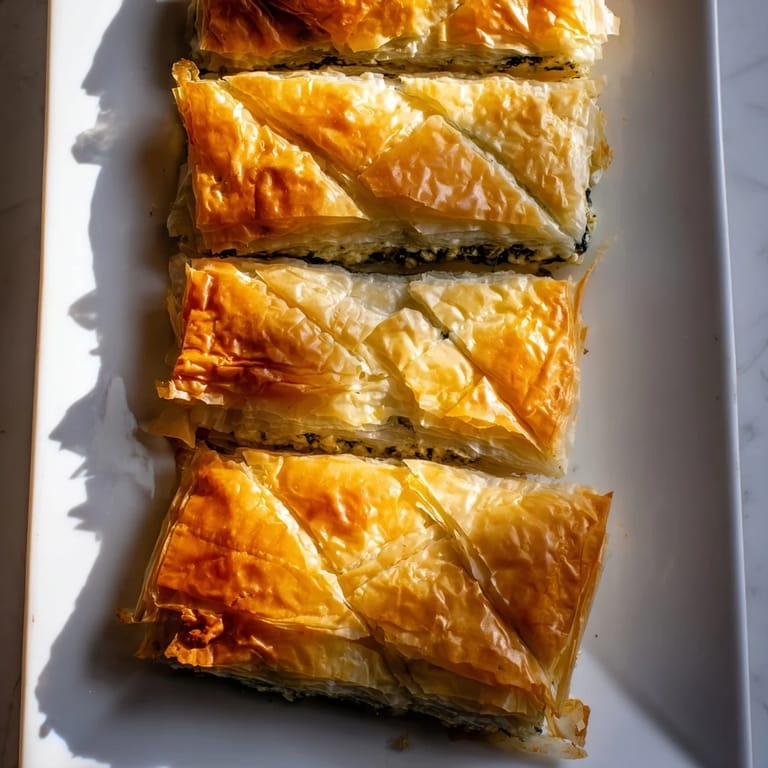
- Bake for 35-40 minutes, until the top is a deep golden brown and the phyllo crackles when the dish moves slightly in the oven. Let it cool for 10 minutes before serving; this resting time lets everything set.
 Save
Save There's something deeply satisfying about pulling a spanakopita from the oven and hearing that first crack of the phyllo as the heat hits it one last time. It's the sound of something worth waiting for.
Phyllo Secrets I've Learned
Phyllo intimidates a lot of home cooks, but it's honestly more forgiving than people think. The key is patience—brush each sheet gently and deliberately, don't rush it. I used to try to layer four sheets at once and end up with a torn mess; now I slow down and actually enjoy the repetitive rhythm. Your hands will get sticky, the oil will pool in odd spots, and that's perfectly fine. Each imperfection just adds character to your final pie.
Variations to Keep Things Interesting
Once you've mastered the classic version, spanakopita becomes a canvas for creativity. I've made it with chard, kale, even a mix of greens when I had them on hand. The cooking time might shift slightly depending on the moisture content of your greens, but the principle stays the same. Sometimes I add a handful of pine nuts to the filling for textural contrast, or even a pinch of cayenne for warmth. The recipe is flexible enough to welcome your own discoveries.
Serving and Pairing Ideas
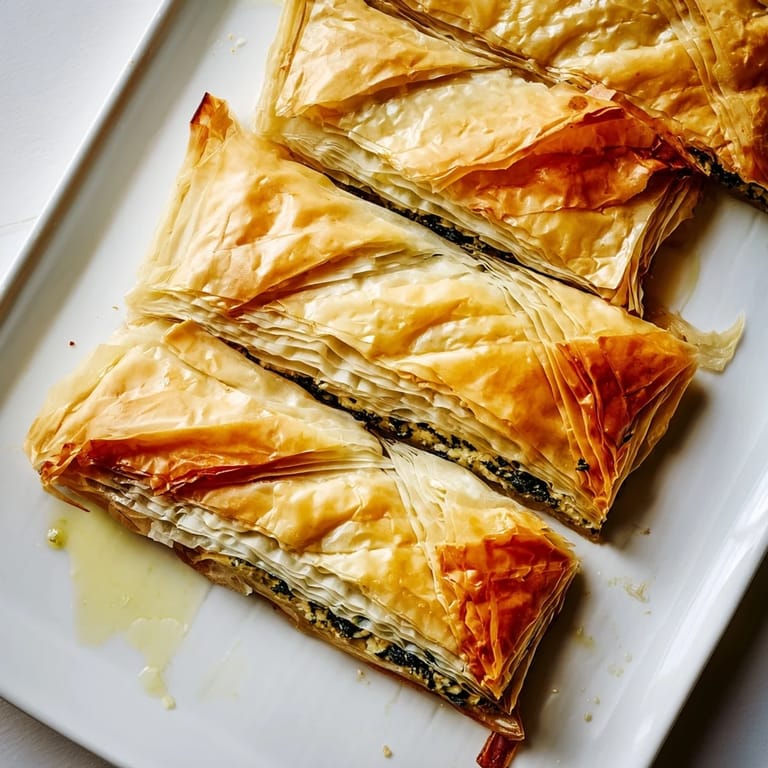
Spanakopita works equally well as an elegant appetizer at a dinner party, a light lunch with a simple salad, or even a satisfying dinner when paired with something fresh. I always serve it warm or at room temperature, never cold—the phyllo loses something in the chill. A crisp white wine like Assyrtiko or Sauvignon Blanc cuts through the richness beautifully, or simply pour cold lemon water and let the flavors speak for themselves.
- Cut it into small squares for appetizers or larger rectangles for a main course portion.
- A squeeze of fresh lemon juice over the top brightens all the flavors just before eating.
- Leftover spanakopita keeps well wrapped in foil and actually improves as the flavors settle.
 Save
Save Every time you make spanakopita, you're connecting to centuries of Greek kitchen tradition while creating something entirely your own. That's the real magic of this dish.
Recipe Questions & Answers
- → Can I use frozen spinach instead of fresh?
Yes, frozen spinach can be substituted. Make sure to thaw and drain it well to remove excess moisture before mixing with other ingredients.
- → What alternatives are there for phyllo dough?
Phyllo dough is ideal for its flaky texture, but you can try puff pastry for a slightly different, yet still crisp, result.
- → How do I prevent the phyllo from drying out during baking?
Brushing each phyllo layer with olive oil or melted butter helps maintain moisture and promotes golden crispness.
- → Can I make this dish ahead of time?
Yes, you can prepare the filling and assemble the pie in advance. Keep it refrigerated and bake just before serving for best texture.
- → What wine pairs well with this dish?
A crisp white wine such as Assyrtiko or Sauvignon Blanc complements the savory spinach and feta flavors beautifully.