 Save
Save My grandmother kept a garden that seemed to exist in every season at once—even in the harshest Ukrainian winters, she'd emerge with beets the color of rubies, their earthiness so deep it felt almost sacred. One November afternoon, watching her grate those beets into a massive pot while the kitchen filled with that distinctive, slightly mineral smell, I realized borscht wasn't just soup—it was her way of saying she'd survived another year. Now when I make it, I'm still chasing that exact memory, that warmth, that feeling of abundance in a bowl.
I made this for a Ukrainian friend who'd moved across the country, and the second she tasted it, her eyes got watery in a way that had nothing to do with the vinegar. She told me her mother made it exactly like this, same proportions, same resting time at the end. That's when I understood—borscht isn't food, it's a conversation across generations.
Ingredients
- Beef chuck or brisket, 400g: This cut has enough fat and connective tissue to turn the broth silky and rich after simmering; cheaper cuts work beautifully here.
- Water, 1.5 liters: Cold water gives the beef a gentle start; never start with boiling water if you want a clear, clean broth.
- Bay leaves and black peppercorns: These aren't just flavor—they're restraint, keeping the broth elegant instead of muddled.
- Fresh beets, 3 medium: Peel them raw and grate them into the oil to preserve their brightness; cooked beets turn dull and lose their sweetness.
- Carrots, 2 medium: Their natural sugar balances the beets' earthiness and vinegar's bite.
- Onion, 1 medium: The foundation—caramelizing it slightly in oil creates depth.
- Potatoes, 2 medium: They soften last and add body without overwhelming the delicate beet flavor.
- Green cabbage, 1/4 small head: Shredded fine, it adds a subtle sweetness and slight chew that grounds everything.
- Tomato paste, 2 tablespoons: A spoonful goes far here; it deepens the color and adds umami.
- Garlic, 2 cloves: Added at the very end so it stays bright and present, not mellowed out.
- Sunflower oil, 2 tablespoons: The vehicle for sautéing vegetables; use neutral oil so the vegetables shine.
- Sugar, 1 tablespoon: A pinch that makes the soup taste like itself—don't skip it.
- White vinegar, 2 tablespoons: The secret weapon that lifts everything; it's what makes people ask what that bright note is.
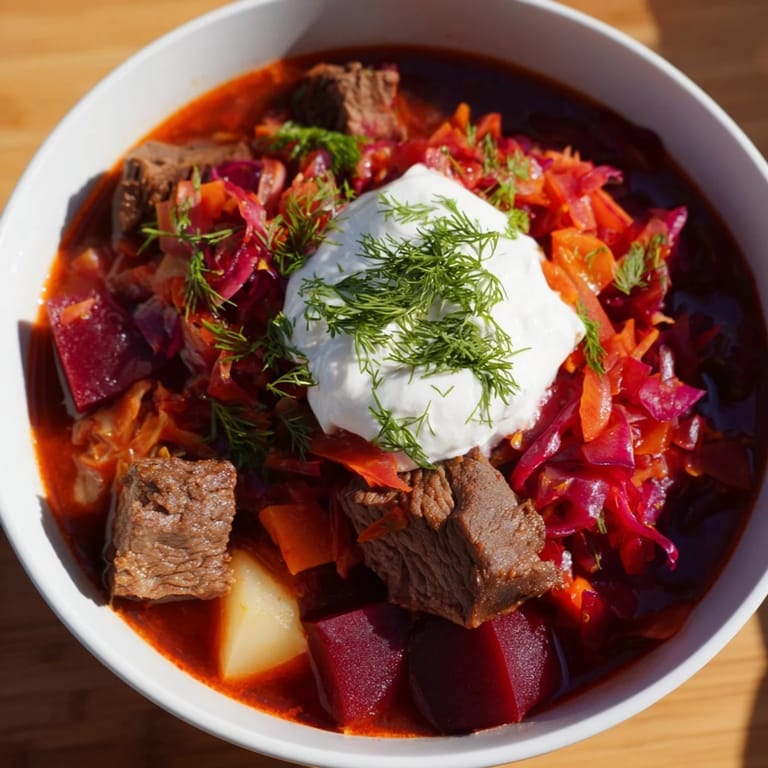
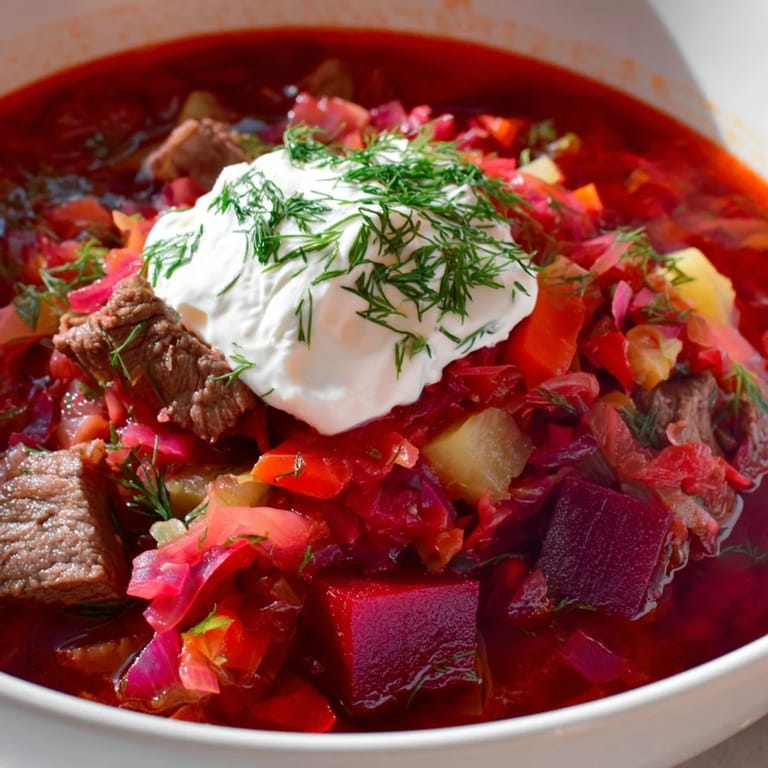
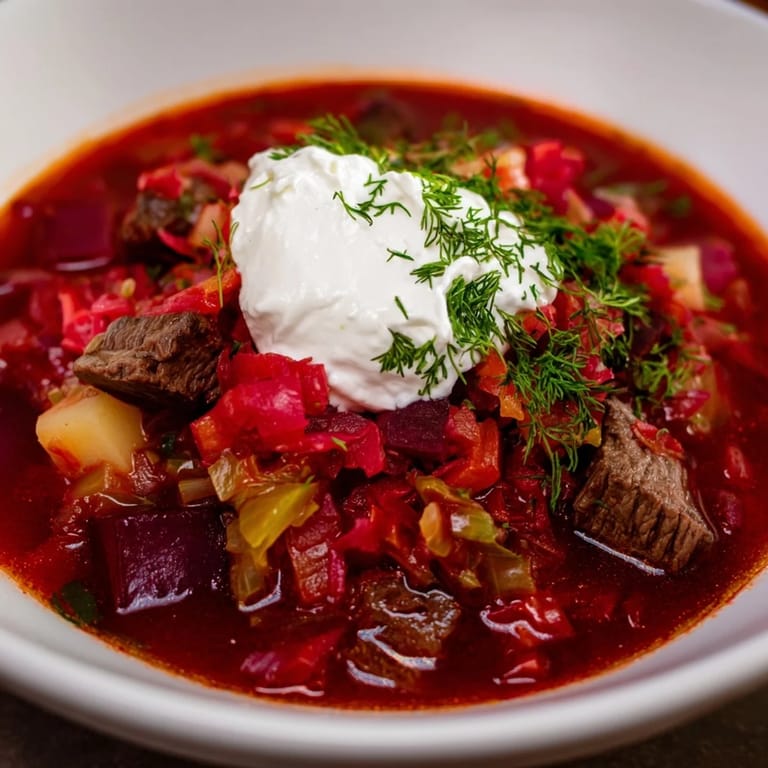
- Sour cream and fresh dill: The finale—sour cream cools the soup slightly and adds tanginess, while dill whispers its name on the finish.
Tired of Takeout? 🥡
Get 10 meals you can make faster than delivery arrives. Seriously.
One email. No spam. Unsubscribe anytime.
Instructions
- Build your broth foundation:
- Drop the beef into cold water with bay leaves, peppercorns, and salt, then bring it to a boil—you'll see grey-white foam rise to the surface, which you'll skim off gently. This takes about 45 minutes at a low simmer, and the kitchen will smell like possibility.
- Wake the vegetables with heat:
- While the beef cooks, heat oil in a skillet and let the onions turn translucent and soft, about 3 minutes. Then add the grated carrots and beets—watch them soften and release their color into the oil, creating this deep magenta paste.
- Build layers in the pan:
- Stir in tomato paste, sugar, and vinegar into the vegetables and let them cook together for 7–8 minutes, stirring occasionally. This is where the magic starts—those three ingredients transform ordinary vegetables into something complex.
- Combine and commit:
- Remove the beef from its broth (it'll be tender and grey), then add the sautéed vegetable mixture to the broth. Add potatoes and let them cook for 10 minutes until they're almost tender.
- Bring it together:
- Add the shredded cabbage and return the vegetables to a simmer for 10 minutes until everything is genuinely soft. Then shred or cube the beef and return it to the pot with the minced garlic.
- Let it rest:
- This 15–20 minute rest at the end isn't optional—the flavors knit together, soften, and the soup tastes completely different than it did 20 minutes earlier. Adjust salt and pepper now, tasting as you go.
 Save
Save I once made this for a dinner party where someone brought their grandmother, visiting from Kyiv, and she sat at my table tasting each spoonful slowly, saying nothing, until finally she nodded and asked for my recipe—in writing. That nod felt like permission to keep making it, to keep the memory alive in my kitchen.
The Beet and Borscht Tradition
Beets aren't just an ingredient in borscht; they're the point. In Eastern European cooking, beets symbolize resilience—they're a crop that survives harsh soil and cold weather, and borscht itself emerged as a way to use what you had through long winters. The soup is deeply red, deeply rooted, and deeply practical. When you make it, you're part of that legacy, whether you know it or not.
Make It Your Own
Borscht is forgiving in ways that feel intentional, not accidental. Some families add more cabbage for texture, others skip it entirely. Some finish with a squeeze of lemon juice instead of relying solely on vinegar. The structure is solid, but the details belong to whoever is cooking it. This is a recipe that welcomes your adjustments and remembers them.
Serving and Storing
Serve borscht steaming hot, with a generous dollop of sour cream swirled in—the contrast of cold and hot, tangy and sweet, is essential. It reheats beautifully and actually tastes better the next day, when the flavors have mellowed into something almost creamy despite there being no cream. Leftovers last five days in the refrigerator, and the flavors only deepen.
- Pair it with dark rye bread or soft Ukrainian garlic rolls if you can find them.
- A handful of fresh dill on top isn't decoration—it's the final note that makes people close their eyes.
- If you're serving it the next day, reheat gently to preserve the vegetables' texture.
 Save
Save This borscht tastes like home in every spoonful, whether home is a memory or a hope. Make it, serve it, and watch what happens.
Recipe Questions & Answers
- → What cut of beef is best for this dish?
Beef chuck or brisket works well due to their tenderness after long simmering.
- → Can I prepare this without meat?
Yes, omitting beef and using vegetable broth provides a rich vegetarian variation.
- → Why is sour cream added at the end?
Sour cream adds creaminess and a slight tang, balancing the earthy beet flavor.
- → Can this soup be made ahead of time?
Yes, flavors deepen when refrigerated overnight, making it ideal for advance preparation.
- → What herbs are best for garnish?
Fresh dill or parsley complements the vibrant flavors and adds a fresh finish.
- → How can I adjust the soup’s acidity?
Adding white vinegar or a splash of lemon juice brightens and balances the flavors.