 Save
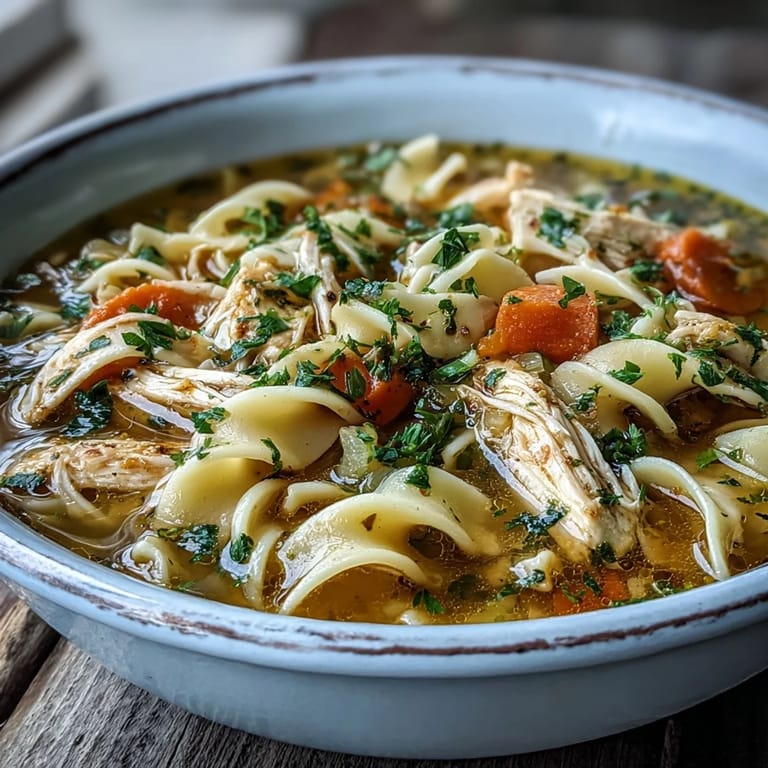
Save The first snow of winter had just fallen outside my kitchen window when I realized nothing would satisfy quite like a pot of chicken noodle soup. My grandmother always said chicken soup was medicine in a bowl, and I believe her to this day. There's something magical about the steam rising from the pot, carrying the aroma of herbs and chicken through the house. What started as a practical way to use leftover chicken has become my most requested comfort food when friends are feeling under the weather.
Last February, my neighbor Sarah came down with a terrible cold, and I brought over a container of this soup. Three days later, she knocked on my door with her own empty pot and a handwritten note requesting the recipe. We laughed about how food creates connections between houses, and now whenever either of us makes a batch, we automatically set aside a portion for the other family. Its become our little neighborhood tradition.
Ingredients
- Bone-in chicken thighs or breasts: Using bone-in pieces might seem fussy but trust me on this one - the bones create a richness in the broth that boneless pieces simply cannot deliver.
- Low-sodium chicken broth: I learned the hard way that starting with regular broth can leave you with soup thats way too salty once it reduces.
- Yellow onion, carrots, and celery: This trio forms what the French call mirepoix, the aromatic foundation that gives the soup its classic flavor without overpowering the delicate chicken.
- Fresh parsley and lemon juice: These finishing touches brighten everything up - the soup tastes flat without them, like a painting missing its final brushstrokes.
- Wide egg noodles: They hold up beautifully in the broth without becoming mushy, plus they remind me of the soup my mother would make.
Tired of Takeout? 🥡
Get 10 meals you can make faster than delivery arrives. Seriously.
One email. No spam. Unsubscribe anytime.
Instructions
- Create your broth base:
- Place chicken pieces and broth in a large pot and bring to a gentle boil, skimming off any foam that rises. This foam contains impurities that can cloud your broth.
- Build the flavor foundation:
- Add onion, carrots, celery, garlic, bay leaves, thyme, rosemary, salt, and pepper, then reduce heat to a simmer. Cover and let everything mingle for about 25-30 minutes until the chicken is cooked through.
- Shred that chicken:
- Remove the chicken pieces and pull them apart using two forks, discarding any bones. The meat should practically fall apart if its cooked properly.
- Return and enrich:
- Put the shredded chicken back into the pot and bring to a gentle boil. Your kitchen should be filled with the most amazing aroma by now.
- Add the noodles:
- Toss in the egg noodles and cook until theyre just tender, about 8-10 minutes. Be careful not to overcook them or theyll get mushy.
- Brighten it up:
- Stir in fresh parsley and lemon juice if using. These fresh elements wake up all the flavors that have been simmering together.
- Final touches:
- Remove bay leaves before serving hot. Nobody enjoys biting into a bay leaf by accident.
 Save
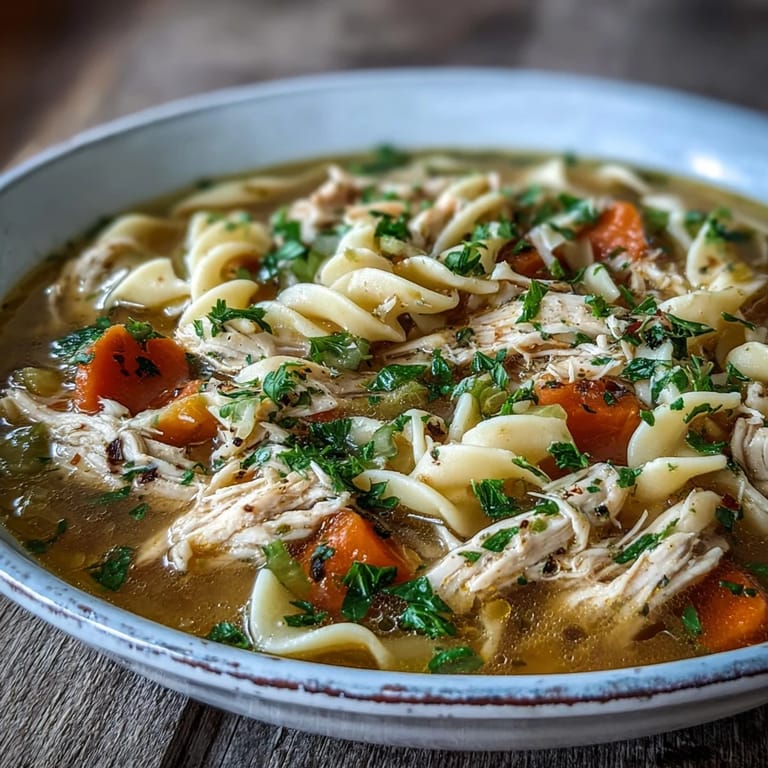
Save The winter my daughter caught the flu, she refused to eat anything for days except this soup. I remember sitting beside her bed, spoon-feeding her small sips, watching color slowly return to her cheeks. Now in college, she calls me whenever shes feeling homesick, and our conversation inevitably turns to when I last made chicken noodle soup. Its not just sustenance anymore - its the taste of being cared for when you need it most.
Storage and Make-Ahead Tips
If youre planning to store this soup for later, I suggest keeping the noodles separate until youre ready to eat. One Sunday I made a huge batch thinking Id have lunches all week, only to find the noodles had absorbed most of the broth by Tuesday, turning my soup into more of a stew. Now I store the broth with chicken and vegetables separately from cooked noodles, combining them only when reheating a portion.
Customizing Your Soup
While the classic version holds a special place in my heart, this recipe welcomes creativity. During spring I often add fresh peas and a handful of spinach right at the end. My husband prefers his with a dash of hot sauce, while my son loves extra noodles. The base recipe is forgiving enough that you can make it your own without compromising that essential comfort-food character.
Serving Suggestions
I never serve this soup alone - part of the experience is tearing off pieces of crusty bread to dunk into the golden broth. On particularly cold evenings, we make grilled cheese sandwiches for dipping, turning a simple soup into a feast that satisfies even my teenagers appetites.
- For a complete meal, pair with a simple green salad dressed with just olive oil and lemon juice.
- Store leftover soup in the refrigerator for up to 4 days, but expect the noodles to continue absorbing broth.
- Freeze without noodles for up to 3 months in airtight containers, leaving room for expansion.
 Save
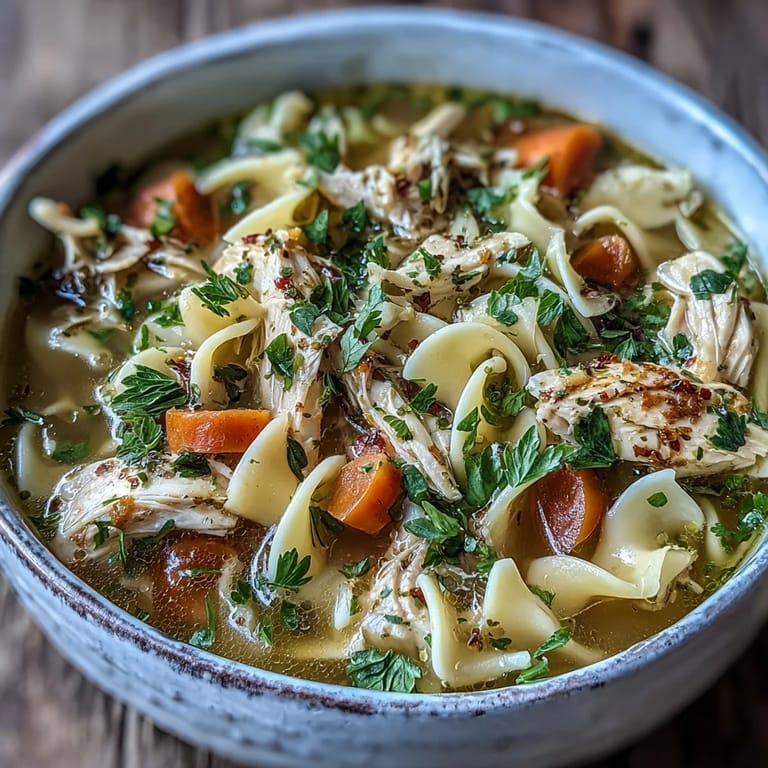
Save This chicken noodle soup has carried me through countless winters, sick days, and moments when I needed the culinary equivalent of a warm hug. Its not just food - its care made edible.
Recipe Questions & Answers
- → How long does homemade chicken and noodle soup keep?
Store cooled soup in an airtight container in the refrigerator for 3-4 days. The noodles will continue to absorb liquid, so you may need to add extra broth when reheating. For longer storage, freeze without the noodles and add fresh ones when reheating.
- → Can I make this with rotisserie chicken?
Absolutely. Use about 3 cups of shredded rotisserie chicken and add it during the last 10 minutes of cooking just to heat through. Skip the initial chicken boiling step and start with your broth and vegetables instead.
- → What type of noodles work best?
Wide egg noodles are traditional and hold up well in hot broth. You can also use rotini, small shells, or even broken spaghetti pieces. For gluten-free options, choose rice noodles or gluten-free pasta specifically designed for soups.
- → How can I make the broth more flavorful?
Simmering a mix of bone-in chicken thighs and breasts creates a richer base. You can also add a Parmesan cheese rind while simmering, or roast the vegetables and chicken bones before adding them to the pot for deeper flavor.
- → What vegetables can I add or substitute?
Beyond the classic carrots and celery, try adding diced potatoes, parsnips, or butternut squash. Spinach, kale, or Swiss chard can be stirred in during the last few minutes. For a twist, add frozen peas or corn with the noodles.