 Save
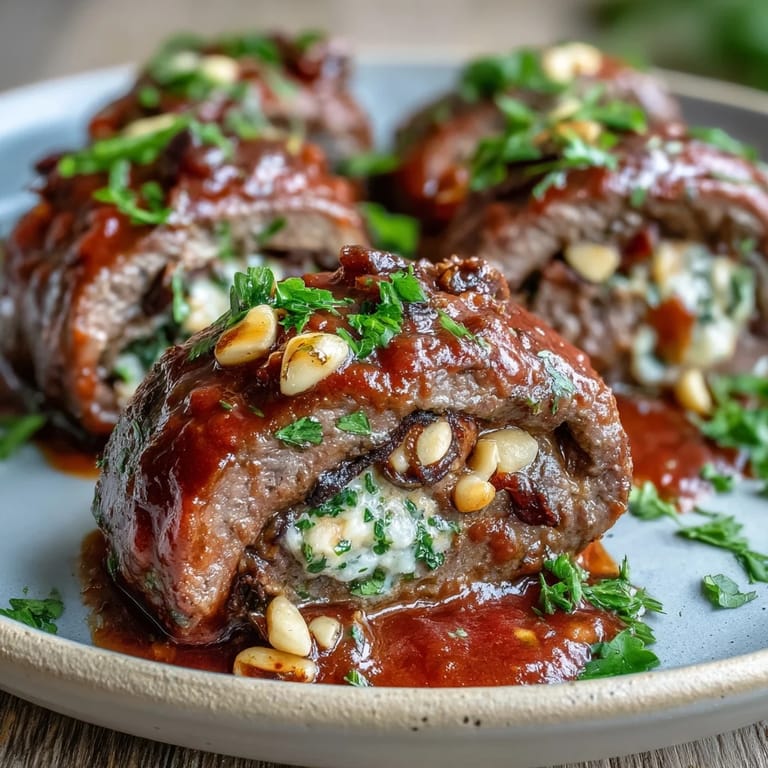
Save My neighbor Maria used to make these every Sunday, and the smell would drift through the hallway and practically pull me out of bed. One morning she invited me in, handed me a wooden spoon, and told me to stir while she rolled the beef. I had no idea something so elegant could come together in a regular Tuesday skillet. That day I learned braciole isn't fancy restaurant food—it's what Sicilian grandmothers make when they want everyone at the table to stop talking and just eat.
I made this for a small dinner party once, and my friend who grew up in Palermo teared up a little when she tasted it. She said it reminded her of her nonnas kitchen, right down to the balance of salty cheese and sweet raisins. We ended up talking for hours about food and memory, and I realized braciole is less about the recipe and more about the ritual of rolling, tying, and waiting while the sauce does its work.
Ingredients
- Beef top round or flank steak: Thin slices are key because they roll easily and cook tender without drying out, look for cuts labeled for braciole or ask your butcher to slice them.
- Pecorino cheese: Sharp and salty, it anchors the filling and melts just enough to bind everything together without turning greasy.
- Pine nuts: Toast them lightly in a dry pan first so they release a warm, buttery flavor that stands up to the tomato sauce.
- Raisins: They add little pockets of sweetness that balance the richness of the cheese and beef, use golden raisins if you want a milder taste.
- Fresh parsley and basil: Bright herbs cut through the heaviness and make the filling feel lighter, chop them fine so they distribute evenly.
- Garlic: Minced fresh garlic in both the filling and the sauce builds layers of flavor that deepen as everything simmers.
- Breadcrumbs: Just a couple tablespoons help the filling hold together and soak up any extra moisture from the cheese.
- Crushed tomatoes: Use good quality canned tomatoes because they form the base of the sauce and simmer for over an hour.
- Dry red wine: Optional but worth it, the wine deglazes the pan and adds a subtle depth that makes the sauce taste more complex.
- Dried oregano: A classic Sicilian herb that ties the whole dish together, use it sparingly so it doesnt overpower the fresh herbs.
Tired of Takeout? 🥡
Get 10 meals you can make faster than delivery arrives. Seriously.
One email. No spam. Unsubscribe anytime.
Instructions
- Prep the beef:
- Lay each slice flat on a cutting board and pound gently with a meat mallet until about a quarter inch thick. Season both sides with salt and pepper, being generous because the filling is flavorful and the beef needs to match.
- Make the filling:
- Combine pecorino, toasted pine nuts, raisins, parsley, basil, garlic, and breadcrumbs in a bowl and mix with your hands so everything gets evenly distributed.
- Roll and tie:
- Spoon filling onto each beef slice, leaving a small border on all sides, then roll tightly like a burrito, tucking in the sides as you go. Secure each roll with kitchen twine or a few toothpicks so nothing escapes during cooking.
- Sear the braciole:
- Heat olive oil in a large skillet over medium high heat and sear each roll on all sides until deeply browned, about six to eight minutes total. Remove and set aside on a plate.
- Start the sauce:
- In the same skillet, add a little more olive oil and sauté the chopped onion until soft and translucent, then add minced garlic and cook one more minute until fragrant.
- Deglaze and build:
- Pour in the red wine if using and let it bubble and reduce by half, scraping up all the browned bits stuck to the bottom of the pan. Stir in crushed tomatoes, oregano, salt, pepper, and a pinch of sugar if your tomatoes taste too acidic.
- Simmer low and slow:
- Return the braciole to the sauce, nestling them in so they are mostly submerged, then cover and let everything simmer gently over low heat for about an hour and fifteen minutes. Turn the rolls occasionally so they cook evenly and the sauce flavors the beef all over.
- Finish and serve:
- Remove the braciole carefully, snip off the twine or pull out the toothpicks, and slice each roll into thick rounds. Spoon the rich tomato sauce over the top and serve immediately.
 Save
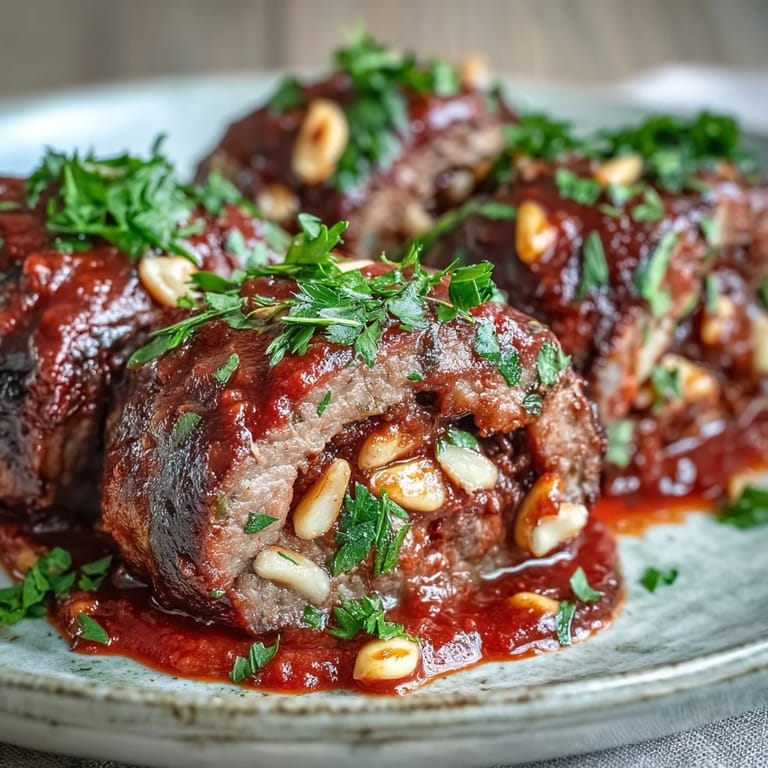
Save The first time I sliced into a finished braciole and saw the spiral of filling inside, I understood why this dish shows up at weddings and Sunday dinners. It looks impressive, tastes like hours of work, and makes people linger at the table long after the plates are empty. That is the magic of braciole, it turns a simple meal into an occasion.
Serving Suggestions
Braciole pairs beautifully with pasta tossed in the leftover tomato sauce, or you can serve it alongside creamy polenta that soaks up every drop. Crusty bread is essential for mopping up the sauce, and a simple arugula salad with lemon dressing cuts through the richness. Pour a glass of Nero dAvola or another robust Sicilian red to complete the experience.
Storage and Reheating
Store leftover braciole in an airtight container with plenty of sauce, and it will keep in the fridge for up to three days. Reheat gently on the stovetop over low heat, adding a splash of water if the sauce has thickened too much. The flavors deepen overnight, so leftovers often taste even better the next day.
Customizing the Filling
You can add chopped hard boiled egg or thin slices of prosciutto to the filling for extra richness and a more traditional Sicilian touch. Some cooks swap the raisins for currants or leave them out entirely if sweetness is not your thing. Play with the herbs too, a little fresh mint or fennel fronds can add an unexpected brightness.
- Try adding a handful of chopped sun dried tomatoes for a deeper, sweeter tomato flavor in the filling.
- If you do not have pine nuts, use chopped toasted almonds or walnuts instead.
- Always taste your filling before you roll, it should be salty, nutty, and just a little sweet.
 Save
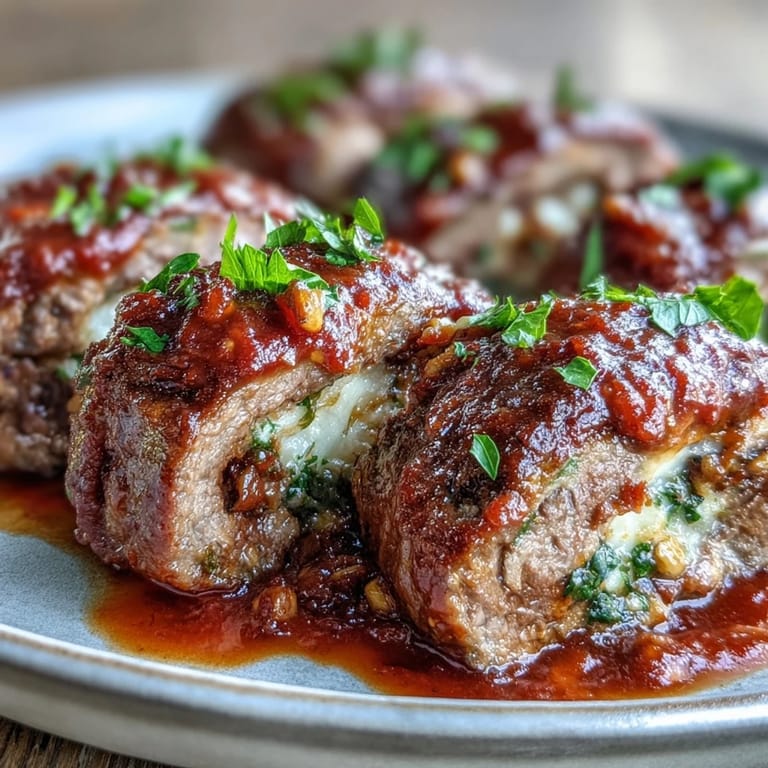
Save This is the kind of dish that makes your kitchen smell like someones childhood and your table feel like a celebration. Make it once, and it will become the recipe you pull out when you want to remind people why cooking matters.
Recipe Questions & Answers
- → Can I use a different cut of beef?
Yes, you can use thin-cut sirloin or even pork cutlets. The key is to pound the meat thin enough to roll easily while keeping it intact.
- → How do I prevent the rolls from falling apart?
Secure each roll tightly with kitchen twine at both ends and the middle, or use several toothpicks. Don't overfill, and leave a border around the edges.
- → Can I make this ahead of time?
Absolutely. Braciole actually tastes better the next day as the flavors meld. Refrigerate in the sauce and gently reheat on the stovetop before serving.
- → What can I substitute for pine nuts?
Chopped walnuts or almonds work well as substitutes. Toast them lightly first to bring out their flavor and add a similar nutty richness to the filling.
- → What should I serve with braciole?
Serve over pasta like rigatoni or spaghetti, alongside creamy polenta, or with crusty Italian bread to soak up the delicious tomato sauce.
- → Can I freeze braciole?
Yes, braciole freezes well. Cool completely, store in sauce in an airtight container for up to 3 months. Thaw in the refrigerator overnight before reheating.