 Save
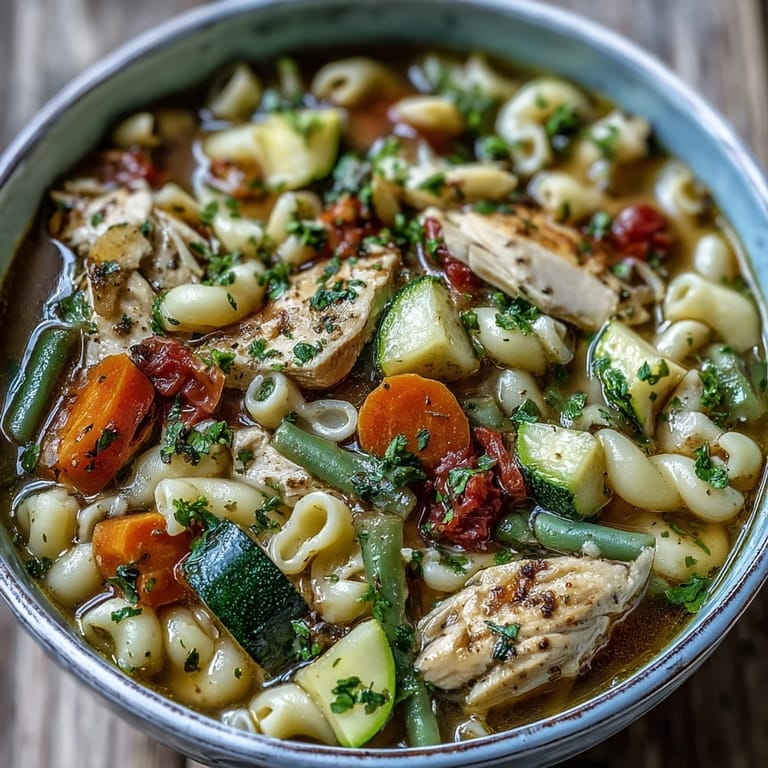
Save My grandmother used to make this soup whenever someone caught a cold in our family, but I've made it my own over the years. The kitchen windows steam up as it simmers, creating this magical barrier between the outside world and our cozy home. Something about the combination of tender chicken, pasta, and vegetables floating in golden broth feels like love in liquid form. Last winter during that terrible snowstorm, this soup kept us going for three days straight.
I remember making this for my sister after she had her first baby, carrying it over in a giant thermos while balancing bags of other essentials. She called me at midnight that same day, exhausted but insistent on telling me that it was the first proper meal she'd managed to eat with one hand while holding the baby. Sometimes the most meaningful cooking isn't about impressive techniques but about nourishing someone exactly when they need it.
Ingredients
- Boneless skinless chicken breasts: Cutting them into half-inch cubes ensures they cook quickly and evenly while staying tender in the broth.
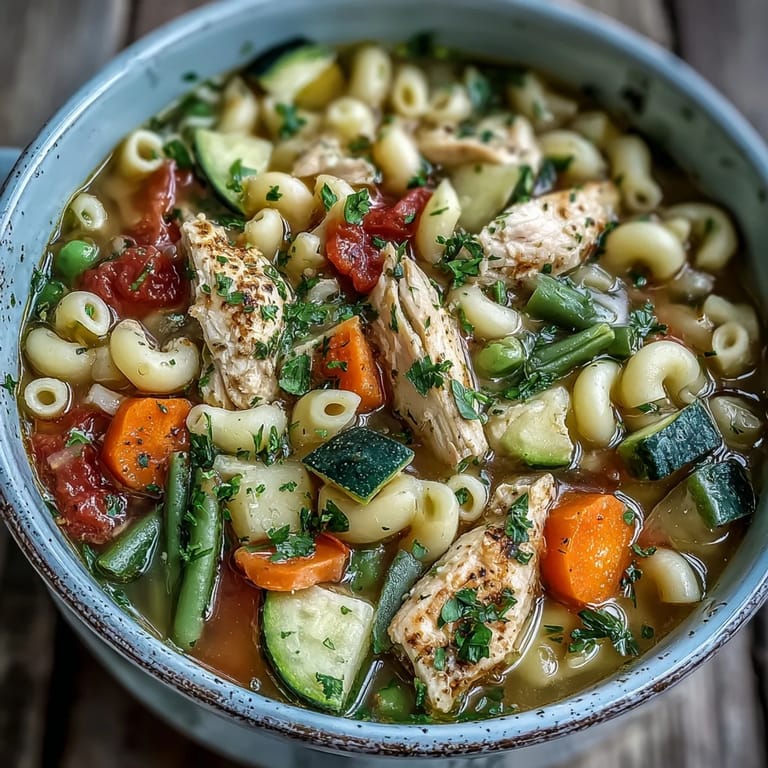
- Small pasta shapes: I prefer ditalini because they're the perfect spoonable size and somehow taste better than larger shapes in soup.
- Fresh and frozen vegetables: The combination of sautéed aromatics with fresh zucchini and green beans creates layers of flavor, while frozen peas add a pop of sweetness without any prep work.
- Diced tomatoes: The acidity brightens the entire pot and gives the broth a beautiful depth that plain chicken stock lacks.
- Dried herbs: Thyme and basil infuse the broth while simmering, creating that homey aroma that fills the kitchen.
Tired of Takeout? 🥡
Get 10 meals you can make faster than delivery arrives. Seriously.
One email. No spam. Unsubscribe anytime.
Instructions
- Build your flavor base:
- Heat that olive oil until it shimmers, then add your onion, carrots, and celery. Listen for that gentle sizzle as they soften and release their sweetness.
- Add your aromatics:
- When you toss in the garlic, that incredible fragrance will hit your nose immediately. Just 60 seconds is all it takes, any longer and it might burn.
- Brown the chicken:
- Add your chicken pieces and let them develop some color without cooking through completely. Those golden edges will contribute richness to your finished soup.
- Layer in vegetables and seasonings:
- As you add the zucchini, green beans, tomatoes and herbs, the pot transforms into a colorful medley. Give everything a good stir to distribute those flavors.
- Let it simmer:
- Once the broth goes in and comes to a boil, turn the heat down and let magic happen under that lid. The vegetables will soften and release their essence into the broth.
- Add pasta and finish:
- When you add the pasta and peas, watch how the pasta gradually plumps up as it absorbs the flavorful broth. Keep an eye on it so it doesn't overcook.
- Final touches:
- Fish out that bay leaf, then sprinkle in fresh parsley for a burst of color and freshness. Take a taste and adjust the seasoning if needed.
 Save
Save One particularly memorable evening, my usually picky nephew slurped up three bowls of this soup without a single complaint about the vegetables. His mother looked at me with a mix of gratitude and betrayal, asking what sorcery I'd used to make him eat zucchini. I just winked and told her that soup has a way of bringing everything together in harmony, including stubborn taste buds. That night, this simple soup elevated my status from regular aunt to culinary magician in the family hierarchy.
Make-Ahead Options
I've learned through much trial and error that this soup can be partially prepped days in advance. Chop all vegetables (except the garlic) and store them together in the refrigerator up to two days ahead. You can even cook the chicken separately and refrigerate it, then simply add it when you're assembling the final soup. This approach has saved countless weeknight dinners when I walk through the door exhausted but still want something homemade and comforting.
Storage and Freezing
This soup plays a clever trick as it ages in your refrigerator. The flavors actually intensify after a day or two, making leftovers sometimes even better than the first serving. When freezing portions for later, I've discovered a weird but effective technique of slightly undercooking the pasta, as it will soften again during reheating. The soup keeps beautifully in the freezer for up to three months, though the vegetables will be a bit softer after thawing.
Serving Suggestions
There's something almost ceremonial about how this soup brings people together at the table. I've noticed conversations slow down, voices soften, and a certain contentment settles over everyone as steam rises from their bowls. The soup itself might be the main event, but I've found the experience elevates when you have the right accompaniments.
- A chunk of crusty sourdough bread with salted butter creates the perfect vehicle for soaking up those last spoonfuls of broth.
- For an unexpected but delightful pairing, try serving small dishes of marinated olives alongside the soup for bursts of contrasting flavor.
- If serving for company, place a small bowl of freshly grated Parmesan and another of red pepper flakes on the table for everyone to customize their bowls.
 Save
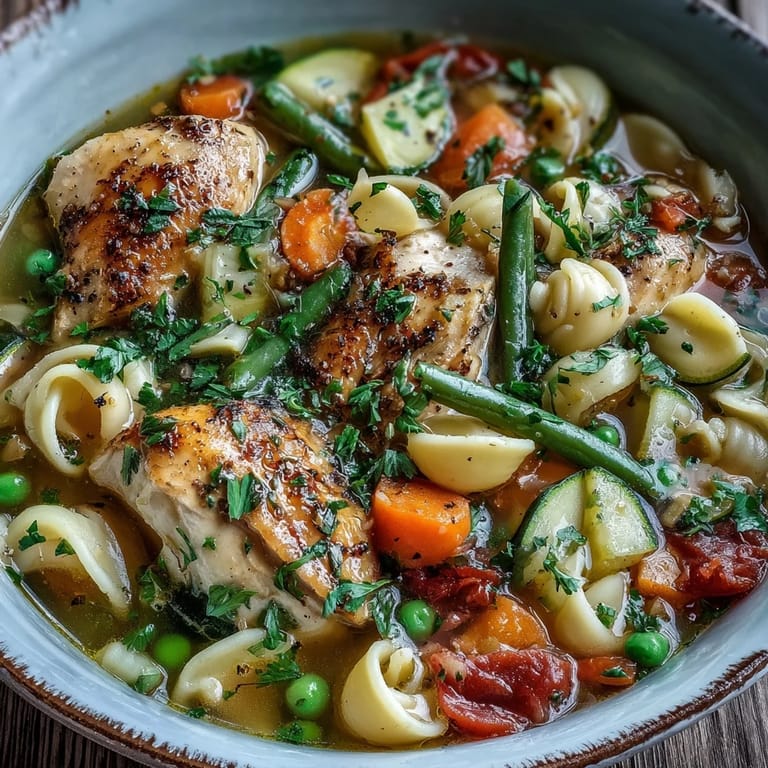
Save This soup has become more than just a recipe in my household—it's a ritual of comfort and care. Whether you're making it for yourself or someone you love, I hope it brings the same warmth to your kitchen that it's brought to mine.
Recipe Questions & Answers
- → What pasta shapes work best in this soup?
Small pasta shapes like ditalini, elbow macaroni, or small shells hold up well in broth. These compact shapes cook evenly and don't become mushy, maintaining pleasant texture throughout the soup.
- → Can I make this ahead of time?
Yes, prepare the soup up to 3 days in advance. Store pasta separately if possible to prevent it from absorbing too much liquid. Reheat gently on the stovetop, adding extra broth if needed.
- → How do I prevent the pasta from getting too soft?
Cook pasta directly in the broth during the final 10–12 minutes of simmering. This timing ensures al dente texture. If storing leftovers, the pasta will continue softening, so slightly undercook initially.
- → Can I use rotisserie chicken instead?
Absolutely. Shredded rotisserie chicken adds rich flavor. Add it during the final 10 minutes with the pasta and peas rather than browning with vegetables, just to heat through.
- → What vegetables can I substitute?
Swap zucchini for spinach or kale. Replace green beans with corn kernels or bell peppers. The medley is flexible—use what's in season or what your family enjoys most.
- → Is this suitable for freezing?
Freeze without pasta for best results. Cook fresh pasta when reheating. If freezing with pasta included, expect softer texture upon reheating. Store in airtight containers for up to 3 months.