 Save
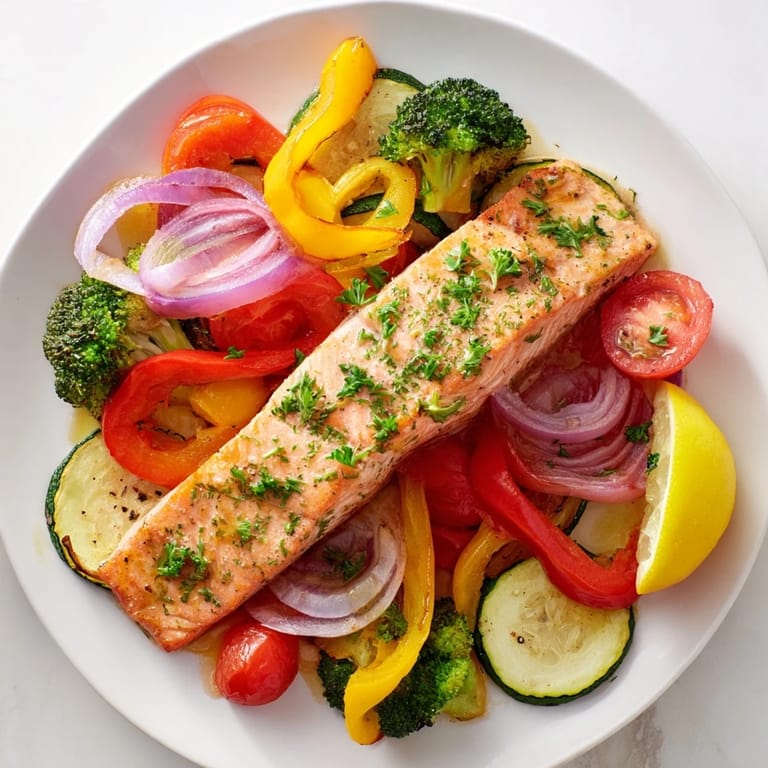
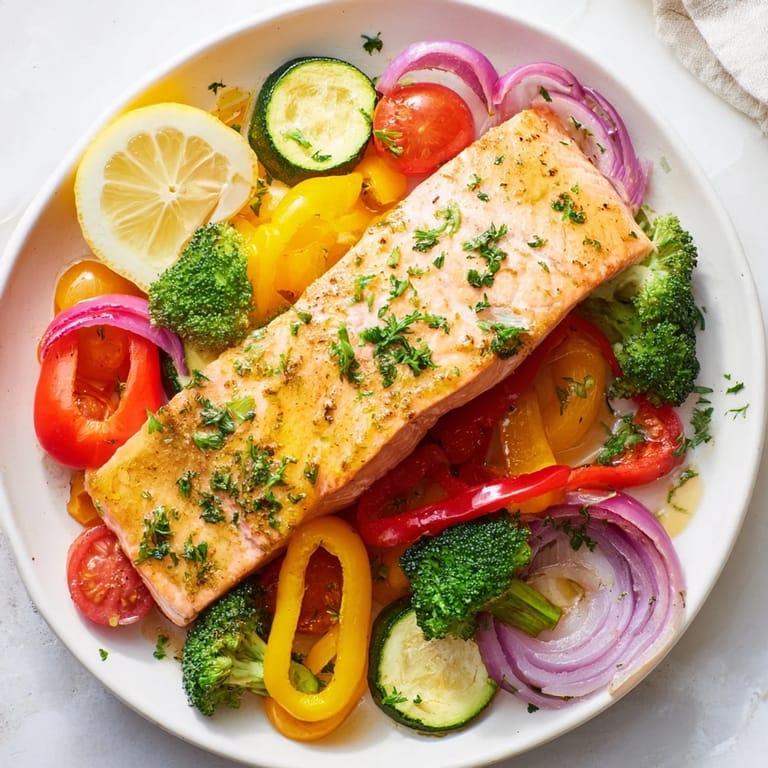
Save There's something almost magical about opening the oven to find salmon perfectly flaked and vegetables blistered to tender sweetness—all happening on one pan while you've been sipping coffee in the other room. I discovered this recipe during a particularly hectic Wednesday when I needed to feed four people without spending an hour in the kitchen, and it turned into my go-to whenever the week feels overwhelming. The combination of bright lemon, aromatic dill, and that golden-brown char on the vegetables creates something that tastes far more impressive than the fifteen minutes of prep suggests.
I remember cooking this for my sister when she visited last fall, and she kept asking if I'd made something different because the salmon was so tender and the peppers had this almost candied quality. The smell that fills your kitchen—lemon cutting through toasted garlic and fresh herbs—made everyone gravitate toward the kitchen before dinner was even ready. That's when I realized this wasn't just a weeknight shortcut; it was something people actually wanted to eat.
Ingredients
- Salmon fillets (4, about 6 oz each): Look for wild-caught if you can find it, and don't be shy about asking your fishmonger to check for any pin bones hiding in the flesh—it's worth the thirty seconds of poking around.
- Olive oil: Use something you'd taste on its own; the oil carries so much of the flavor here that cheap stuff really shows.
- Lemon (zest and juice): Fresh lemon is non-negotiable—the brightness keeps everything from feeling heavy.
- Dill: Fresh is preferable, but dried works in a pinch; if using fresh, tear it gently rather than chopping so you don't bruise the delicate leaves.
- Garlic powder: Just a teaspoon does the work without overpowering, but if you have fresh garlic minced, use about half a clove instead.
- Salt and pepper: Season generously; fish especially needs good salt to shine.
- Red bell pepper: The sweetness balances the salmon's richness perfectly.
- Yellow bell pepper: Adds a sunny note and looks beautiful next to the red.
- Red onion: Cut into wedges so the layers stay together and caramelize instead of falling apart.
- Zucchini: Slice it roughly the same thickness as your other vegetables so everything finishes at once.
- Cherry tomatoes: Halving them prevents them from rolling around and helps them concentrate their flavor.
- Broccoli florets: Cut them smaller than you might think; they need that extra time to get crispy at the edges.
Tired of Takeout? 🥡
Get 10 meals you can make faster than delivery arrives. Seriously.
One email. No spam. Unsubscribe anytime.
Instructions
- Get your pan ready:
- Preheat your oven to 425°F and line a large sheet pan with parchment paper or foil—this step saves your sanity come cleanup time. If you're using foil, give it a light spray of cooking oil so nothing sticks.
- Make your magic mixture:
- Whisk olive oil with lemon zest, lemon juice, dill, garlic powder, salt, and pepper in a small bowl until everything is evenly distributed. Taste it straight from the spoon and adjust salt if needed; this seasoning needs to be confident.
- Arrange the vegetables:
- Spread all your chopped vegetables across the sheet pan in a relatively even layer, leaving a bit of space in the center for the salmon. Pour half the oil mixture over the vegetables and toss everything with your hands or a wooden spoon until each piece is glistening.
- Nestle in the salmon:
- Place the salmon fillets skin-side down among the vegetables, spacing them so the heat can reach all sides. Brush the remaining oil mixture over each fillet, making sure the exposed flesh gets coated while leaving the vegetables as they are.
- Roast until it's perfect:
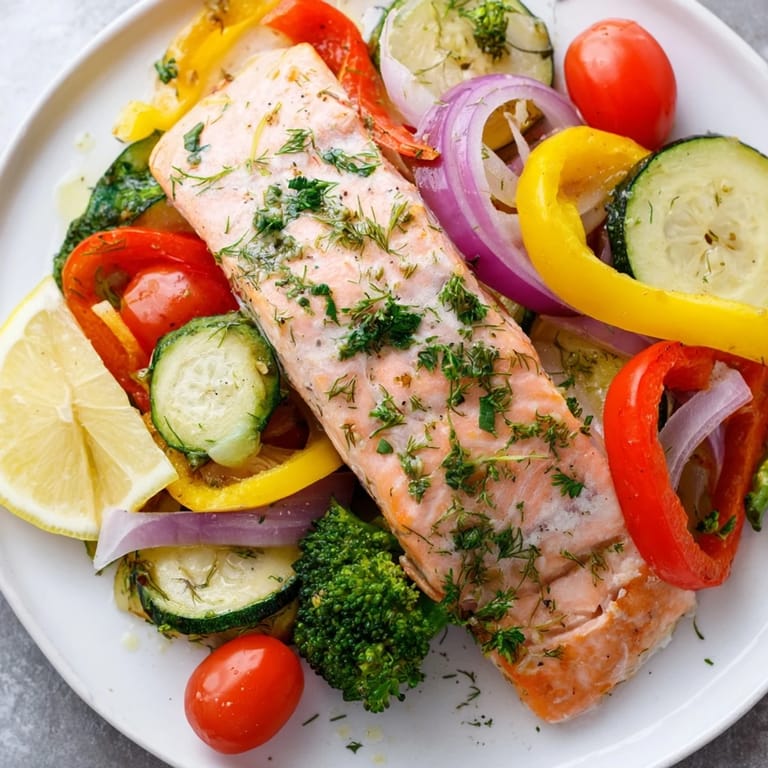
- Slide into the oven and set a timer for 18 to 20 minutes—the salmon is done when it flakes easily with a fork and the flesh has turned opaque salmon-pink throughout. The vegetables should be tender with slightly charred edges.
- Finish and serve:
- Pull the pan from the oven, scatter fresh parsley over everything if you have it, and add lemon wedges for people to squeeze over their portions. Serve immediately while everything is hot and the vegetables still have a little snap to them.
 Save
Save There's a specific joy in that moment when you pull the pan out and the steam rises, carrying the smell of lemon and herbs straight into your face, and you already know it's going to be good. My ten-year-old actually asked for seconds, which in our house is basically a standing ovation.
The Flexibility Factor
The beauty of sheet pan cooking is that this recipe doesn't really care what vegetables you have on hand. Asparagus, green beans, or carrots work beautifully in spring and fall, and honestly, if you've got half a fennel bulb or some Brussels sprouts, those are going straight on the pan too. The salmon and the lemon-dill mixture are the constants; everything else adapts to what's in your crisper drawer and what looks good at the market that day.
Seasoning Beyond the Basics
If the lemon-dill combination feels predictable to you, consider this your permission to experiment. A scatter of capers adds a salty-briny punch that makes people stop mid-bite and wonder what you did. Crumbled feta cheese, a sprinkle of everything bagel seasoning, or even a pinch of smoked paprika can transform the flavor profile into something that feels entirely different while still being impossibly simple.
Wine and Serving Suggestions
A crisp Sauvignon Blanc or light Chardonnay is the obvious pairing, but this dish is also gorgeous with a dry Riesling if you have one open. The acidity in any of these wines cuts through the richness of the salmon and brings out the roasted sweetness of the vegetables, making each bite taste brighter.
- Serve this with crusty bread to soak up any oil and lemon juice left on the pan.
- A simple green salad with vinaigrette on the side adds freshness without making the meal feel heavy.
- Leftovers are excellent cold or at room temperature the next day, perfect for a quick lunch.
 Save
Save This recipe has become my answer whenever someone asks how to cook more at home without spending their evenings in the kitchen. Once you make it, you'll understand why it keeps finding its way back onto the table.
Recipe Questions & Answers
- → What is the best temperature to roast salmon in this dish?
Preheat your oven to 425°F (220°C) for optimal roasting, ensuring tender salmon and perfectly cooked vegetables.
- → Can I substitute the vegetables used in this dish?
Yes, feel free to swap in seasonal vegetables like asparagus, green beans, or carrots to suit your taste and availability.
- → How do I know when the salmon is cooked through?
The salmon flakes easily with a fork and is opaque in the center when fully cooked, typically after 18-20 minutes roasting.
- → What seasoning enhances the flavor of the salmon?
A mixture of olive oil, lemon zest and juice, dill, garlic powder, salt, and black pepper perfectly highlights the salmon's natural taste.
- → Are there any serving suggestions to complement this dish?
Pair with a crisp Sauvignon Blanc or light Chardonnay to balance the bright flavors of salmon and vegetables.