 Save
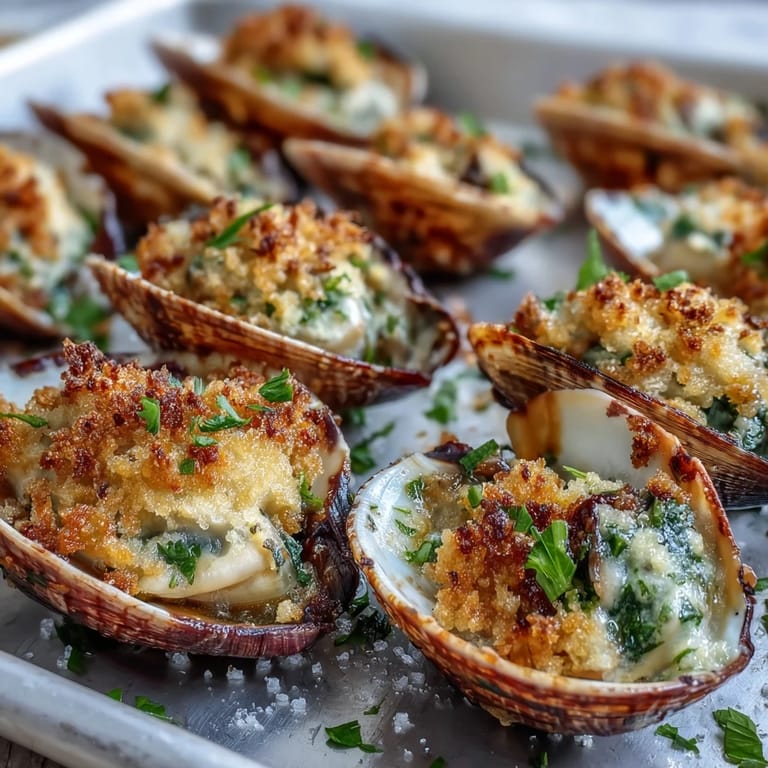
Save My brother brought home a bucket of littlenecks one Saturday morning, still cold from the fish market, and announced we were learning to shuck. The kitchen smelled like brine and butter within the hour. I nicked my thumb twice before I got the rhythm right, but by the time those clams came out of the oven, golden and crackling, I forgot all about the bandage. We stood at the counter, lemon juice running down our wrists, and polished off the entire tray before anyone else got home.
I made these for a small dinner party once, arranging them on a platter over crushed ice like I knew what I was doing. One friend, who claimed she hated clams, ate six before realizing what they were. She paused mid-chew, laughed, and reached for another. That moment taught me more about cooking than any cookbook: sometimes all it takes is a little crunch and a lot of lemon to change someone's mind.
Ingredients
- Littleneck clams: Choose clams that are tightly closed or snap shut when tapped; anything gaping and unresponsive should go straight into the compost.
- Panko breadcrumbs: Japanese-style panko is airier and crisps up better than regular breadcrumbs, giving you that shatteringly crunchy top layer.
- Unsalted butter: Melted butter binds the crumbs and adds richness without overwhelming the delicate clam flavor.
- Extra-virgin olive oil: A tablespoon of good olive oil keeps the topping moist and adds a fruity note that pairs beautifully with lemon.
- Garlic: Mince it finely so it disperses evenly and doesn't burn under the high heat.
- Lemon zest: The zest carries all the aromatic oils; use a microplane and avoid the bitter white pith underneath.
- Fresh parsley: Flat-leaf parsley has more flavor than curly, and it should be chopped just before mixing to keep it vibrant.
- Parmesan cheese: Optional, but a little grated Parm adds a nutty, salty depth that makes the topping even more irresistible.
- Kosher salt and black pepper: Season the panko mixture well; the clams themselves are briny, but the topping needs its own punch.
- Lemon wedges: For serving, because a squeeze of fresh lemon at the table brightens everything one last time.
Tired of Takeout? 🥡
Get 10 meals you can make faster than delivery arrives. Seriously.
One email. No spam. Unsubscribe anytime.
Instructions
- Prep the oven and tray:
- Preheat your oven to 450°F and line a baking sheet with a layer of rock salt or crumpled foil. This creates little nests that keep the clam shells from tipping over and spilling their precious juices.
- Scrub and check the clams:
- Rinse each clam under cold running water, scrubbing away any sand or grit with a stiff brush. Tap any open shells; if they don't close, toss them out.
- Shuck the clams:
- Slide a clam knife between the shells, twisting gently to pop them open, and work the blade around to sever the muscle. Keep the meat and liquid in one half-shell, discarding the top, and nestle each clam onto your prepared tray.
- Make the lemony panko:
- Combine panko, melted butter, olive oil, garlic, lemon zest, parsley, Parmesan, salt, and pepper in a bowl, tossing until the crumbs are evenly coated and fragrant. It should look like damp sand that holds together when you pinch it.
- Top each clam:
- Spoon about a tablespoon of the panko mixture over each clam, pressing lightly to form a little mound. Don't pack it too tight or it won't crisp properly.
- Roast until golden:
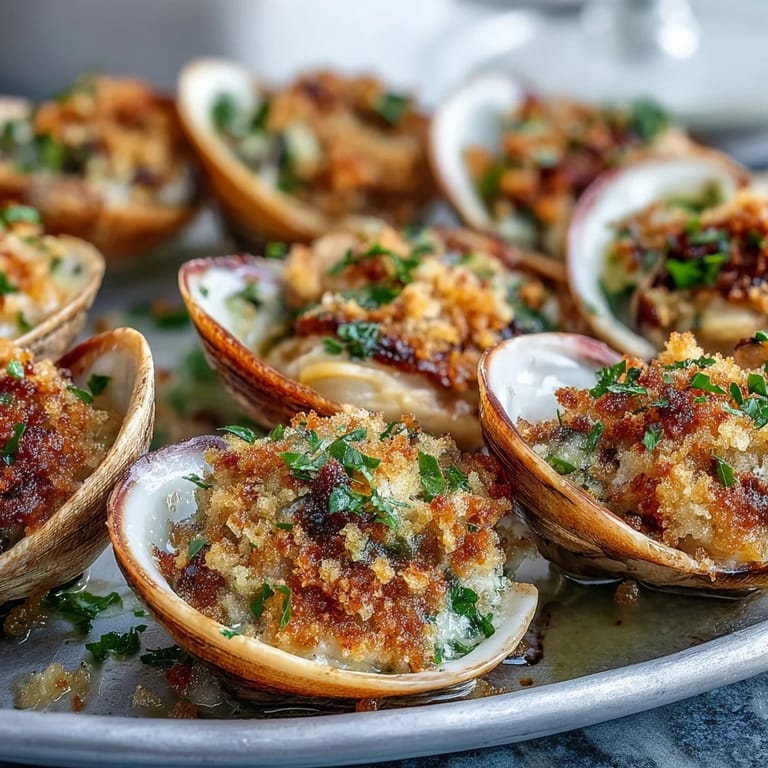
- Slide the tray into the oven and roast for 10 to 12 minutes, watching for the topping to turn golden brown and the clam edges to curl slightly. The smell of toasted garlic and butter will tell you when they're close.
- Serve hot:
- Transfer the clams to a platter, scatter extra parsley over the top if you like, and serve with lemon wedges on the side. Eat them while they're still crackling hot.
 Save
Save One summer evening, I served these on the back porch with a bottle of cold Sauvignon Blanc and a bowl of cherry tomatoes. We didn't talk much, just passed the platter back and forth, licking our fingers and watching the sun drop behind the trees. It wasn't a special occasion, but it felt like one anyway, the kind of meal that makes you remember why you love cooking in the first place.
How to Choose Fresh Clams
At the market, look for clams that are heavy for their size and smell clean, like the ocean on a good day. If they smell fishy or sour, walk away. Ask to see them on ice, not sitting out, and give any open shells a firm tap. The good ones will close up tight, proving they're still alive and fresh. I once bought a bag that looked fine but smelled off when I got home, and I learned my lesson: trust your nose first, always.
Shucking Without Fear
Shucking clams intimidated me for years until a fishmonger showed me the trick: hold the clam in a folded towel, hinge facing out, and wiggle the knife in near the hinge, not the front. Once you feel it pop, the rest is easy. I still go slow, and I still sometimes slip, but the towel catches the blade and my confidence has grown with every dozen. If you're nervous, practice on a few extra clams before your guests arrive, and remember that even wonky-looking shucked clams taste just as good.
Serving and Pairing Ideas
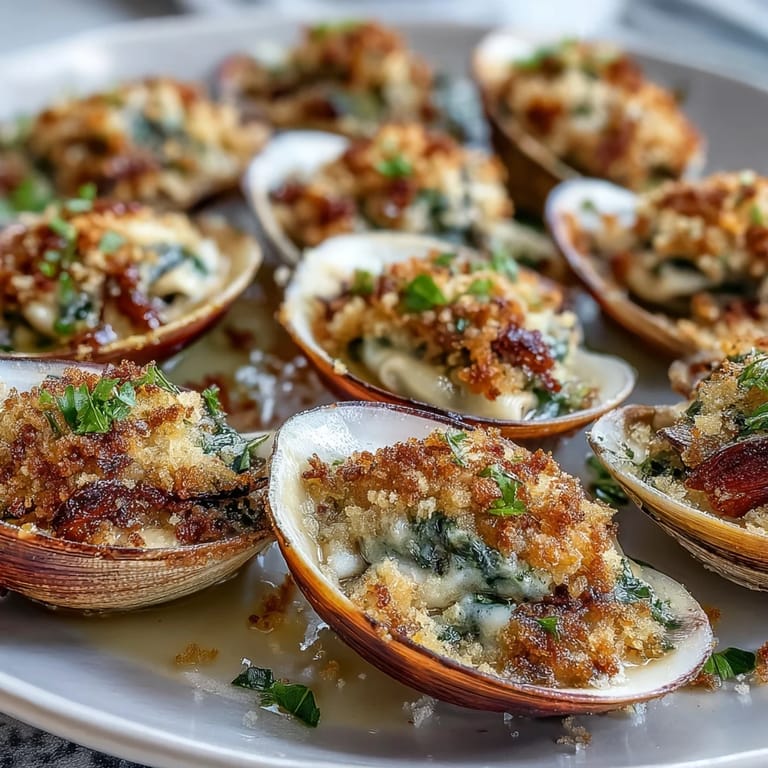
These clams shine as a passed appetizer or a light main course with a green salad and crusty bread to soak up any escaped juices. I like to serve them family-style on a big platter lined with more rock salt for drama. A crisp white wine, something with citrus and minerality, is the classic match, but a cold lager or even a sparkling water with lime works beautifully too.
- Add a pinch of red pepper flakes to the panko for a gentle kick.
- Swap parsley for fresh basil or cilantro if you want a different herbal note.
- Leftover topping can be sprinkled over roasted fish or baked oysters the next day.
 Save
Save Once you get the hang of shucking, these clams become the kind of dish you make on repeat, tweaking the topping each time and feeling a little more confident with every batch. They're proof that simple ingredients, treated well, can feel like a celebration.
Recipe Questions & Answers
- → Can I use frozen clams instead of fresh?
Fresh littleneck clams are recommended for best texture and flavor. If using frozen, ensure they're fully thawed and drained before topping and roasting.
- → How do I know if a clam is fresh and safe to eat?
Fresh clams should be tightly closed or close when tapped. Discard any that remain open, have cracked shells, or emit an unpleasant odor before cooking.
- → What can I substitute for panko breadcrumbs?
Regular dried breadcrumbs work, though panko provides superior crunch. For gluten-free options, use certified gluten-free panko or crushed gluten-free crackers.
- → Can I prepare the topping mixture ahead of time?
Yes, the panko mixture can be prepared several hours in advance and refrigerated. Shuck clams just before roasting for optimal freshness and texture.
- → What wine pairs best with these clams?
Crisp white wines like Sauvignon Blanc, dry Riesling, or Pinot Grigio complement the lemony, garlicky flavors beautifully. Serve well-chilled.
- → How can I keep the clams steady while roasting?
Line your baking sheet with rock salt or crumpled aluminum foil to create stable nests that prevent the half-shells from tipping during roasting.