 Save
Save There's something magical about watching pierogi float to the surface of boiling water—that moment when you realize the dough you kneaded with your hands is about to transform into something tender and delicious. My first time making these, I was at my friend's grandmother's kitchen in a cramped apartment, flour everywhere, and she kept laughing at how seriously I was taking the folding. By the end, we had golden, crispy dumplings that tasted like home, even though it wasn't mine.
I made these for a dinner party once, stressed because I'd never served them to people who weren't Polish, and I remember my neighbor taking a bite, closing her eyes, and saying "this tastes like someone cares about you." That's when I understood these aren't just dumplings—they're an edible way of saying you took time.
Ingredients
- All-purpose flour: The foundation that needs to be kneaded until it becomes satiny; this is where you build the dough's structure, so don't rush it.
- Egg: Binds everything together and gives the dough that tender bite.
- Lukewarm water: Too hot and you'll cook the egg, too cold and the dough fights back—aim for that goldilocks temperature.
- Sour cream: The secret ingredient that keeps the dough soft and forgiving, even if you work it a little too long.
- Salt: For the dough and seasoning everything else—don't be shy with it.
- Unsalted butter: Use it melted in the dough and for pan-frying; it gives pierogi that golden, toasted finish.
- Russet potatoes: Their starch content means they mash into something creamy without needing extra dairy.
- Farmers cheese or ricotta: Choose farmers cheese if you can find it; ricotta works but drain it thoroughly or your filling gets watery.
- Sharp cheddar: The cheese that actually has flavor and prevents the filling from being one-note boring.
- Onion for the filling: Sautéed until golden so it adds sweetness and depth to the potato base.
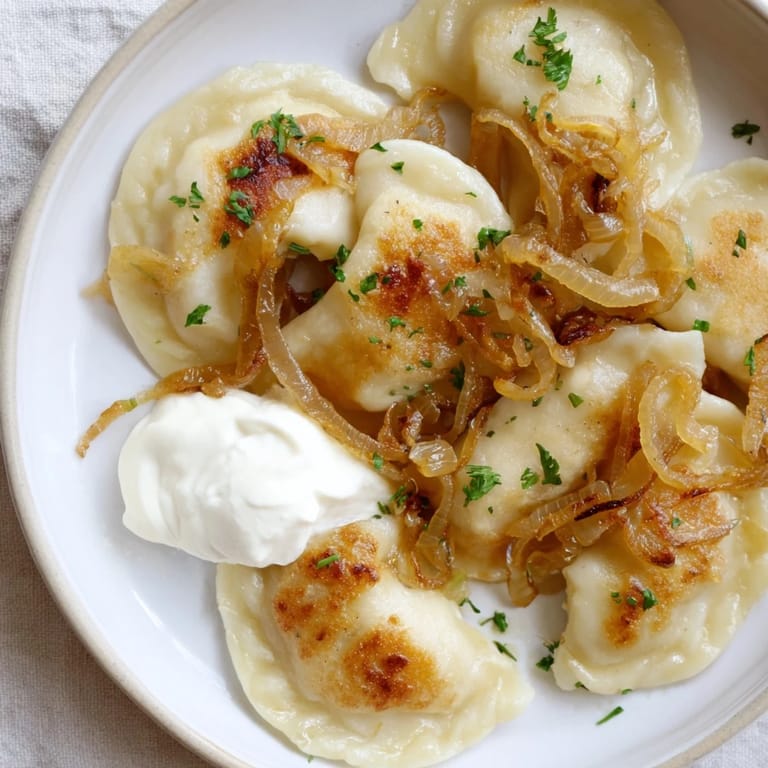
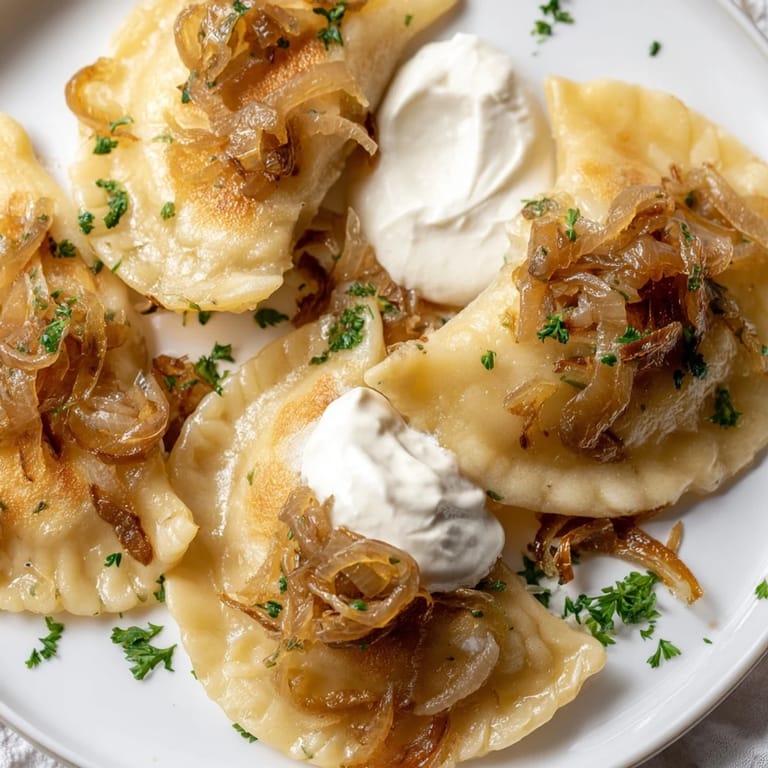
- Large onions to serve: These become your caramelized crown; slice them thin and give them time to turn jammy and dark.
- Sour cream for serving: Cold dollop on hot pierogi is the textural magic that makes this dish work.
Tired of Takeout? 🥡
Get 10 meals you can make faster than delivery arrives. Seriously.
One email. No spam. Unsubscribe anytime.
Instructions
- Mix and knead the dough:
- Make a well in your flour like you're creating a little nest, crack that egg in, add the melted butter and sour cream, then slowly incorporate the water until you have a shaggy mass. Knead it on a floured surface for 5 to 7 minutes—you'll feel it go from rough to smooth and elastic, almost like it's coming alive under your hands. This is the meditative part.
- Let it rest:
- Cover it with a damp towel for 30 minutes; the dough needs time to relax so it won't fight you when you roll it out. This is a good time to start boiling your potatoes.
- Boil and mash the potatoes:
- Cut them into chunks so they cook evenly, about 15 to 18 minutes until a fork slides through easily. Drain really well—wet potatoes make wet filling—then mash until completely smooth with no lumps.
- Build the filling:
- Sauté your diced onion in butter until it's golden and sweet, about 5 minutes, then fold it into the mashed potatoes along with both cheeses. Season generously with salt and pepper, then let it cool completely so it's easier to handle.
- Roll and cut:
- Dust your surface generously with flour and roll the dough to about ⅛-inch thickness—thin enough to be tender but thick enough to hold the filling. Use a 3-inch cutter or even a drinking glass to cut circles and cover them with a towel so they don't dry out.
- Fill and seal:
- Put a heaping teaspoon of filling in the center of each circle, fold it in half, and pinch the edges firmly so they're completely sealed—any opening means water gets in during boiling. Think of it like you're protecting something precious.
- Boil gently:
- Drop them into simmering salted water in batches—too many at once drops the temperature—and wait until they float, then give them 1 to 2 minutes more. Remove them with a slotted spoon and set them aside; they'll look delicate but they're actually quite resilient.
- Caramelize the onions:
- This can't be rushed or faked—melt the butter over medium-low heat, add your sliced onions, and let them cook for 20 to 25 minutes, stirring often, until they're deeply golden and smell incredible. This is the magic that makes everything taste richer.
- Pan-fry until golden:
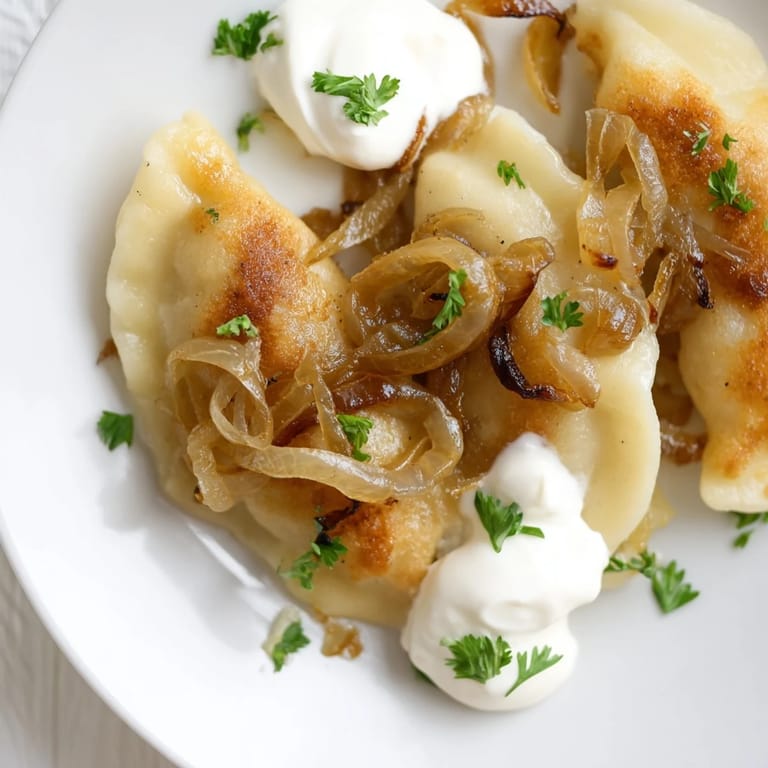
- In the same skillet, fry the boiled pierogi in batches, 2 to 3 minutes per side, until the outside is crispy and golden and they smell like butter and toasted dough. This is where they go from tender to unforgettable.
 Save
Save I'll never forget the first time someone asked me for the recipe—it felt like being asked for something precious. Now when I make them, I think about all the times these have shown up on tables as comfort food, peace offerings, and everyday celebrations.
Freezing and Make-Ahead Magic
The beauty of pierogi is that they freeze beautifully uncooked, which means you can spend an hour one afternoon assembling them and then have dinner ready in 15 minutes for weeks afterward. Lay them on a tray, freeze solid, then transfer to a freezer bag and they'll keep for up to 2 months. Cook them straight from frozen—just add a minute or two to the boiling time—and no one will know they weren't made fresh that day.
Filling Variations Worth Exploring
Once you've mastered the potato and cheese version, the dough becomes a canvas. Sauerkraut with mushrooms brings an earthy, tangy complexity, or you can go with minced meat if you want to break away from vegetarian. Even just changing the type of cheese—maybe gruyere for something nuttier—shifts the whole vibe of the dish without any real extra effort.
Serving and Pairing Ideas
Pierogi want caramelized onions and sour cream—that's the trifecta—but they also appreciate a crispy Polish lager or a dry white wine alongside them. Some people add crispy bacon to their caramelized onions, which makes them decidedly non-vegetarian but undeniably delicious, and fresh chives or parsley scattered on top adds a bright finish that cuts through the richness.
- Make double the caramelized onions because there will never be enough.
- Sour cream should be cold against hot pierogi for maximum textural contrast.
- These are best served immediately after pan-frying, while they're still crispy and steaming.
 Save
Save These dumplings have a way of bringing people together, whether you're making them for a crowd or just for yourself on a quiet night. There's something deeply satisfying about turning flour, potatoes, and cheese into something this good.
Recipe Questions & Answers
- → What type of cheese is best for the filling?
Farmers cheese or well-drained ricotta combined with sharp cheddar gives a creamy, flavorful filling that balances well with the potatoes.
- → How can I prevent the dough from sticking?
Use a floured surface when rolling out the dough and dust the dough lightly to avoid sticking while shaping the dumplings.
- → What is the best way to cook the dumplings before frying?
Boil them in salted water until they float, indicating they are cooked through, then remove with a slotted spoon before pan-frying.
- → How do I achieve sweet caramelized onions?
Cook the sliced onions slowly in butter over medium-low heat, stirring often for about 20-25 minutes until deeply golden and sweet.
- → Can the dumplings be frozen for later?
Yes, freeze uncooked dumplings on a tray, then transfer to bags. They can be stored frozen for up to two months.