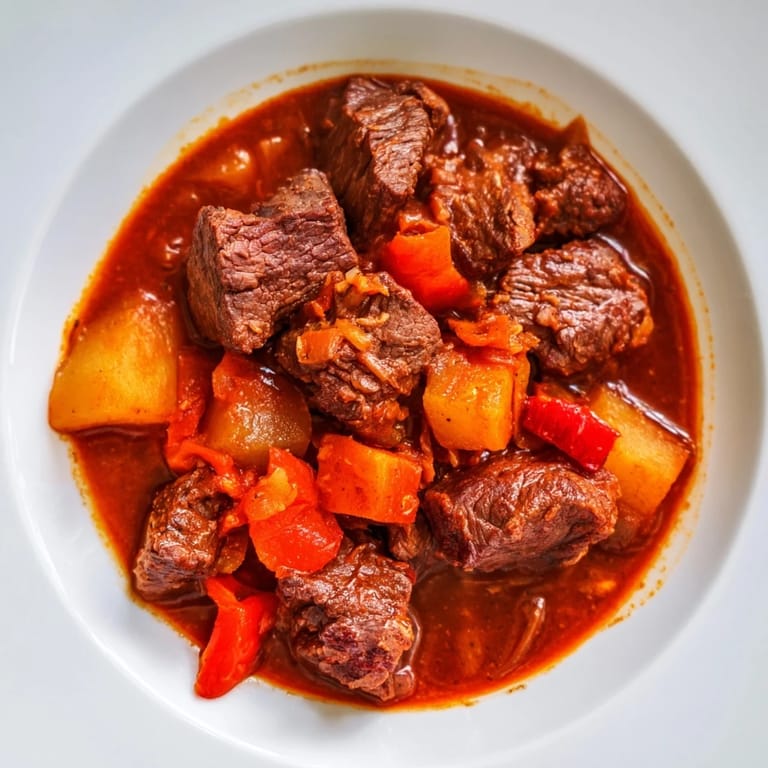
 Save
Save I discovered real Hungarian goulash on a gray October afternoon at a Budapest market, watching an elderly vendor stir an enormous pot with the confidence of someone who'd made it a thousand times. She caught me staring and smiled, handing me a small wooden spoon to taste—and that first sip changed everything. The paprika wasn't just a spice; it was warmth, history, and something deeply satisfying all at once. Years later, I finally understood what she was making, and now whenever I simmer this stew, I feel like I'm sitting in that market again, steam rising around us both.
The first time I made this for my partner, I was so nervous about the paprika—I'd read somewhere about how easy it is to burn—that I practically stood over the pot like a nervous parent. When he tasted it and went quiet for a moment, I thought I'd ruined it, but he was just savoring it, eyes closed. He asked for seconds before I'd even sat down, and that's when I realized this stew had become something I'd make over and over.
Ingredients
- Beef chuck (2 lbs, cut into 1-inch cubes): This cut has just enough marbling and connective tissue to become incredibly tender and create a silky broth as it simmers—don't use anything leaner or you'll end up with dry meat.
- Hungarian sweet paprika (3 tbsp): This is non-negotiable; regular paprika won't give you that distinctive warm, slightly sweet flavor that makes goulash Hungarian and not just beef stew.
- Onions (2 large, finely chopped): They're the flavor foundation and will practically dissolve into the broth, making everything taste richer.
- Carrots (2 medium, sliced) and red bell pepper (1 large, diced): These add natural sweetness and texture—the pepper especially gives you those moments of brightness between bites of tender beef.
- Garlic (2 cloves, minced): Just enough to whisper in the background without overpowering the paprika's starring role.
- Potatoes (2 medium, optional): I usually add them because they soak up all that amazing broth and turn almost creamy in the center.
- Caraway seeds (1 tsp) and marjoram (1 tsp dried): These are the secret—they're traditional for a reason, adding an earthy, slightly peppery note that you can't quite identify but absolutely makes the dish.
- Beef broth (4 cups) and tomato paste (2 tbsp): The broth becomes the soul of this stew, and the tomato paste adds umami and helps bind everything together.
- Oil or lard (2 tbsp): Lard will give you the most authentic flavor, but good vegetable oil works just fine.
Tired of Takeout? 🥡
Get 10 meals you can make faster than delivery arrives. Seriously.
One email. No spam. Unsubscribe anytime.
Instructions
- Get Your Pot Ready and Start with the Onions:
- Heat your oil in a large heavy-bottomed pot over medium heat—you want it shimmering but not smoking. Add your chopped onions and let them soften and turn golden, stirring occasionally, about 8 minutes; you'll know they're ready when the kitchen starts to smell sweet.
- Add Garlic and Let It Wake Up:
- Stir in your minced garlic and cook for just about 1 minute until it's fragrant; this is your moment to make sure it doesn't brown or it will taste bitter.
- Brown the Beef on All Sides:
- Add your beef cubes and let them sit for a minute or two before stirring, so they get a nice golden crust; this takes about 5 minutes total and creates all that deep flavor.
- The Most Important Step: Add the Paprika Carefully:
- This is where magic happens—sprinkle the paprika over the meat and onions and stir quickly and constantly for about 30 seconds so it coats everything and releases its color and flavor without burning. If you let it sit too long without stirring, it'll taste harsh and bitter instead of warm and sweet.
- Build the Flavor Base:
- Stir in your tomato paste, caraway seeds, marjoram, black pepper, and salt, mixing until everything is combined; you'll see the paste break down and coat the meat.
- Add the Rest of Your Vegetables and Broth:
- Add your carrots, bell pepper, and bay leaf, then pour in the beef broth, scraping up any browned bits stuck to the bottom of the pot because those are pure flavor. Bring everything to a simmer.
- The Long, Slow Cook:
- Cover the pot and let it simmer gently on low heat for 1 hour, stirring occasionally; the beef will start to yield and soften, and the broth will become deeper and richer.
- Final Push with Potatoes:
- If you're using potatoes, add them now and continue simmering uncovered for another 45 to 60 minutes until the beef is completely tender and the stew has thickened slightly. Without potatoes, just let it simmer a bit longer until you like the consistency.
- Taste, Adjust, and Finish:
- Remove the bay leaf, taste the stew, and add more salt if it needs it; this is your moment to make sure it's exactly how you want it.
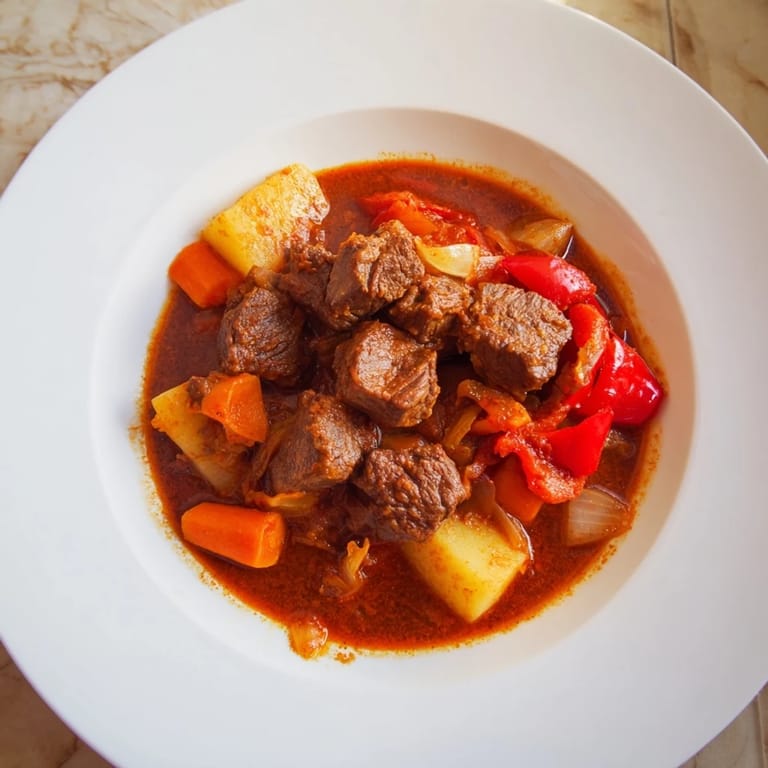 Save
Save There's a moment near the end of cooking when you lift the lid and the steam rises up and hits your face, and you know you've made something worth making. That's when the house smells like Hungary and comfort and home all at once, and it doesn't matter if you've been to Budapest or if you're just cooking in your own kitchen—something in you recognizes it as real.
Serving and Pairing
Goulash wants company—crusty bread for soaking up the broth, or egg noodles if you want something more substantial. I've also had it with traditional Hungarian csipetke dumplings, which are these little pinched bits of dough that cook right in the stew and absorb all that paprika-rich broth. The stew is thick enough to stand on its own, but it also embraces whatever you want to pair it with, making it endlessly flexible for different moods and gatherings.
Storing and Reheating
Leftovers genuinely taste better—I mean this sincerely—because the flavors have time to deepen and settle overnight in the fridge. You can store it for up to four days and simply reheat it gently on the stove with a splash of broth if it's thickened too much. It also freezes beautifully for up to three months, so making a double batch and freezing half is a gift to your future self.
Making It Your Own
This is a dish that welcomes your adjustments—add a pinch of hot paprika if you like heat, throw in some mushrooms if that speaks to you, or skip the potatoes if you prefer a brothier version. I once made it with a bit of sour cream swirled in at the end because I had some on hand, and it created this luxurious richness that wasn't traditional but was absolutely delicious.
- For heat, add a small chopped chili pepper or a pinch of hot paprika along with the sweet paprika.
- Use good quality Hungarian paprika from a source you trust—this dish lives or dies by that one ingredient.
- Taste and adjust as you go near the end of cooking; stew seasoning can be finicky, and what works for one batch might need tweaking the next time.
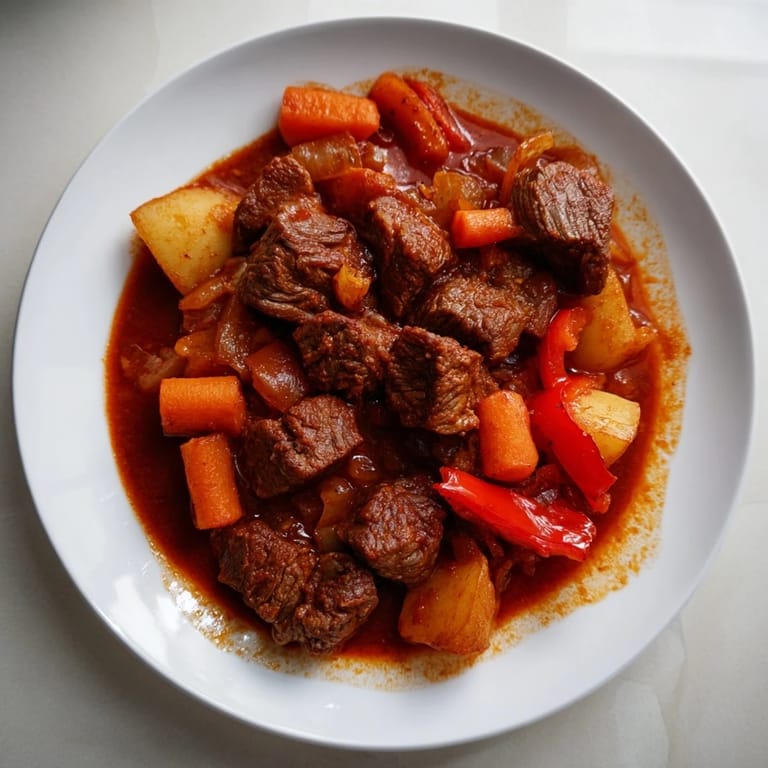 Save
Save Make this goulash and you'll understand why it's been feeding people for generations. It's the kind of dish that turns a regular day into something worth remembering.
Recipe Questions & Answers
- → What cut of beef is best for this stew?
Beef chuck is ideal due to its marbling and tenderness when slow-cooked, which creates a rich, flavorful stew.
- → Can I make this stew spicier?
Yes, adding a pinch of hot paprika or chopped chili peppers will provide a spicy kick without overpowering the original flavors.
- → Are potatoes necessary in the stew?
Potatoes are optional and add extra heartiness; you can omit them for a lighter but equally rich dish.
- → What sides pair well with this stew?
Rustic bread, egg noodles, or traditional Hungarian dumplings complement the stew’s hearty, savory taste perfectly.
- → How long should I simmer the stew for tender meat?
Simmering on low heat for about two hours ensures the beef becomes tender and the flavors fully develop.