 Save
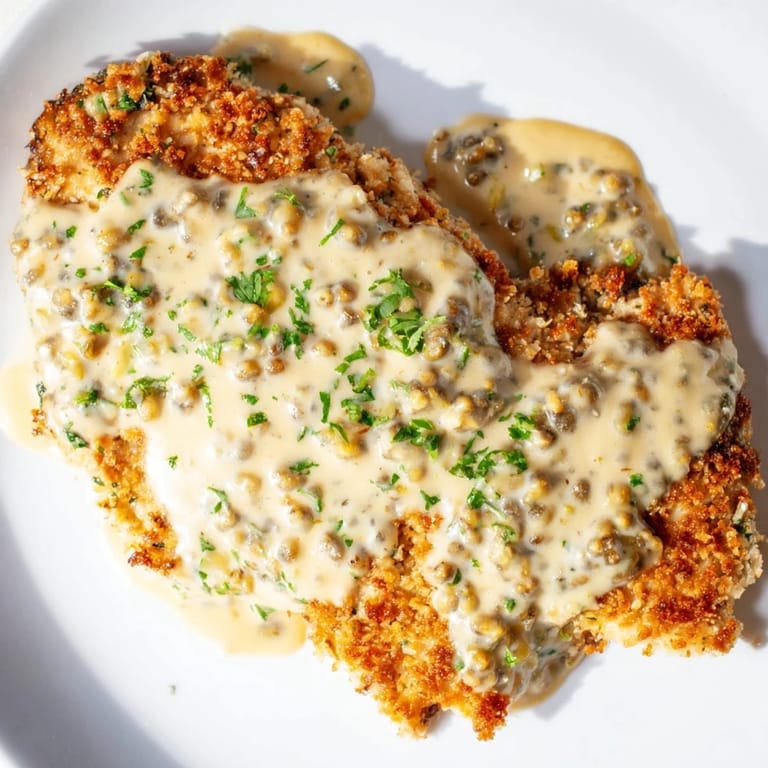
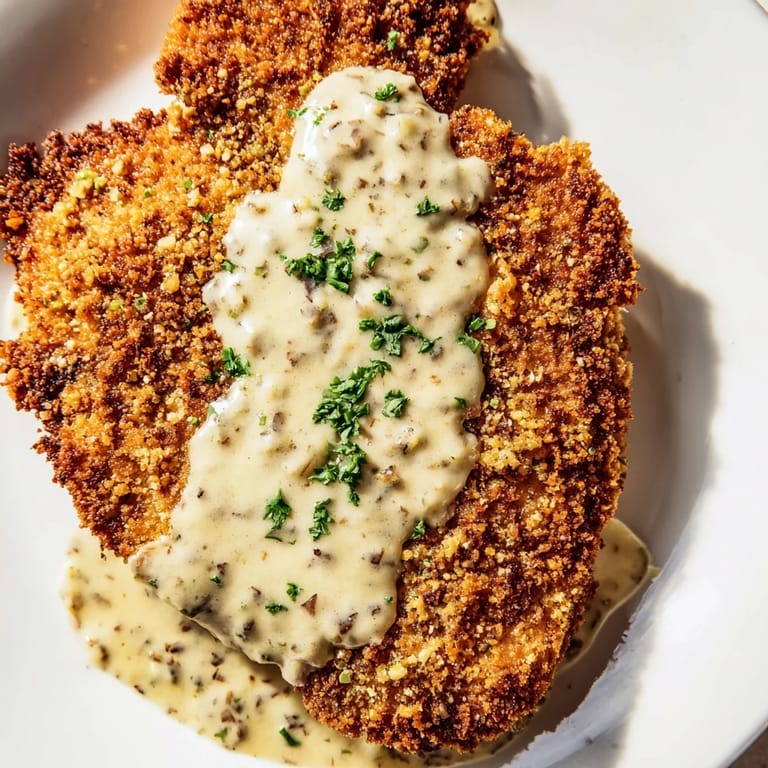
Save There was a Tuesday night when my roommate came home exhausted from work, and I wanted to make something that felt restaurant-quality but wouldn't trap me in the kitchen for hours. That's when crispy chicken with garlic cream sauce became my go-to move. The kitchen filled with the smell of butter and garlic sizzling in the pan, and watching her face light up when that creamy sauce hit the plate—that moment taught me that the best meals don't require complicated techniques, just good ingredients and a little patience.
I made this for my sister's book club years ago, and someone asked if I'd gone to culinary school. The truth was simpler: I'd burned three batches of chicken before figuring out that medium-high heat and patience were the real secrets. Watching them all go back for seconds of sauce—scraping their plates clean—that's when I knew this recipe had staying power.
Ingredients
- Boneless, skinless chicken breasts (4): Pound these thin so they cook evenly and stay moist. Uneven thickness is the enemy of crispy, tender chicken.
- All-purpose flour (1/2 cup): This is your base layer, helping the egg and breadcrumb coating stick. Don't skip it or rush past it.
- Eggs (2 large): Beat these well—they're the glue that holds everything together.
- Panko breadcrumbs (1 cup): Panko gives you those golden, crunchy edges that regular breadcrumbs can't match.
- Grated Parmesan cheese (1/2 cup): Half goes in the coating for nutty flavor and crunch, half into the sauce for richness.
- Olive oil (1/4 cup): Use a neutral oil with a high smoke point if you prefer, though olive oil adds its own warmth here.
- Unsalted butter (3 tablespoons): This builds the foundation of your sauce—don't use salted or you'll throw off the balance.
- Fresh garlic (6 cloves, minced): Mince it yourself if you can; jarred garlic loses its punch in the pan.
- Heavy cream (1 cup): This is what makes the sauce luxurious. Temperature matters—cold cream can break if added to a too-hot base.
- Chicken broth (1/2 cup): This keeps the sauce from becoming too heavy and adds subtle depth.
- Fresh parsley (2 tablespoons plus extra): The final sprinkle of green brightens everything and makes it look intentional.
Tired of Takeout? 🥡
Get 10 meals you can make faster than delivery arrives. Seriously.
One email. No spam. Unsubscribe anytime.
Instructions
- Pound and season your chicken:
- Lay each breast between two sheets of plastic wrap and pound with steady, even strokes until it's about 1/2-inch thick all the way across. This is the move that prevents dry, rubbery chicken. Season both sides generously with salt and pepper.
- Set up your breading station:
- Three shallow bowls in a row: flour in the first, beaten eggs in the second, panko mixed with Parmesan in the third. This assembly line keeps your hands cleaner and makes the process smooth.
- Coat each breast:
- Dredge the chicken in flour, shaking off excess. Dip it in egg, then press it gently into the panko mixture, making sure the coating adheres evenly. Don't rush this step—a well-coated chicken is what gives you that shatter when you bite into it.
- Fry to golden:
- Heat olive oil in a large skillet over medium-high heat until it shimmers. Add the chicken and listen for that sizzle—it should sound confident. Cook 4 to 5 minutes per side until the crust is deep golden and the internal temperature reaches 165°F.
- Rest and tent:
- Remove the chicken to a clean plate and cover loosely with foil. This keeps it warm while you build the sauce and prevents carryover cooking from making it tough.
- Build the sauce base:
- Lower the heat to medium and add butter to the same skillet. Once it foams, add minced garlic and stir constantly for about a minute—you want fragrant, not brown. The browned bits stuck to the pan are liquid gold; don't let them burn.
- Deglaze and simmer:
- Pour in the heavy cream and chicken broth, scraping up every flavorful bit stuck to the pan. Bring it to a gentle simmer and let it bubble softly for 3 to 4 minutes until it thickens just enough to coat the back of a spoon.
- Finish with flavor:
- Stir in salt, pepper, grated Parmesan, and fresh parsley. Give it another minute on the heat to let the flavors meld, then taste and adjust seasoning if needed.
- Bring it together:
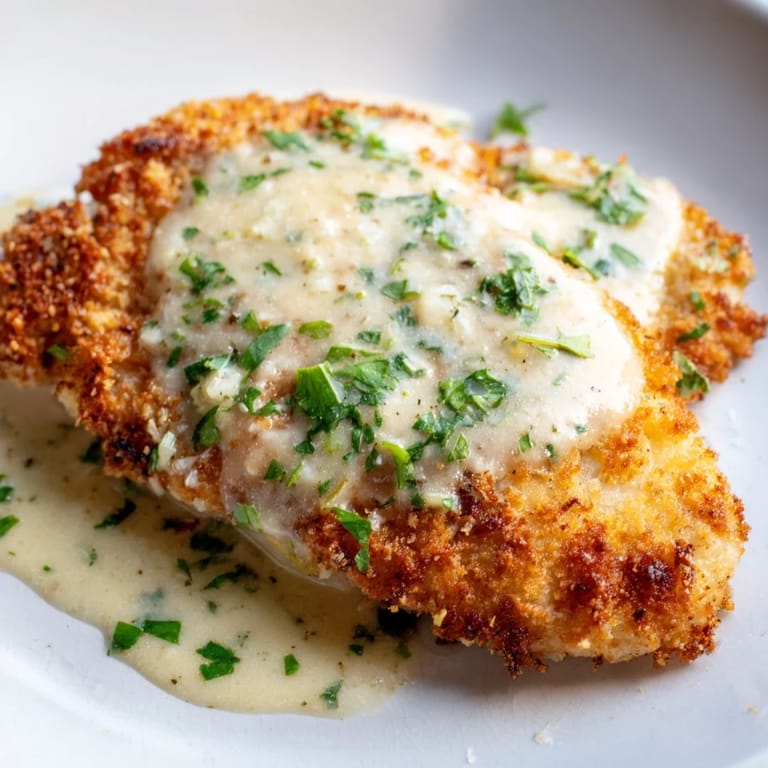
- Return the chicken breasts to the skillet, spoon that creamy sauce generously over the top, and let it warm through for 1 to 2 minutes. Garnish with extra parsley and serve immediately while everything is still hot.
 Save
Save The moment I knew this recipe was special was when my partner, who usually eats in silence, started talking about how the textures worked together—the crunch, the creamy sauce, the tenderness underneath. That's when I realized I'd stumbled onto something that goes beyond feeding someone; it actually makes them pause and pay attention.
The Breading Technique That Changes Everything
The difference between breaded chicken that's soggy and breaded chicken that stays crispy for hours comes down to one thing: respecting the breading process. When you dredge in flour first, you're creating a dry base that helps the egg adhere. Skip that step and your coating slides off in the pan. When you press the panko mixture onto the egg wash, you're locking it in place. The Parmesan isn't just for flavor; it browns and creates tiny anchor points that hold everything together even after the chicken sits for a few minutes.
Making the Sauce Without Fear
Cream sauces intimidate people because they seem fragile, but this one is forgiving if you respect a few rules. The butter melts first and gives you a base that's stable. The garlic needs only a minute—you're waking it up, not cooking it to death. When you add the cream, you're combining two ingredients that actually want to work together, especially when you've already got savory broth and umami from the pan drippings. The sauce thickens naturally as it simmers because cream reduces and tightens; you're not adding cornstarch or anything weird. The Parmesan goes in at the end and melts into silky richness without any chance of breaking.
Serving and Variations That Work
This dish is naturally flexible, which is part of why it works on busy nights. Mashed potatoes are the traditional route—they soak up the sauce like they were made for it. Pasta, especially a wide ribbon like pappardelle, catches the sauce beautifully. Even steamed green beans or roasted broccoli adds balance if you want something lighter. If you want to brighten the sauce, a squeeze of fresh lemon juice at the very end cuts through the richness without overwhelming the dish. For a lighter version, swap half-and-half for the heavy cream, though you'll lose some of that luxurious mouthfeel.
- Double-coat the chicken by repeating the egg and panko steps if you want maximum crunch and are willing to add two minutes per side of cooking time.
- Stir in fresh thyme or sage into the sauce if you have it on hand—herbaceous notes elevate everything.
- Make extra sauce and keep it warm in a small pot; people always want more than you expect.
 Save
Save This recipe has become my answer to the question of what to make when you want something that tastes like care without it feeling like work. It's proof that the best dishes don't need to be complicated—they just need respect for the ingredients and confidence in the process.