 Save
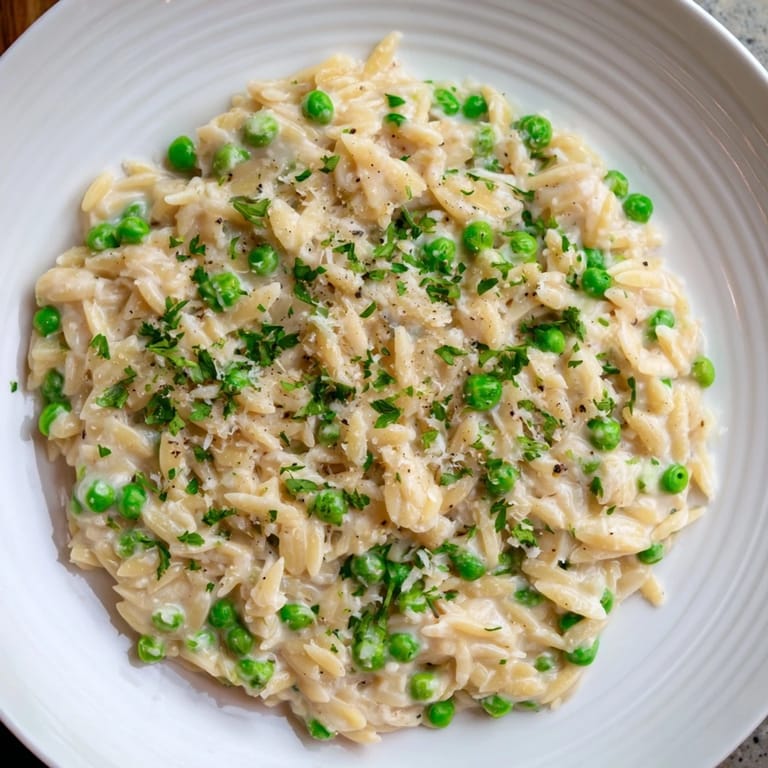
Save I stumbled onto this dish on a Wednesday night when the fridge was nearly bare and I needed something warm fast. All I had was a box of orzo, a bag of frozen peas, and some Parmesan. Twenty minutes later, I was scraping the pan clean. The creaminess surprised me—how something so simple could taste so indulgent without much fuss.
The first time I made this for friends, I doubled the batch and set it on the table in the skillet. Everyone went quiet for a minute, just twirling their forks. One friend said it reminded her of risotto but without the constant stirring. That became my favorite compliment—comfort food that doesn't ask too much of you.
Ingredients
- Orzo pasta: These little rice-shaped grains soak up liquid like a dream and turn creamy without any extra starch, making them perfect for this kind of dish.
- Unsalted butter: I always use unsalted so I can control the salt level myself, especially since Parmesan brings its own saltiness.
- Heavy cream: This is what makes the sauce luxurious and coats every piece of orzo in that silky richness.
- Freshly grated Parmesan cheese: Pre-grated never melts the same way, so I grate it myself right before cooking for the smoothest sauce.
- Low-sodium vegetable broth: It keeps the base flavorful without overwhelming the delicate sweetness of the peas.
- Whole milk: I use this alongside the broth to add creaminess early on, so the orzo cooks evenly.
- Frozen green peas: They add a pop of color and sweetness, and thawing them first means they don't cool down the pan.
- Shallot: Milder than onion, it melts into the butter and gives the dish a subtle aromatic base.
- Garlic: Just two cloves, minced fine, bloom in the butter and make the whole kitchen smell incredible.
- Salt, black pepper, and nutmeg: The nutmeg is optional, but a tiny pinch adds warmth that surprises people in the best way.
- Fresh parsley: A handful chopped at the end brightens everything up and makes it look like you really tried.
Tired of Takeout? 🥡
Get 10 meals you can make faster than delivery arrives. Seriously.
One email. No spam. Unsubscribe anytime.
Instructions
- Start with the aromatics:
- Melt the butter in a large skillet over medium heat, then add the shallot and let it soften for a few minutes until it smells sweet. Toss in the garlic and stir for just 30 seconds so it doesn't burn.
- Toast the orzo:
- Add the orzo to the pan and stir it around for a minute or two until it smells nutty and starts to turn golden at the edges.
- Simmer with the liquids:
- Pour in the vegetable broth and milk, bring it to a gentle simmer, then lower the heat. Stir often for 8 to 10 minutes until the orzo is tender and most of the liquid is absorbed.
- Fold in the peas:
- Add the thawed peas and cook for another 2 to 3 minutes until they're heated through and bright green.
- Finish with cream and cheese:
- Stir in the heavy cream, Parmesan, salt, pepper, and nutmeg if you're using it. Keep stirring gently until the cheese melts and the sauce turns glossy and thick, about 2 to 3 minutes.
- Taste and garnish:
- Remove the pan from the heat, taste it, and add more salt if needed. Sprinkle with fresh parsley and serve right away while it's still creamy.
 Save
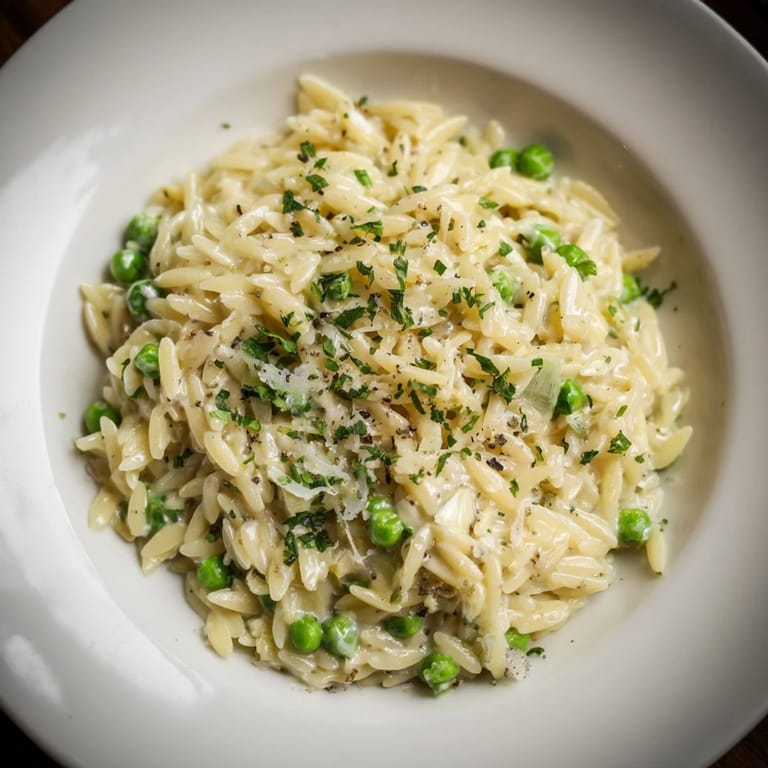
Save I remember serving this on a rainy Sunday afternoon, steam rising from the skillet, and my partner saying it felt like a hug in a bowl. That's when I realized some recipes aren't just about feeding people—they're about making a moment feel warmer.
Serving Suggestions
This orzo works beautifully on its own as a light vegetarian main, but I've also plated it under grilled chicken thighs or next to pan-seared salmon. If you want to stretch it further, toss in some sautéed mushrooms or baby spinach at the end. A squeeze of lemon juice right before serving wakes up all the flavors.
Storage and Reheating
Leftovers keep in the fridge for up to three days in a sealed container. The orzo will soak up more liquid as it sits, so when you reheat it, add a splash of milk or broth and stir over low heat until it loosens up again. I've even eaten it cold straight from the container, though it's best warm.
Variations and Swaps
You can swap the peas for asparagus tips, baby spinach, or even roasted cherry tomatoes if that's what you have. For a lighter version, use half-and-half instead of heavy cream. If you want a little brightness, stir in a splash of white wine right after toasting the orzo, then let it cook off before adding the broth.
- Try stirring in a handful of fresh basil or mint at the end for an herby twist.
- Add a pinch of red pepper flakes if you like a subtle kick of heat.
- Top with crispy breadcrumbs for a crunchy contrast to the creamy orzo.
 Save
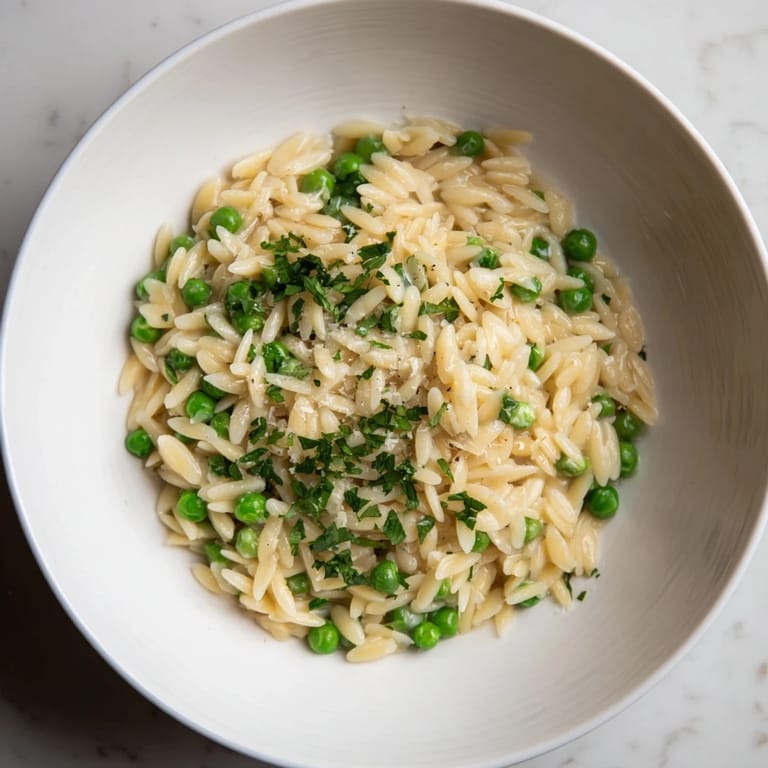
Save This dish has become my go-to when I want something comforting without spending an hour in the kitchen. I hope it brings the same kind of warmth to your table.
Recipe Questions & Answers
- → Can I substitute frozen peas with fresh vegetables?
Yes, fresh peas or alternatives like baby spinach or asparagus tips work well, adding vibrant flavor and texture.
- → How can I make this dish lighter?
Using half-and-half instead of heavy cream reduces richness while maintaining creaminess.
- → What is the best way to achieve al dente orzo?
Simmer the orzo uncovered, stirring frequently until most liquid is absorbed but pasta remains firm yet tender.
- → Can this dish be prepared ahead of time?
It’s best served fresh, but leftovers keep well refrigerated. Reheat gently adding a splash of milk to restore creaminess.
- → Are there any suggested garnishes?
Chopped fresh parsley adds color and a hint of freshness enhancing the savory creamy flavors.
- → Can I add protein to make it a fuller meal?
Pairing with grilled chicken or fish complements the creamy orzo for a balanced plate.