 Save
Save My neighbor burst through the kitchen door one afternoon with a container of golden samosas, and the aroma that followed was pure magic—crispy, spiced, utterly impossible to resist. She'd just gotten an air fryer and was experimenting, and watching her pull these perfectly bronzed triangles from the basket made me understand why samosas have been a beloved snack across generations. What struck me most was how she served them with a bright, vibrant mint chutney she'd whizzed together in minutes, and suddenly this traditional Indian treat felt both nostalgic and refreshingly modern. I asked for the recipe that very evening, and after a few trial runs in my own kitchen, I realized the air fryer had transformed this from a deep-fried indulgence into something I could actually make on a weeknight without guilt.
I still think about the first time I served these to my partner's family—his mother grew up eating samosas from street vendors in Delhi, and I was genuinely nervous about how my air-fried version would land. But when she bit into one and closed her eyes, then smiled and said, "This is very good," something in the kitchen shifted. She walked me through a few subtle adjustments to the spice balance, and we spent the next hour making batch after batch, her stories about eating samosas by the roadside weaving through our conversation like the steam rising from the filling.
Ingredients
- All-purpose flour: The backbone of a tender, flaky dough; don't skip the resting time because it allows the gluten to relax and makes rolling effortless.
- Vegetable oil: Use a neutral oil for the dough and filling; it keeps everything light and lets the spices shine without adding competing flavors.
- Potatoes: Choose waxy varieties like red potatoes if you can, as they hold their shape better when boiled and mashed than starchy russets.
- Cumin seeds: Toast them briefly in hot oil before adding other ingredients—this releases their earthy oils and deepens the entire filling's flavor profile.
- Garam masala: This warm spice blend is essential, but taste your filling before adding the full amount since spice brands vary in intensity.
- Fresh mint and cilantro: Don't substitute dried herbs here; the chutney's magic comes from the bright, almost grassy freshness that only living leaves can deliver.
- Green chili: Start with half and add more to taste—some days your hand feels braver than others, and that's perfectly fine.
Tired of Takeout? 🥡
Get 10 meals you can make faster than delivery arrives. Seriously.
One email. No spam. Unsubscribe anytime.
Instructions
- Mix and Rest the Dough:
- Combine flour and salt, then work in oil with your fingertips until the texture resembles breadcrumbs with a few larger pieces still visible. Add water gradually, kneading until you have a smooth, slightly firm dough that doesn't stick to your hands—this takes patience, but rushing it leads to tears later when rolling.
- Sauté and Season the Filling:
- Heat oil in a pan and listen for the cumin seeds to crackle and pop, signaling they're releasing their flavor into the oil. Add onions, ginger, and chili, cooking until softened and fragrant, then fold in your boiled vegetables along with the spices, tasting as you go so the heat and warmth build gradually rather than shocking your palate all at once.
- Shape the Samosas:
- Divide your rested dough into six balls and roll each into a thin oval—think crepe-thin, but don't panic if it's not perfect because slight thickness variations actually add rustic charm. Cut each oval in half, then transform each semicircle into a cone by wetting the straight edges and pressing them together, creating a little pouch ready to cradle the filling.
- Fill with Care:
- Spoon about two tablespoons of filling into each cone, then pinch the open top closed—this is where your hands become a seal, and a little moisture from the filling helps bind everything together. Don't overstuff or the seams will burst open during air frying, leaving you with a sad, leaking samosa.
- Air Fry Until Golden:
- Brush the samosas lightly with oil, arrange them in your air fryer basket without stacking or crowding, and let them fry at 375°F for 15 to 18 minutes, turning halfway through so both sides develop that burnished, crackling exterior. The sound they make when golden—a crispy whisper—tells you everything you need to know about doneness.
- Blend the Chutney:
- Combine mint, cilantro, chili, ginger, lemon juice, sugar, salt, and a splash of water in a blender, pulsing until you reach a smooth paste with just a hint of texture. Taste and adjust the salt and lemon until the chutney sings—it should be bright and herbaceous, with the chili heat arriving gently rather than all at once.
 Save
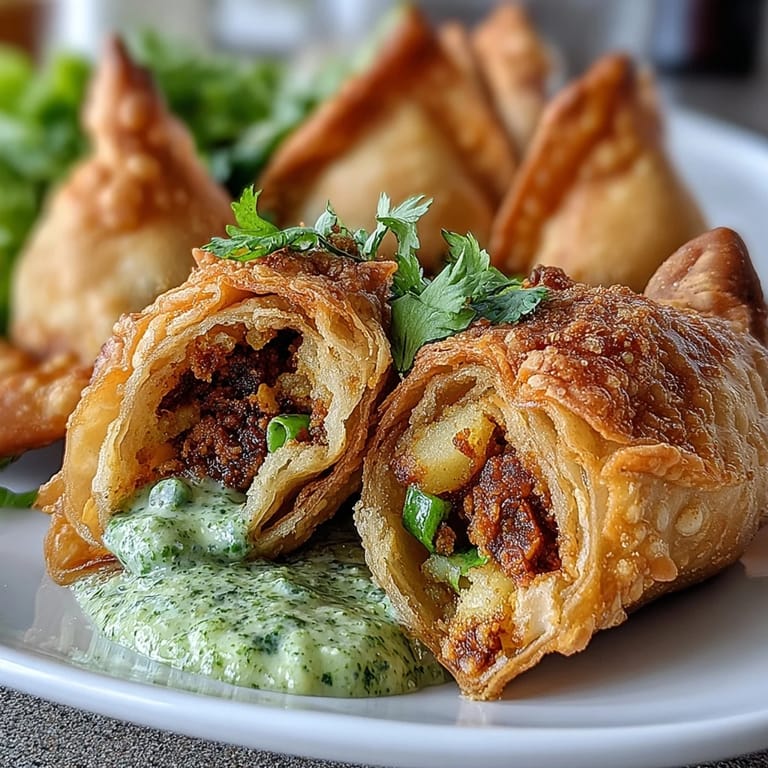
Save There's a moment just after pulling a batch from the air fryer when you break one open and steam escapes alongside the fragrance of cumin, ginger, and warm spices—and in that moment, the dish stops being just food and becomes permission to slow down. Dipping that still-warm samosa into mint chutney feels like both a small celebration and an ancient ritual all at once.
Making the Dough Foolproof
The dough is forgiving once you understand that you're looking for texture more than a specific water amount, since humidity in your kitchen will change how much liquid you actually need. I keep a small cup of water beside my bowl and add it in half-teaspoon increments, pinching the dough between my fingers to feel when it transitions from crumbly to cohesive—this tactile approach beats any written measurement.
Filling Flavors and Flexibility
The vegetable filling is honestly a canvas—you could add corn, cauliflower, or even leftover cooked chickpeas without breaking the dish. The spice ratios matter more than the exact vegetables, so if you've got a carrot but no peas one day, your samosas will still sing as long as the cumin, garam masala, and fresh chili are balanced and singing in harmony.
Air Fryer Mastery and Serving Suggestions
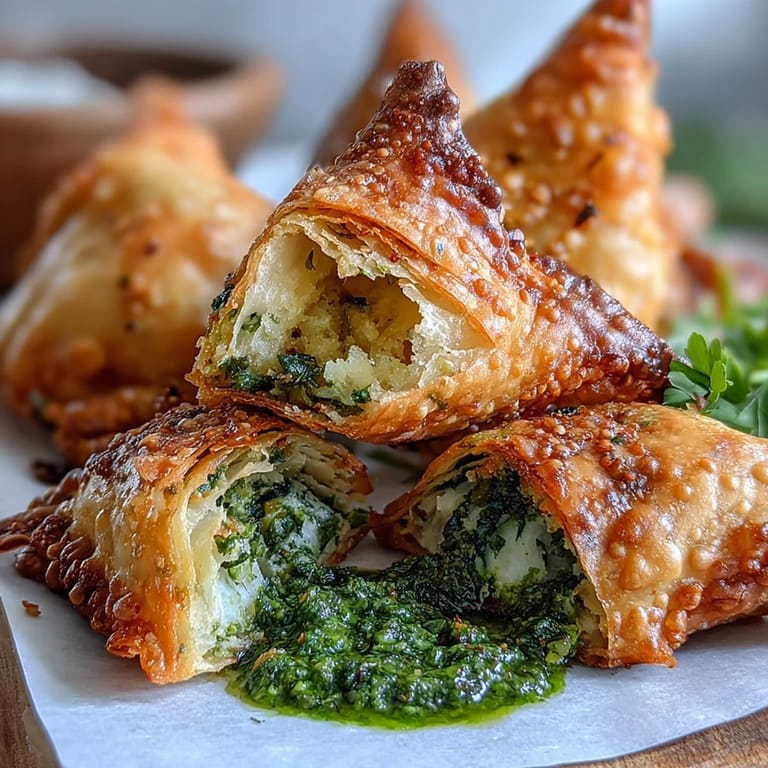
Air fryers vary in personality—some run hotter than others, so after your first batch, you'll know whether to adjust the temperature or time for yours specifically. I've learned that checking around the 12-minute mark prevents the rare overbrowning, and I always arrange samosas with space between them so hot air circulates freely rather than steaming them instead of crisping them.
- Serve samosas hot or at room temperature, though the texture is best enjoyed within an hour of air frying when the exterior is still crackling.
- Make the mint chutney no more than a few hours ahead so the mint stays bright; it darkens and loses vibrancy if prepared the night before.
- If you're meal prepping, store uncooked shaped samosas on a parchment-lined tray in the freezer, then air fry straight from frozen, adding just two minutes to the cooking time.
 Save
Save These samosas have quietly become my go-to when I want something that feels special but doesn't demand hours in the kitchen, and the mint chutney is so versatile that it's now my answer to almost every "what should I serve alongside this" question. Make them once, and I promise they'll become a regular visitor to your table.
Recipe Questions & Answers
- → How do I make the samosa dough crispier?
Use cold water to knead the dough and rest it for 20 minutes to develop gluten. When shaping, roll the dough thinly and brush samosas lightly with oil before air frying to enhance crispiness.
- → Can I prepare the filling in advance?
Yes, the vegetable filling can be made ahead and stored in the refrigerator for up to 2 days. Allow it to cool completely before filling the dough.
- → What spices give the filling its flavor?
The filling includes cumin seeds, turmeric, garam masala, coriander, chili powder, and fresh ginger, creating a warm, aromatic profile.
- → How does air frying affect taste compared to deep frying?
Air frying produces a crispy exterior with less oil, preserving the spiced vegetable filling’s fresh flavors while making the samosas lighter and healthier.
- → What can I use instead of all-purpose flour for gluten-free options?
Substitute with a gluten-free flour blend suitable for dough preparations, and adjust water quantities as needed for a pliable texture.