 Save
Save On a sweltering afternoon when my kitchen felt too warm for anything hot, I found myself standing at the farmers market staring at a tower of zucchini and a bundle of fresh mint. A vendor suggested spiralizing them into noodles, and something clicked. That simple conversation led me to this salad, which has become my go-to when I need something that tastes indulgent but leaves me feeling light and energized. It's the kind of dish that surprises people because it's vibrant and satisfying without any heaviness.
I made this for a potluck last summer when everyone was supposed to bring something cold, and it became the first thing to disappear. People kept asking if there was dairy in the dressing, genuinely surprised when I told them it was just peanut butter and a few pantry staples. That moment when someone discovers a plant-based dish is actually delicious, not some nutritious obligation, never gets old.
Ingredients
- Zucchini (2 medium): Spiralizing transforms them into delicate noodles that soak up the dressing without turning mushy if you serve right away.
- Carrot (1 large): The ribbons add natural sweetness and a satisfying crunch that anchors the whole salad.
- Red bell pepper (1): Fresh and slightly sweet, it brings color and a crisp texture that holds up beautifully.
- Cucumber (1 small): Shaved thin, it adds refreshing lightness and keeps everything from feeling too heavy.
- Spring onions (3): Their mild bite wakes up the palate without overpowering the delicate vegetables.
- Red cabbage (1 cup shredded): This is your secret weapon for crunch and visual drama, staying firm even after dressing.
- Fresh cilantro and mint: These herbs are non-negotiable; they transform the salad from good to genuinely memorable.
- Roasted peanuts (1/3 cup): Roughly chop them so you get little bursts of nuttiness rather than dust.
- Sesame seeds: Toast them lightly before adding if you want to amplify their nutty, toasted flavor.
- Creamy peanut butter (1/4 cup): The foundation of your dressing; natural or standard both work, but look for one without added sugar if possible.
- Soy sauce or tamari (2 tablespoons): This brings umami depth that balances the sweetness of the maple syrup.
- Maple syrup (1 tablespoon): Just enough to round out the dressing without making it taste like dessert.
- Fresh lime juice (1 tablespoon): Squeeze it yourself; bottled just doesn't have the same brightness.
- Rice vinegar (2 teaspoons): Adds tang without the harshness of regular vinegar.
- Toasted sesame oil (1 teaspoon): A little goes a long way; it adds an aromatic richness that makes people ask what the secret ingredient is.
- Fresh ginger (1 teaspoon grated): Grate it finely so it distributes evenly throughout the dressing.
- Garlic (1 small clove): Mince it small so it doesn't overpower the delicate balance.
- Water (2 to 3 tablespoons): Add gradually to get the dressing to pourable consistency without making it watery.
- Chili flakes or Sriracha (optional): Start with less than you think you need; heat builds as it sits.
Tired of Takeout? 🥡
Get 10 meals you can make faster than delivery arrives. Seriously.
One email. No spam. Unsubscribe anytime.
Instructions
- Prep your ribbons and spirals:
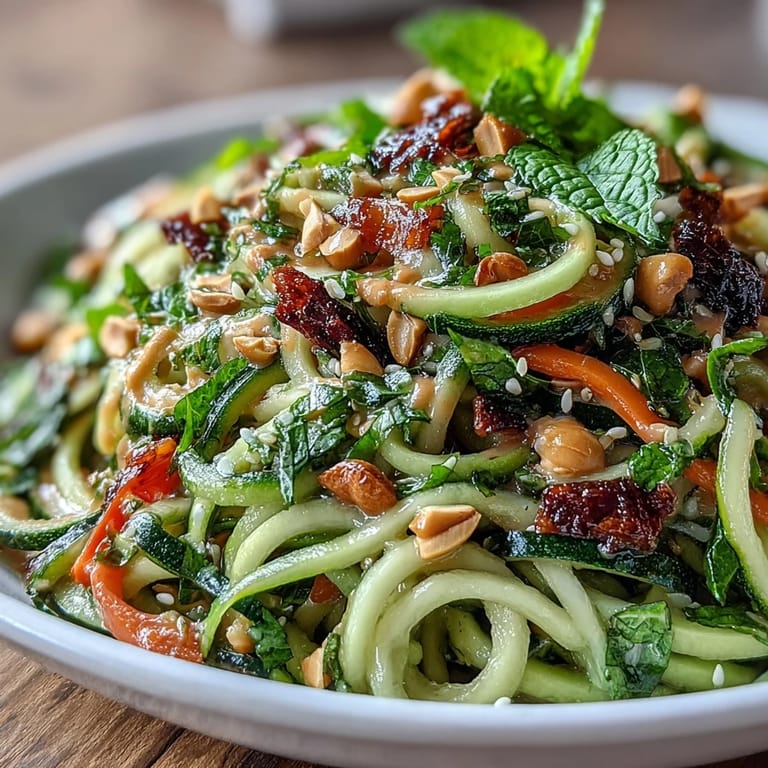
- Run the zucchini through your spiralizer, then use a vegetable peeler or mandoline to shave the carrot, bell pepper, and cucumber into ribbons. This part feels meditative once you find your rhythm, and watching the vegetables transform is oddly satisfying.
- Build your salad bowl:
- Toss the zucchini noodles, vegetable ribbons, spring onions, shredded cabbage, cilantro, and mint into a large mixing bowl. The pile looks enormous, but it will settle once the dressing hits it.
- Whisk the dressing:
- In a small bowl, whisk together the peanut butter, soy sauce, maple syrup, lime juice, rice vinegar, sesame oil, ginger, and garlic until they're combined and smooth. Add water a tablespoon at a time, whisking as you go, until it reaches that perfect pourable consistency.
- Dress and toss:
- Pour the dressing over the vegetables and toss everything gently but thoroughly, making sure each piece gets coated. You want to be confident but gentle so the vegetables don't bruise.
- Finish and serve:
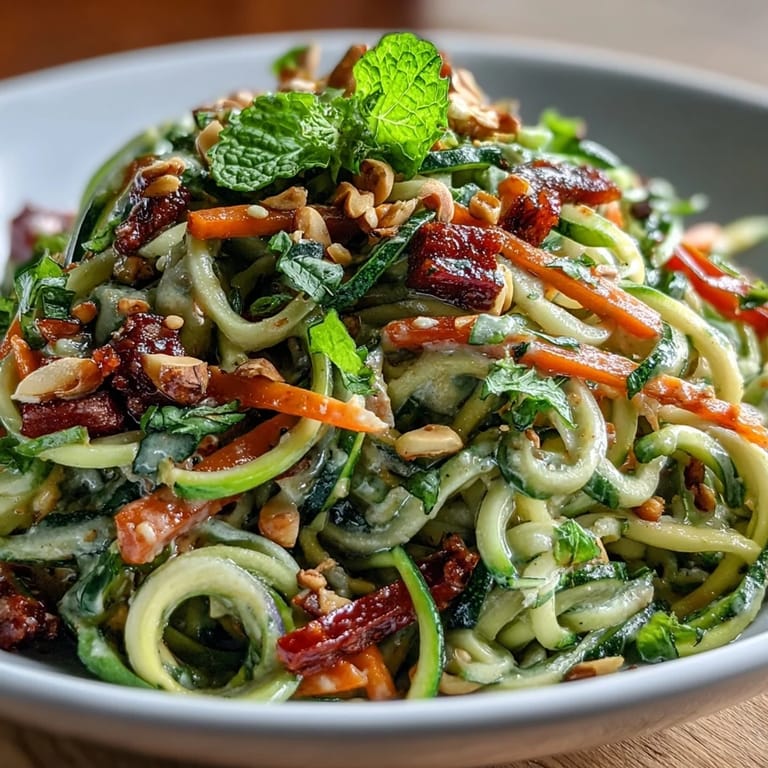
- Transfer the salad to a serving platter or individual bowls, then crown each serving with roasted peanuts and sesame seeds. Serve immediately while everything is still crisp, or chill for up to an hour if you prefer it colder.
 Save
Save My friend Sarah brought a friend to dinner who claimed to be impossible to cook for, and I served this salad without making a big deal about it. Watching someone's face when they realize they're eating vegetables and actually enjoying them is its own kind of magic. Food that nourishes your body while making your taste buds sing is worth the extra few minutes of prep work.
The Magic of the Dressing
The peanut dressing is honestly the heart of this salad, and I learned the hard way that it deserves respect. Years ago, I tried to make a similar dressing with peanut butter that had added sugar, and the result tasted one-dimensional and cloying. Now I always taste the dressing on its own before committing it to the vegetables, checking for that perfect balance where you can taste the peanut, the brightness of lime, the depth of sesame oil, and the hum of ginger all at once. It should make you pause and think, 'Okay, that's good.'
Playing with Textures and Vegetables
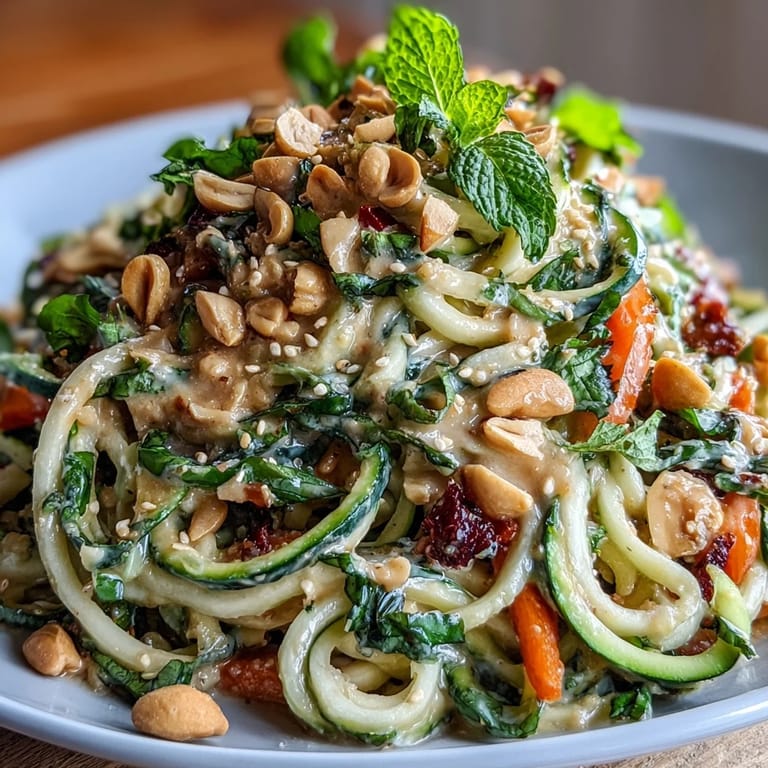
What makes this salad endlessly appealing is how every texture lives together in harmony. The spiralized zucchini is tender but substantial, the shaved ribbons add delicate glide, the shredded cabbage brings serious crunch, and the herbs add brightness that lifts everything. One winter I experimented with spiralizing sweet potato instead of zucchini, and while it was delicious, it lost that light, refreshing quality that makes this salad feel like a celebration of abundance rather than a heavy meal. Stick with zucchini for the classic version, but don't be afraid to swap in cucumber noodles in spring or add shredded beets for earthiness.
Making It Your Own
This salad is a canvas, and you get to decide what the painting looks like. Some nights I add a palm full of shredded purple cabbage just for color, other times I throw in edamame because I need the protein and it adds a pleasant pop. I've made it at beach houses with whatever vegetables the local market had, and it's always been delicious because the dressing is so forgiving and flavorful. Here are the adjustments I come back to again and again:
- Add baked tofu cubes or chickpeas if you want something more filling and protein-rich.
- Drizzle extra sesame oil and squeeze fresh lime right before eating to brighten flavors if you've prepped it ahead.
- Swap in sunflower seed butter if you're serving people with peanut allergies, and it honestly tastes just as good.
 Save
Save This salad has taught me that the simplest dishes, made with intention and good ingredients, are often the ones people remember. Serve it cold, serve it soon after assembling, and watch people rediscover what salad can actually be.
Recipe Questions & Answers
- → What vegetables work best in this dish?
Spiralized zucchini pairs wonderfully with thin ribbons of carrot, bell pepper, cucumber, and finely shredded red cabbage to create a fresh, crisp texture.
- → How is the Thai peanut dressing prepared?
The dressing is a smooth blend of creamy peanut butter, soy sauce, maple syrup, lime juice, rice vinegar, toasted sesame oil, fresh ginger, garlic, and optional chili flakes, thinned with water to desired consistency.
- → Can I make this salad ahead of time?
For best crunch, serve immediately or chill for up to one hour before serving. Longer storage may soften the veggies and nuts.
- → Are there substitution options for allergies?
Substitute peanut butter with sunflower seed butter and omit peanuts for nut allergies. Use gluten-free tamari to keep it gluten-free.
- → What tools are needed to prepare the vegetables?
A spiralizer or julienne peeler helps create zucchini noodles, while a vegetable peeler or mandoline is ideal for shaving carrot, bell pepper, and cucumber into ribbons.