 Save
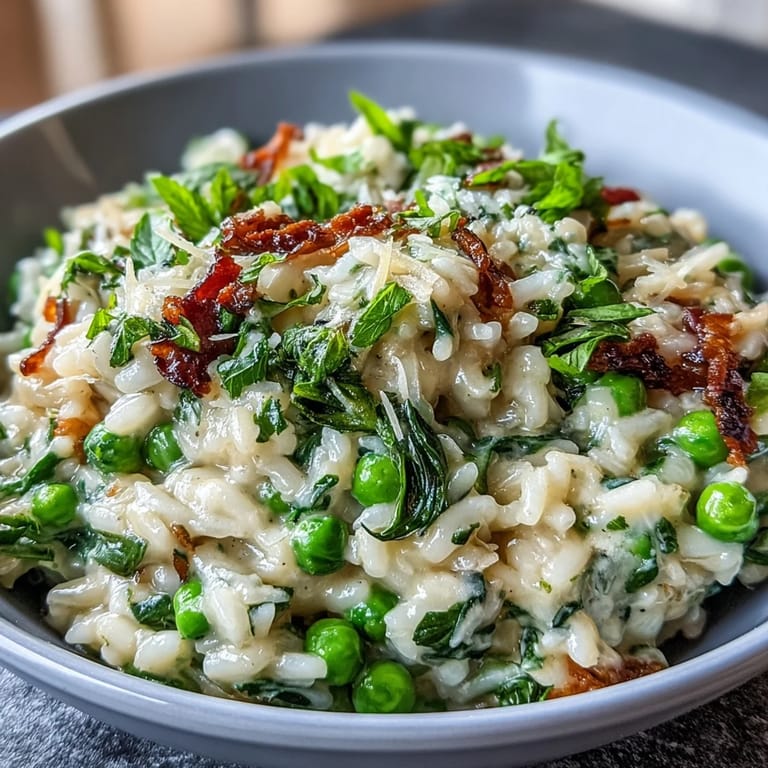
Save There's something magical about springtime cooking—the arrival of tender peas, the first cuttings of fresh mint, and the promise of vibrant, sun-kissed flavors. This Spring Pea and Mint Risotto with Parmesan captures all of that in one creamy, comforting bowl. Arborio rice is slowly cooked to velvety perfection, enriched with butter and Parmesan, then brightened with sweet peas and aromatic mint. It's a dish that feels both elegant and approachable, perfect for a quiet weeknight dinner or a special springtime gathering. Each spoonful delivers that signature risotto creaminess alongside bursts of garden-fresh flavor, making it a celebration of the season on your plate.
Save Risotto is one of those dishes that looks intimidating but rewards you with pure comfort. The key is patience—standing at the stove, stirring gently, and letting each ladleful of broth be absorbed before adding the next. This meditative process transforms simple Arborio rice into something luxurious. The addition of peas near the end keeps them tender and sweet, while fresh mint and a touch of lemon zest lift the entire dish with unexpected freshness. Whether you're new to risotto or a seasoned home cook, this recipe strikes the perfect balance between classic technique and seasonal inspiration.
Ingredients
Tired of Takeout? 🥡
Get 10 meals you can make faster than delivery arrives. Seriously.
One email. No spam. Unsubscribe anytime.
- 1 cup fresh or frozen spring peas
- 1 small onion, finely chopped
- 2 cloves garlic, minced
- 2 tablespoons fresh mint leaves, finely chopped
- Zest of 1 lemon (optional)
- 1 1/2 cups Arborio rice
- 3 tablespoons unsalted butter, divided
- 1/2 cup grated Parmesan cheese
- 1/4 cup heavy cream (optional)
- 4 cups vegetable broth, kept warm
- 1/2 cup dry white wine
- 2 tablespoons extra-virgin olive oil
- Salt and freshly ground black pepper, to taste
Instructions
- Step 1
- In a medium saucepan, warm the vegetable broth over low heat; keep it simmering throughout the process.
- Step 2
- In a large, heavy-bottomed skillet or saucepan, heat the olive oil and 2 tablespoons butter over medium heat. Add the chopped onion and cook until soft and translucent, about 4 minutes.
- Step 3
- Add the garlic and cook for 1 minute until fragrant.
- Step 4
- Stir in the Arborio rice and cook for 2 minutes, stirring constantly, until the grains are well coated and slightly translucent at the edges.
- Step 5
- Pour in the white wine and cook, stirring, until mostly absorbed.
- Step 6
- Begin adding the warm broth, one ladleful at a time, stirring frequently and allowing each addition to absorb before adding more. Continue until the rice is creamy and al dente, about 18–20 minutes.
- Step 7
- When about 5 minutes of cooking remain, stir in the peas.
- Step 8
- Once the rice is cooked and creamy, remove from heat. Stir in the remaining tablespoon of butter, Parmesan cheese, heavy cream (if using), chopped mint, and lemon zest. Season with salt and pepper to taste.
- Step 9
- Let the risotto rest for 2 minutes, then serve immediately, garnished with extra mint and Parmesan if desired.
Zusatztipps für die Zubereitung
The secret to perfect risotto is keeping your broth warm and adding it gradually—cold broth will slow down the cooking and affect the final texture. Stir frequently but gently to release the starch from the rice without breaking the grains. Don't rush the process; the rice should be tender yet still have a slight bite (al dente). If you run out of broth before the rice is done, you can use hot water. Taste as you go, and remember that the risotto will continue to thicken slightly as it rests, so it should look a bit looser than your desired final consistency when you remove it from the heat.
Varianten und Anpassungen
This recipe is wonderfully adaptable. For a vegan version, substitute the butter with vegan butter or extra olive oil, use nutritional yeast or vegan Parmesan alternatives, and omit the cream. If you don't have fresh mint, you can use basil for a different herbal note, though the mint truly makes this dish shine. Add a handful of baby spinach or arugula along with the peas for extra greens. For added texture and richness, top the finished risotto with toasted pine nuts, chopped walnuts, or crispy pancetta (if not keeping it vegetarian). You can also stir in some mascarpone cheese for an even creamier finish.
Serviervorschläge
Serve this risotto as a light main course with a simple side salad dressed in lemon vinaigrette, or pair it with roasted asparagus or sautéed spring vegetables. It also works beautifully as a side dish alongside grilled chicken, pan-seared fish, or roasted lamb. For wine pairing, a crisp Sauvignon Blanc or a light Pinot Grigio complements the bright, fresh flavors perfectly. Garnish each serving with extra grated Parmesan, a few fresh mint leaves, and a crack of black pepper. For an elegant presentation, serve in shallow bowls with a drizzle of good-quality olive oil on top.
 Save
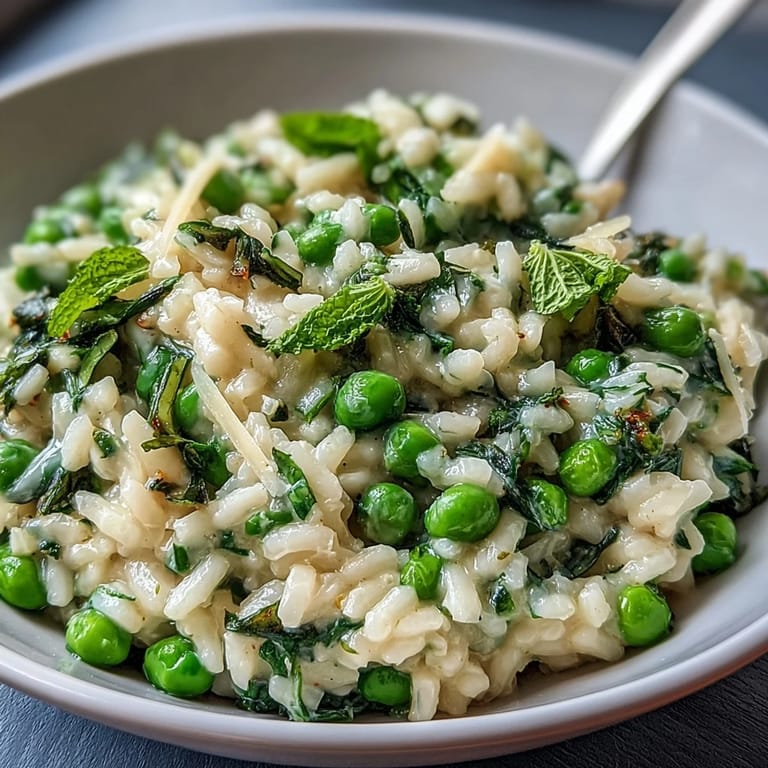
Save This Spring Pea and Mint Risotto with Parmesan is more than just a recipe—it's an experience of Italian comfort food at its finest, elevated by the freshness of spring. The creamy, dreamy texture combined with the sweet pop of peas and the cool brightness of mint creates a dish that feels both indulgent and refreshing. Whether you're cooking for yourself, your family, or guests, this risotto delivers restaurant-quality results right from your own kitchen. So pour yourself a glass of wine, put on some music, and enjoy the therapeutic rhythm of stirring your way to a truly memorable meal.
Recipe Questions & Answers
- → What type of rice is best for this dish?
Arborio rice is ideal due to its high starch content, which creates the creamy texture essential to this dish.
- → Can frozen spring peas be used instead of fresh?
Yes, frozen peas work well and can be added directly during the last few minutes of cooking to retain their sweetness and color.
- → How do I achieve the perfect creamy consistency?
Slowly add warm broth one ladleful at a time, stirring frequently to release starch and achieve a smooth, creamy risotto.
- → Is the white wine necessary in this preparation?
White wine adds acidity and depth of flavor, enhancing the dish's brightness, but can be omitted or substituted with additional broth if preferred.
- → What can I use to add extra brightness to the flavors?
Lemon zest is a great addition that adds a fresh, citrusy note complementing the mint and peas.