 Save
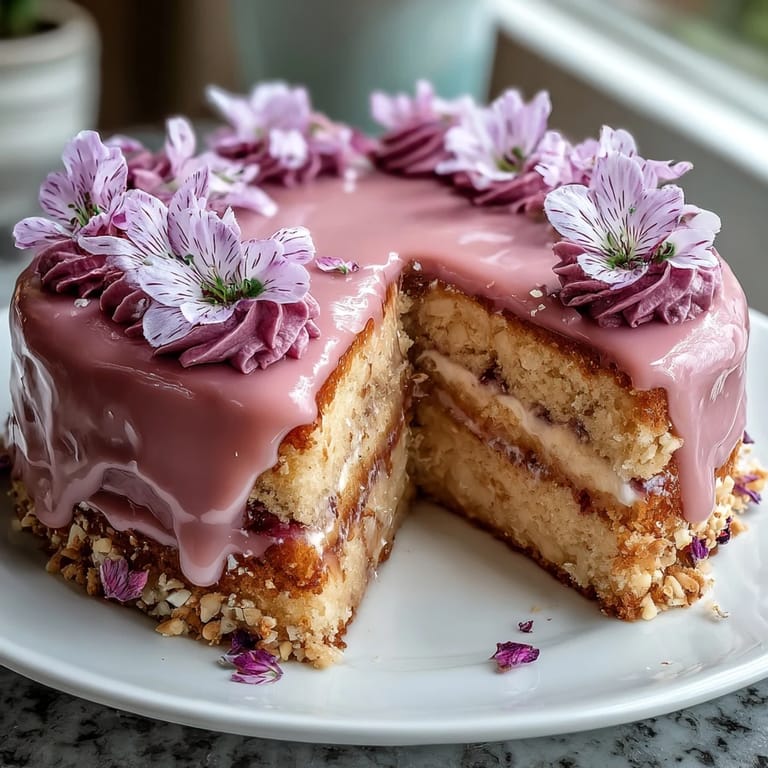
Save My sister called me three weeks before her birthday with a request that made me both nervous and oddly excited: she wanted a cake that looked like spring had exploded on it. Not store-bought with those stiff fondant flowers, but something that felt homemade, soft, and cheerful. I'd never piped buttercream flowers before, but standing in my kitchen on a Saturday afternoon with pastel gel colors lined up like little promises, I realized this vanilla cake wasn't just about the baking—it was about trying something that scared me a little.
I made this cake for the first time on a gray April morning, and my daughter wandered into the kitchen asking why everything smelled like vanilla and butter at 8 AM. By the time the layers came out of the oven, she was perched on a stool watching me divide buttercream into bowls, asking if she could name each color. We called the pink 'ballet,' the lavender 'dream,' and the green 'garden path'—suddenly it wasn't just cake, it was a story we were creating together.
Ingredients
- All-purpose flour (2 ½ cups): Measure by spooning into the cup and leveling off rather than scooping directly—this prevents packing and keeps the cake light and tender.
- Baking powder (2 ½ tsp): Use fresh baking powder; old batches lose their lift, and nobody wants a heavy birthday cake.
- Salt (½ tsp): This tiny amount heightens the vanilla flavor and balances the sweetness in ways people can't quite name but absolutely taste.
- Unsalted butter (1 cup for cake, 1 ½ cups for buttercream): Room temperature butter creams properly and incorporates air, which is the secret to that cloud-like texture.
- Granulated sugar (2 cups): Beat this with butter until it's visibly lighter and airier—this creates the structure the cake needs to rise evenly.
- Large eggs (4): Room temperature eggs blend smoothly into the batter; cold eggs create lumps no matter how much you beat.
- Pure vanilla extract (1 tbsp for cake, 2 tsp for buttercream): Vanilla is the backbone here—don't skimp on quality because it's what people remember about the flavor.
- Whole milk (1 cup for cake, ¼ cup for buttercream): Room temperature milk combines evenly with the butter mixture and prevents the batter from breaking.
- Powdered sugar (6 cups): Sift this before measuring to remove lumps that would make buttercream grainy.
- Gel food coloring: Gel colors don't thin the buttercream like liquid food coloring does, so your frosting stays the right consistency for piping.
- Edible flower petals and sprinkles: Optional decorations that add a final touch of spring magic if you're feeling it.
Tired of Takeout? 🥡
Get 10 meals you can make faster than delivery arrives. Seriously.
One email. No spam. Unsubscribe anytime.
Instructions
- Get your mise en place ready:
- Preheat your oven to 350°F and grease those three 8-inch pans like you mean it, then line them with parchment paper so the cakes slide out easily. Having everything prepped means you can focus on the batter without rushing.
- Combine your dry ingredients:
- Whisk together flour, baking powder, and salt in a medium bowl—this distributes the leavening evenly so your cake rises uniformly. It only takes a minute but makes a real difference.
- Cream the butter and sugar:
- Beat them together on medium-high speed for about 3 to 4 minutes until the mixture is noticeably lighter, pale, and fluffy—you're literally whipping air into it. This is where the cake's tender crumb is born.
- Add eggs one at a time:
- Drop each egg in and beat well after each addition so it fully incorporates before the next one joins the party. If you dump them all in at once, the batter can look curdled and scared.
- Mix in the vanilla:
- A single tablespoon of pure vanilla extract goes in after the eggs, and this small addition is what makes people close their eyes when they taste the cake.
- Alternate the flour and milk:
- Start with flour, then milk, then flour again, ending with flour—this prevents overmixing because you're not beating the batter for as long. Mix until just combined; lumps are your friend here because they mean you stopped before developing too much gluten.
- Divide and smooth:
- Distribute the batter evenly among your three prepared pans and smooth the tops gently with an offset spatula so they bake at the same rate.
- Bake with patience:
- Bake for 25 to 30 minutes until a toothpick inserted in the center comes out clean—every oven is different, so start checking at 25 minutes. The kitchen will smell absolutely amazing.
- Cool with intention:
- Let the cakes cool in the pans for exactly 10 minutes so they're sturdy enough to turn out, then transfer them to a wire rack to cool completely. Warm cake falls apart; room-temperature cake is your friend.
- Make your buttercream:
- Beat the butter until it's creamy, then gradually add sifted powdered sugar, milk, vanilla, and salt while beating on medium speed for 3 to 4 minutes until it's light and fluffy. This is the frosting that pipes beautifully and tastes like butter clouds.
- Tint with gel colors:
- Divide the buttercream into separate bowls and add gel food coloring a tiny drop at a time, stirring until you reach that perfect pastel shade. The colors intensify slightly as they sit, so go lighter than you think you need.
- Layer your cake:
- Place the first layer on your serving plate, spread buttercream on top, repeat with the second layer and buttercream, then crown it with the third layer. Each layer of buttercream should be about ¼ inch thick—enough to taste but not so much that the cake slides around.
- Apply the crumb coat:
- Spread a thin, almost translucent layer of buttercream over the entire cake to seal in crumbs, then chill for 20 minutes so this layer sets. This step is what makes your final frosting look polished instead of speckled.
- Pipe your floral designs:
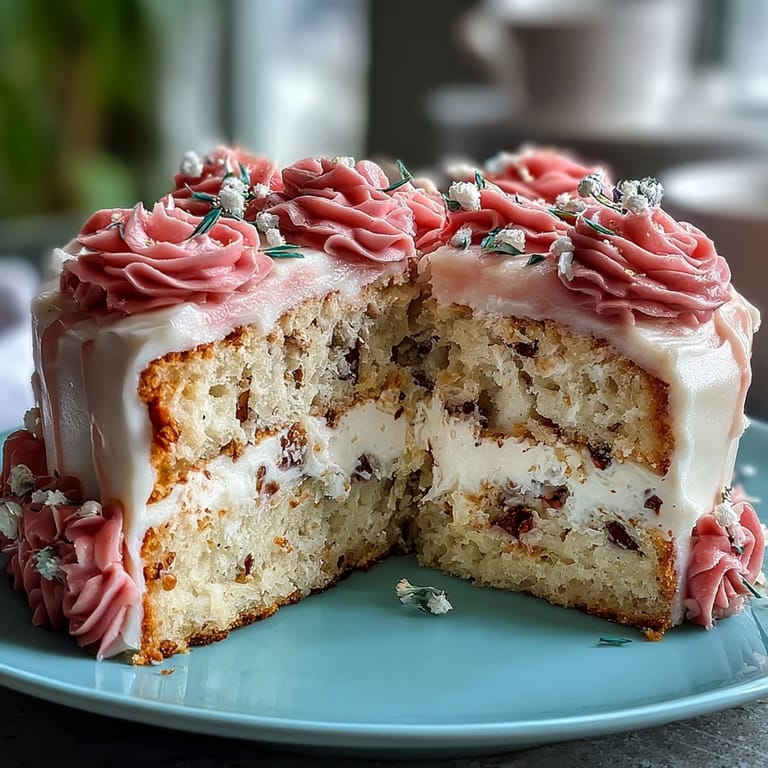
- Fit your piping bags with various tips—I love a small round tip for dots and a petal tip for flowers—and pipe decorative buttercream flowers, leaves, and flourishes all over the cake. Don't worry about perfection; asymmetrical spring flowers are more charming anyway.
- Add final touches:
- Scatter edible flower petals or sprinkles if you want, then chill for 15 to 20 minutes so the buttercream sets before serving. A chilled cake is easier to slice and looks stunning when you bring it to the table.
 Save
Save The moment my sister walked into the kitchen and saw that cake, she got quiet in a way that made my effort feel worth every nervous minute I'd spent piping flowers. She didn't just smile—she took a photo, called our mom, and told me it was too beautiful to cut. We ended up slicing it carefully an hour later, and watching people's faces light up when they tasted how tender and vanilla-sweet it was felt like the real celebration.
Why Room Temperature Matters
I learned this the hard way when I rushed and used cold butter straight from the fridge one morning. The batter looked separated and broken, and no amount of beating fixed it—the cake that came out was dense and weirdly grainy, not at all like this fluffy version. Taking 30 minutes to let your ingredients sit on the counter while you prep isn't wasted time; it's the difference between a cake that disappoints and one that delights.
The Art of Buttercream Piping
Piping buttercream flowers sounds intimidating until you realize that most people are so amazed by the effort that imperfection becomes part of the charm. I bought a piping bag set with different tips and practiced on a piece of parchment paper first, making little practice flowers that my family ate with their coffee. By the time I decorated the actual cake, my hands weren't shaking anymore, and I could actually enjoy the creative part instead of just surviving it.
Flavor Customization and Celebration
This vanilla cake is a beautiful canvas for whatever makes the birthday person happy. Some years I add a quarter teaspoon of almond extract for subtle complexity, other times I stick with pure vanilla because that's what people know and love. The buttercream is equally flexible—I've made versions with lemon zest for brightness, a hint of rose water for elegance, or just kept it simple and buttery so the focus stays on those pastel flowers and the love behind the baking.
- If your birthday person has a favorite flavor like lemon or almond, add an extra ½ teaspoon of that extract to the cake batter for a personal touch.
- Mix and match your pastel colors to match the party theme, or let the birthday person choose their favorite color combination.
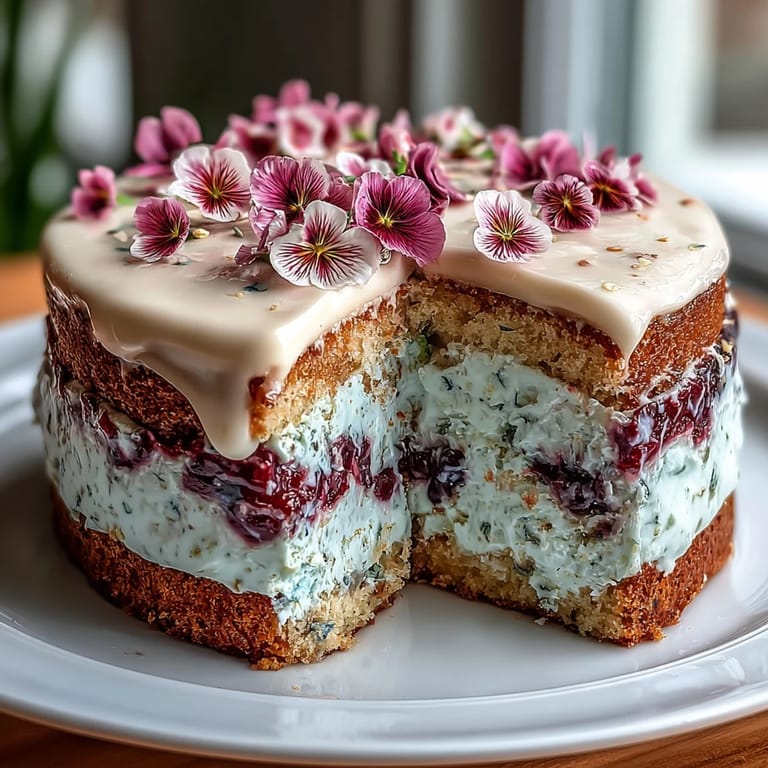
- Edible glitter, candied flowers, or even small macarons tucked between piped flowers take the presentation from beautiful to show-stopping.
 Save
Save This cake is about more than the baking; it's about taking time to create something beautiful for someone you love. Every piped flower, every perfectly mixed batch of buttercream, and every moment spent in the kitchen is a gift wrapped in vanilla and butter.
Recipe Questions & Answers
- → What ingredients create the pastel floral decoration?
Buttercream is tinted with gel food coloring in pink, yellow, lavender, green, and blue to pipe soft, pastel floral designs.
- → How is the cake batter prepared for even layers?
The flour mixture and milk are alternately folded into the creamed butter and sugar, ensuring a tender and evenly mixed batter before baking.
- → What is the best way to apply buttercream for smooth decoration?
A thin crumb coat is applied first and chilled before piping the final floral designs to ensure a clean and smooth finish.
- → Can this cake be made without all pastel colors?
Yes, the buttercream can be tinted using fewer colors or natural food colors depending on preference.
- → How long should the cake layers cool before decorating?
Layers should cool completely on a wire rack, typically about 30 minutes, before buttercream is applied to prevent melting.