 Save
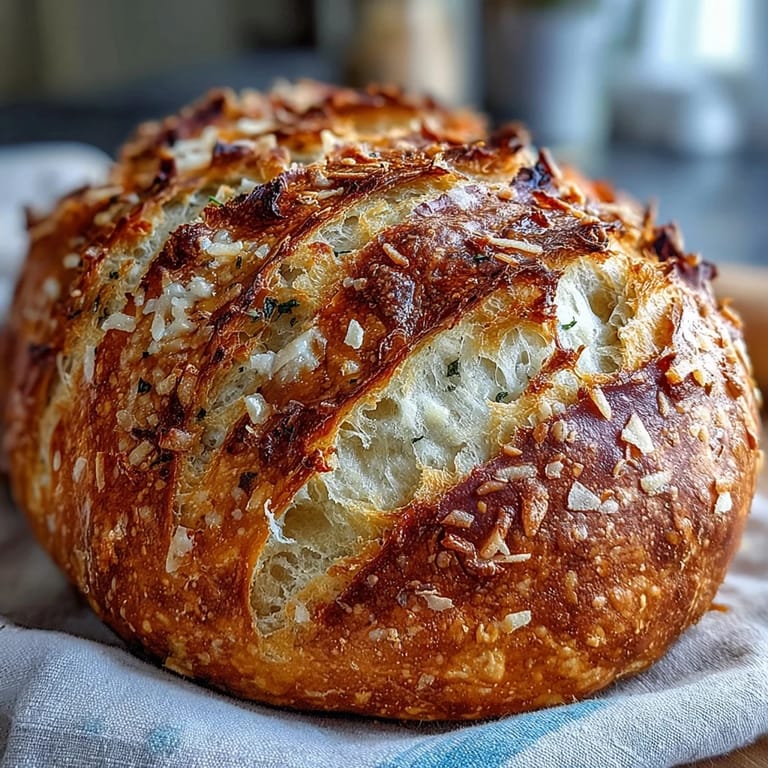
Save The smell of garlic and Parmesan hitting hot dough will absolutely stop everyone in your house mid-step. I learned this accidentally when I first started experimenting with no-knead breads, thinking I'd throw in whatever was in my cheese drawer. That first loaf disappeared before dinner even started, with family members casually wandering in and out of the kitchen, 'just checking on it' while tearing off pieces.
I served this alongside a simple tomato soup on a rainy Tuesday, and somehow the bread became the main event. My friend Sarah actually asked for the recipe before she had even finished her bowl, saying she could taste this bread for days. Something about the way the garlic mellows into sweetness while the Parmesan gets all salty and golden in the oven makes people strangely protective of their slices.
Ingredients
- All-purpose flour (3 1/4 cups): Provides structure and protein for that beautiful crumb structure
- Salt (2 teaspoons): Enhances all the other flavors and helps control yeast activity
- Granulated sugar (1 teaspoon): Feeds the yeast for optimal rise and contributes to crust color
- Active dry yeast (2 teaspoons): The magic behind those gorgeous air pockets and overnight fermentation
- Warm water (1 1/2 cups): Should feel like bath temperature, around 110°F, to activate yeast without killing it
- Olive oil (2 tablespoons): Adds richness and keeps the crumb tender while helping the cheese distribute evenly
- Freshly grated Parmesan cheese (1 cup): Pre-grated cheese has anti-caking agents that affect texture, so grate it yourself for melting perfection
- Garlic cloves (2-3), minced: Mince it finely so you get pockets of roasted sweetness throughout rather than overwhelming raw garlic bites
- Fresh rosemary or parsley (1 tablespoon, optional): Add an herbal layer that makes the house smell incredible while baking
Tired of Takeout? 🥡
Get 10 meals you can make faster than delivery arrives. Seriously.
One email. No spam. Unsubscribe anytime.
Instructions
- Mix the base:
- Combine flour, salt, and sugar in a large bowl, then dissolve yeast in warm water until foamy before pouring everything together
- Build the dough:
- Stir with a wooden spoon until a sticky, shaggy dough forms, then fold in the Parmesan, garlic, and herbs until evenly distributed
- Let it work overnight:
- Cover the bowl and let it rise in a warm spot for 12 to 18 hours until doubled in size and bubbly on top
- Shape gently:
- Turn the dough onto a floured surface and lightly shape it into a round, being careful not to deflate all those beautiful air pockets
- Preheat strategically:
- Place your dough on parchment paper to rest for 30 minutes while your oven and Dutch oven heat to 450°F
- Create your design:
- Score the top with a sharp knife in any pattern you like, which helps the loaf expand beautifully and looks professionally artisan
- Bake with steam:
- Transfer the dough with parchment into the hot Dutch oven, cover, and bake for 30 minutes to create that initial steam burst
- Reveal the golden crust:
- Remove the lid and bake for another 15 minutes until deeply golden and the loaf sounds hollow when tapped on the bottom
 Save
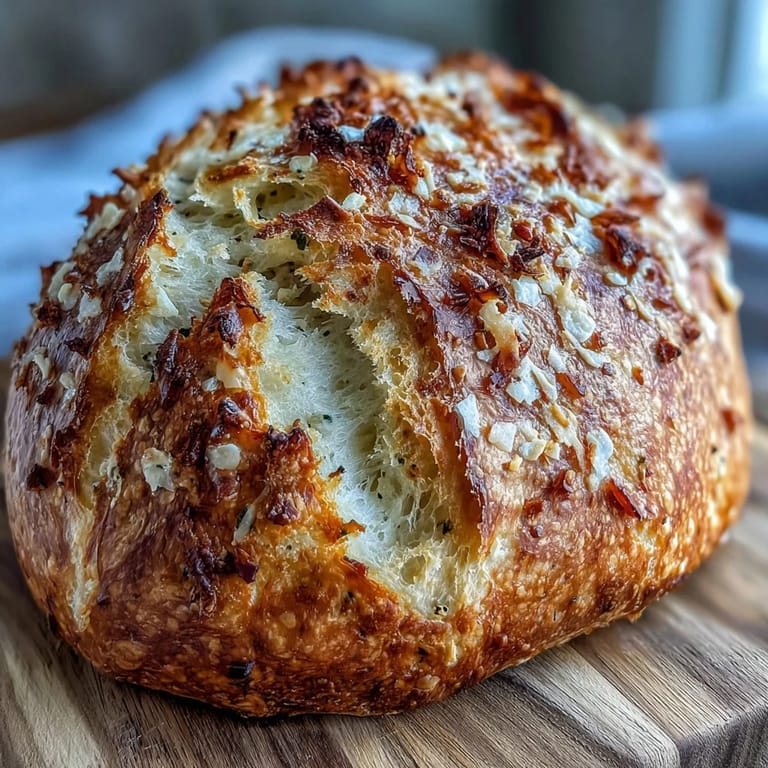
Save This bread has become my go-to when I want to make people feel special without spending hours in the kitchen. Something about tearing into a warm loaf together makes conversations flow easier and dinner feel like an occasion.
Making It Your Own
Once you master the basic technique, the variations are endless. I have swapped the Parmesan for aged Gruyère when feeling fancy, and used sharp cheddar with diced jalapeños for game day. The method stays exactly the same, just let your cravings guide your cheese and herb combinations.
The Science Behind the Dutch Oven
That heavy pot creates a mini steam oven in your regular oven, which is exactly how professional bakeries get those crackly, restaurant worthy crusts. The trapped steam keeps the exterior moist long enough for the bread to expand fully, then evaporates to let the crust crisp up spectacularly.
Timing Your Bake
The overnight ferment might feel long, but that extended time develops complex flavors and makes the dough incredibly manageable to work with. I typically mix it before bed, shape it the next morning, and have fresh bread by lunchtime.
- Set up your ingredients the night before so you can mix everything in literally five minutes
- If your kitchen runs cold, find the warmest spot in your house or turn your oven light on for extra warmth
- Let the bread cool for at least 30 minutes because cutting too early will make the texture gummy inside
 Save
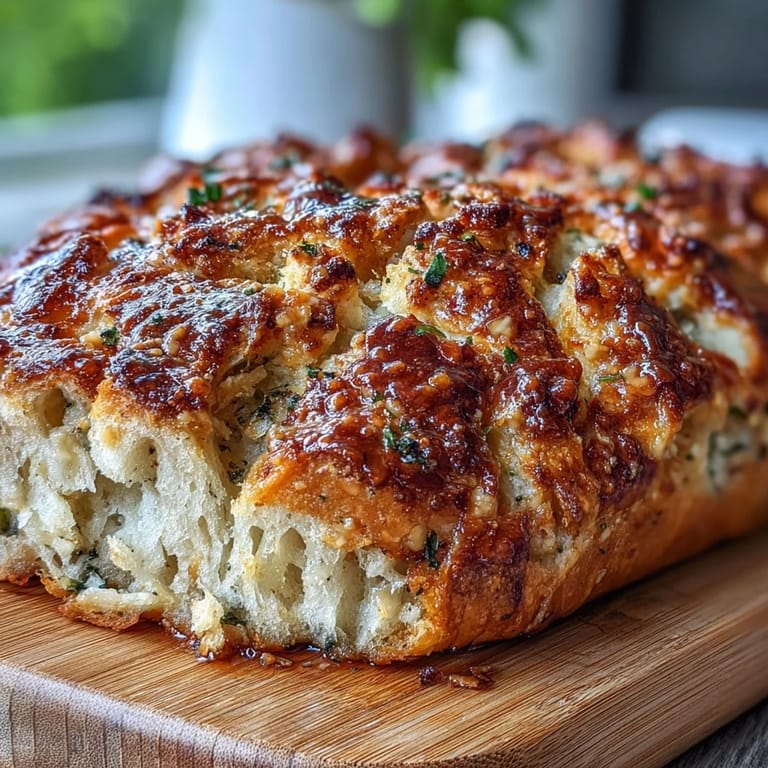
Save There is something deeply satisfying about pulling a gorgeous, golden loaf out of your own oven. Enjoy every warm, cheesy, garlicky slice.
Recipe Questions & Answers
- → Why does the dough need to rise overnight?
The extended fermentation develops complex flavors and creates that signature airy, open crumb structure. Slow fermentation breaks down starches naturally, resulting in better texture and digestibility while allowing the garlic and Parmesan flavors to permeate throughout the dough.
- → Can I skip the Dutch oven?
While a Dutch oven creates the ideal steam environment for a crisp crust, you can use a heavy oven-safe pot with a tight-fitting lid or place a baking sheet on the lowest rack with ice cubes. The steam helps achieve that bakery-quality golden exterior and tender interior.
- → How do I know when it's fully baked?
The loaf should sound hollow when tapped on the bottom, have a deep golden-brown color, and register 200°F internally. The crust should be firm and crackly, while the interior should be cooked through without any doughy texture.
- → Can I use dried garlic instead of fresh?
Yes, though fresh garlic provides superior flavor. If using garlic powder, reduce to 1-2 teaspoons as it's more concentrated. Granulated garlic works too but may distribute differently. Fresh cloves release their oils during fermentation, creating more nuanced flavor throughout.
- → How should I store leftovers?
Wrap completely cooled bread in a clean kitchen towel or paper bag to maintain crust texture—avoid plastic which makes it soggy. Keeps for 2-3 days at room temperature. For longer storage, slice and freeze in freezer bags, reheating individual slices in a 350°F oven for 5-8 minutes.
- → What other cheeses work well?
Asiago, aged Gruyère, Pecorino Romano, or sharp cheddar all create delicious variations. Softer cheeses like mozzarella work but may create a more tender crumb. Mix hard cheeses for complexity, keeping the total amount equal to one cup.