 Save
Save Last spring, I was standing in my kitchen with a container of sourdough discard that I'd been meaning to use, when my neighbor mentioned she was hosting an elegant brunch and needed something showstopping but not fussy. That's when it clicked: why not combine the tangy depth of sourdough with bright lemon and blueberries, baked in those precious little bundt pans that somehow make everything feel like a gift? These mini cakes struck the perfect balance between impressive and simple, tender crumb meeting that subtle fermented undertone that nobody could quite name.
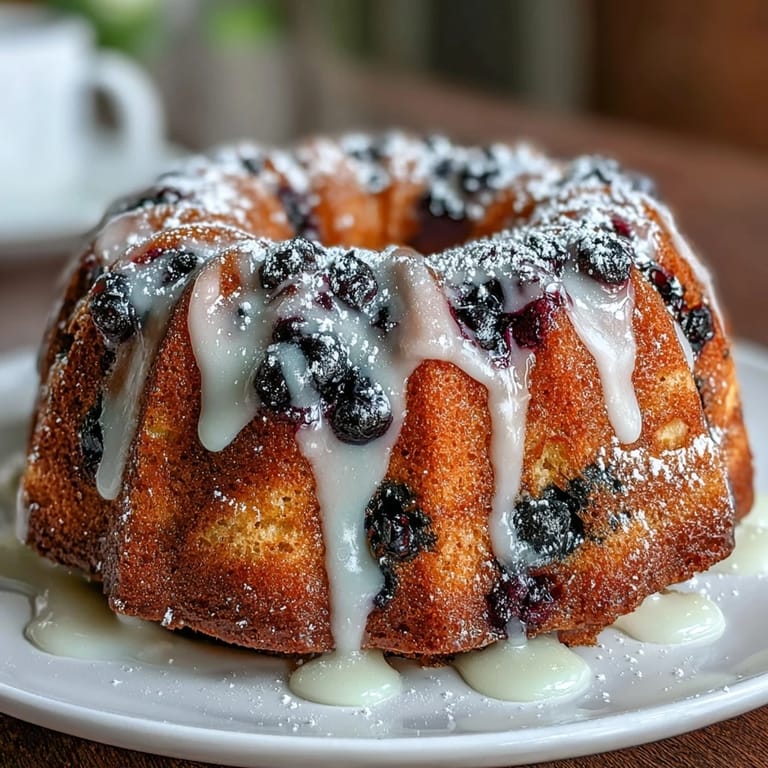
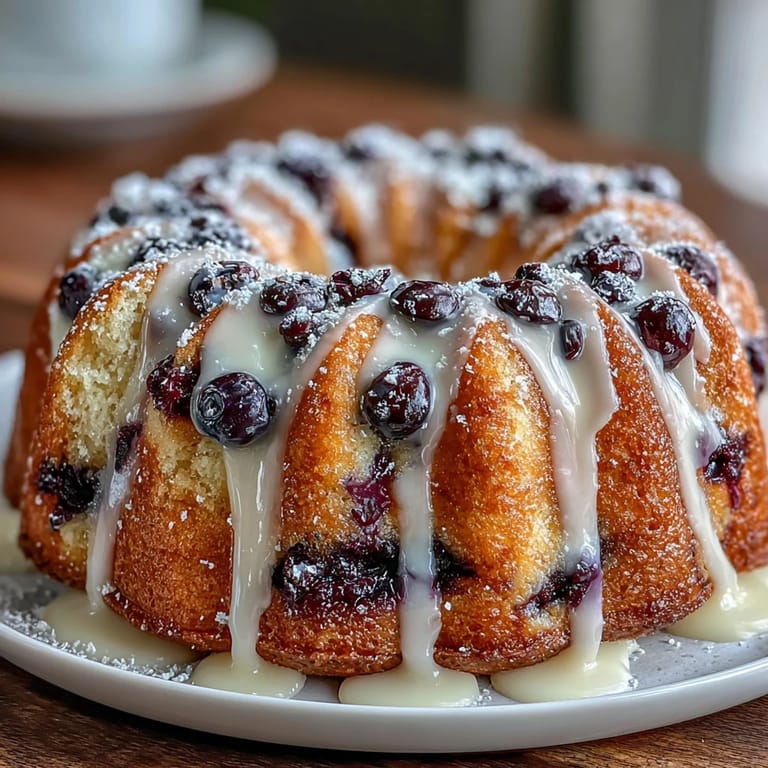
I made these for the first time on a gray morning when I was testing recipes, and my partner came downstairs mid-bake asking what smelled like lemon and honey and something almost earthy he couldn't place. When those cakes came out of the oven and I inverted them onto the cooling rack, the blueberries had settled just enough to create these beautiful dark pockets against the golden cake. He ate one still slightly warm with the glaze still sticky, and that's when I knew I'd stumbled onto something worth repeating.
Ingredients
- All-purpose flour (2 cups): The foundation here, and keeping it measured by weight instead of volume makes a real difference in how tender these cakes turn out.
- Baking powder and baking soda (1 tsp and 1/2 tsp): Work together to give these little cakes their gentle rise and that tender crumb that practically melts.
- Salt (1/4 tsp): A small amount but essential, as it amplifies the lemon flavor and balances the sweetness beautifully.
- Unsalted butter (1/2 cup, softened): Make sure it's actually soft before you start mixing, or your creaming step will take forever and the texture suffers.
- Granulated sugar (3/4 cup): This is your sweetness anchor, creamed with butter to incorporate air into the batter.
- Eggs (2 large, room temperature): Room temperature eggs incorporate smoothly and create a lighter, more tender cake than cold ones ever could.
- Sourdough starter (1/2 cup active or discard): The secret ingredient that adds complexity without making the cakes taste obviously sour, just sophisticated.
- Whole milk (1/2 cup, room temperature): Keeps the batter from becoming too thick and helps the sourdough flavor disperse evenly.
- Fresh lemon juice and zest (2 tbsp juice, 1 tbsp zest): Use fresh lemons always, as bottled juice tastes flat by comparison, and that zest is where the bright lemon personality lives.
- Pure vanilla extract (1 tsp): A small amount that deepens without announcing itself.
- Fresh blueberries (1 cup): Don't thaw frozen ones if that's what you're using, as the cold helps them hold their shape and prevents them from turning the batter gray.
- All-purpose flour for blueberries (1 tbsp): A chef's trick that prevents the berries from sinking to the bottom of each cake.
- Powdered sugar and lemon juice for glaze (1 cup and 2 to 3 tbsp): Keep the consistency pourable but thick enough to coat the top without running off.
Tired of Takeout? 🥡
Get 10 meals you can make faster than delivery arrives. Seriously.
One email. No spam. Unsubscribe anytime.
Instructions
- Prepare your stage:
- Preheat the oven to 350°F and spend a moment generously buttering those mini bundt pans, then dust them lightly with flour so nothing sticks. This step feels small but it's absolutely where success is won or lost.
- Mix your dry team:
- Whisk the flour, baking powder, baking soda, and salt together in a medium bowl until they're evenly distributed. This is your insurance policy against lumpy spots in the final cake.
- Cream butter and sugar until fluffy:
- Using a mixer, beat the softened butter and sugar together for about 3 minutes until the mixture is pale and voluminous, almost cloud-like in texture. You'll feel like you're making more air than cake batter, but that air is what gives you tenderness.
- Introduce the eggs gently:
- Add the eggs one at a time, beating well after each addition and scraping down the bowl's sides to make sure everything combines evenly. Rush this step and you'll end up with streaky, uneven cakes.
- Build the wet mixture:
- Mix in the sourdough starter, milk, lemon juice, lemon zest, and vanilla extract until everything looks combined and smells like spring in a bowl. The mixture will look a bit curdled at this point, and that's completely normal.
- Marry wet and dry:
- Add the dry ingredients to the wet mixture in stages, mixing just until you see no more flour streaks, then stop immediately. Overmixing at this point toughens the crumb, turning elegance into density.
- Coat the blueberries:
- Toss the fresh blueberries with 1 tablespoon of flour so they're lightly dusted, which anchors them and prevents them from sinking. Gently fold them in by hand, being careful not to crush any.
- Fill the pans:
- Divide the batter evenly among the 8 prepared mini bundt pans, filling each about 2/3 full to leave room for the rise. An ice cream scoop helps keep portions consistent.
- Bake with patience:
- Slide the pans into the oven for 22 to 25 minutes, watching for a light golden color and testing with a toothpick that comes out clean. The window is small, so check at 22 minutes and don't wander far.
- Cool and invert:
- Let the cakes rest in the pans for 10 minutes so they set slightly, then carefully run a thin knife around the edges and invert onto a cooling rack. This is the moment of truth, and patience here prevents broken cakes.
- Make the glaze:
- Whisk the powdered sugar with fresh lemon juice until it reaches a pourable consistency, then drizzle it over completely cooled cakes. The warmth of a fresh cake will make the glaze run too thin.
 Save
Save 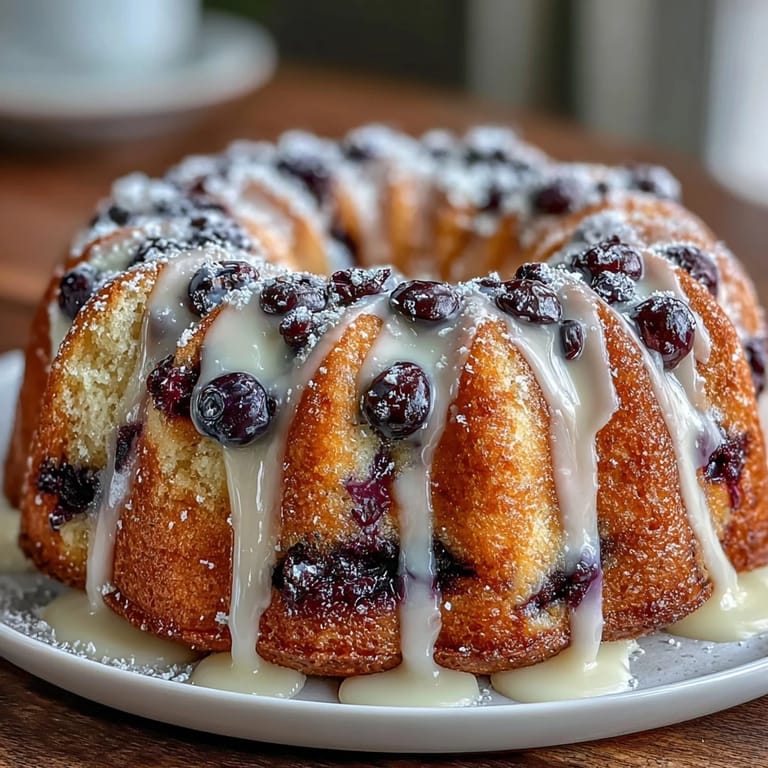 Save
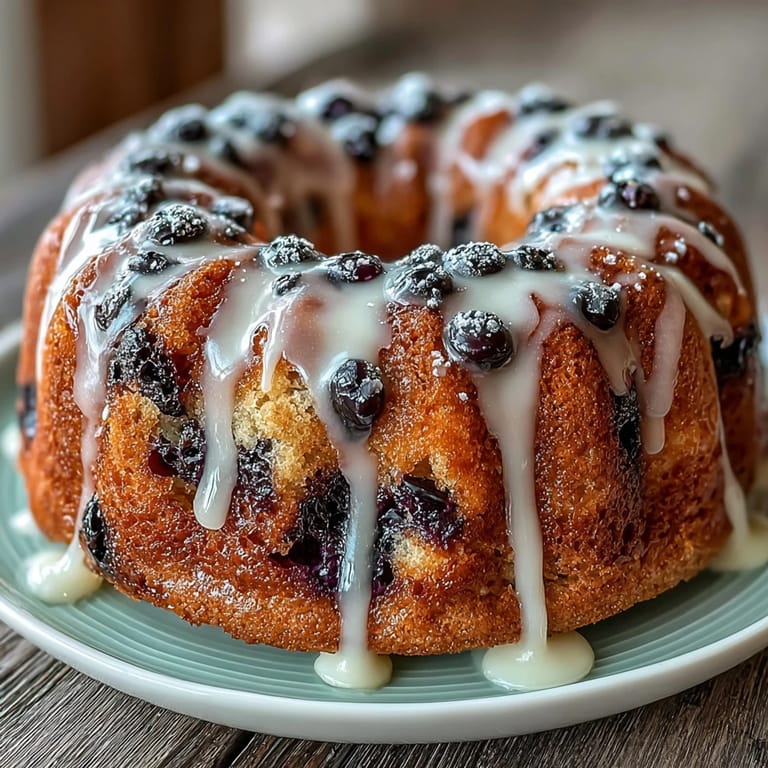
Save There's a moment when you invert a mini bundt cake and watch the whole shape hold perfectly, the blueberries visible through the golden exterior, and you realize you've made something that tastes as good as it looks. That's when baking stops being just technique and becomes a small gift you're giving to someone, including yourself.
The Sourdough Advantage
Using sourdough starter in cakes seems counterintuitive until you taste how it works, adding this subtle depth that people describe as sophisticated without understanding why. The fermentation creates complexity that regular flour can't achieve, and because you're only using half a cup, the flavor is a whisper, not a shout. I've experimented with substituting Greek yogurt when I don't have starter on hand, and while it works in a pinch, the cakes lose that specific something that makes people pause and ask for the recipe.
Lemon Flavor Calibration
The balance between lemon juice and zest matters more than you'd think, as the juice adds moisture while the zest delivers brightness and aromatic oil that powder can never capture. I learned the hard way that bottled lemon juice produces a different, flatter cake, so investing in fresh lemons changed everything. The 2 tablespoons of juice plus 1 tablespoon of zest creates this perfect interplay where the lemon is noticeable but not aggressive, complementing rather than overwhelming the blueberries.
Serving and Pairing Inspiration
These cakes are genuinely lovely on their own, but they transform into something even more special when paired thoughtfully, becoming an excuse to slow down and actually taste what you're eating. I've served them warm with whipped cream and cold with crème fraîche, and both approaches work depending on the season and mood. The tartness of the crème fraîche against the lemon and blueberry is particularly magical, and if you're feeling fancy, a sparkling Moscato or a cup of Earl Grey tea beside the plate makes the whole experience feel intentional.
- Fresh whipped cream melts beautifully into a warm cake and softens the lemon's sharp edge.
- Crème fraîche's tang echoes the sourdough's depth and adds richness that balances the brightness.
- Serve them slightly warm on the same day they're baked, or at room temperature the next day when the flavors have had time to develop and meld.
 Save
Save  Save
Save These little cakes remind me why I bake in the first place: to create something that brings people together and tastes like you put thought into it, even when the whole process took less than an hour. Once you master them, you'll find yourself making them on quiet mornings just because, or pulling them out for celebrations, knowing they always deliver.
Recipe Questions & Answers
- → How does sourdough starter affect the texture?
Sourdough starter adds a mild tanginess and moisture, contributing to a tender crumb and subtle depth of flavor in the cakes.
- → Can I use frozen blueberries?
Yes, use frozen blueberries without thawing, tossed in flour to prevent sinking and maintain an even fruit distribution.
- → What is the best way to ensure a moist cake?
Using softened butter, sourdough starter, and not overmixing the batter helps retain moisture and a soft texture in the finished cakes.
- → Is the lemon glaze necessary?
The lemon glaze adds a tangy sweetness that complements the cakes, but you can omit it if you prefer a less sweet finish.
- → Can I substitute sourdough starter with another ingredient?
Plain Greek yogurt can be used as a substitute, providing similar moisture and tenderness without the sourdough tang.