 Save
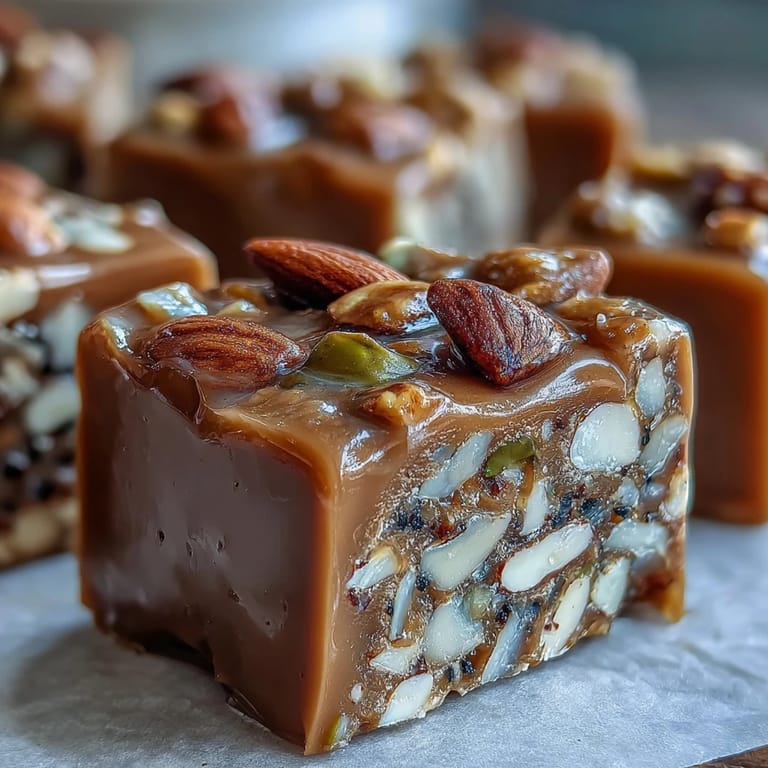
Save My neighbor handed me a small box of hojicha nougat at a tea gathering, and I was immediately struck by how the earthy, roasted tea flavor cut through the sweetness with such elegance. The texture was impossibly light and chewy, nothing like the dense candy I expected, and I found myself asking for the recipe before I'd even finished the first piece. What fascinated me most was discovering that the secret lay in whipped egg whites and a carefully controlled sugar temperature, turning something that seemed complicated into a very achievable kitchen project. Now I make batches whenever I want to impress someone or simply remind myself that the best treats often require patience rather than complexity.
I brought a batch to a dinner party where my friend was recovering from surgery, and watching her face light up at that first bite reminded me why homemade candy matters so much more than store-bought. Someone at the table asked if I'd ordered them from a specialty shop, which prompted a laughing explanation of my failed attempts before this version. The room suddenly filled with questions about hojicha and candy-making, and that single box became the reason we all ended up planning a tea afternoon together the following month.
Ingredients
- Roasted almonds and pistachios: These aren't just texture—they carry their own toasted warmth that mirrors the hojicha beautifully, and rough chopping instead of precise cuts gives the nougat an artisanal feel.
- Honey and granulated sugar: The honey adds a subtle floral note while the sugar provides structure; I learned the hard way that skimping on either one throws off the final texture completely.
- Water and fine sea salt: The water helps dissolve the sugar evenly, and the salt is crucial because it amplifies the hojicha flavor without making the candy taste salty at all.
- Egg whites and cream of tartar: Room-temperature egg whites whip to higher peaks, and the cream of tartar stabilizes them so they don't collapse when the hot syrup hits.
- Hojicha powder: This is where everything comes together—use a quality powder because you're really tasting it, not hiding it under cocoa or vanilla.
- Unsalted butter and vanilla extract: The butter adds richness that prevents the nougat from being one-dimensional, while vanilla just barely whispers in the background.
Tired of Takeout? 🥡
Get 10 meals you can make faster than delivery arrives. Seriously.
One email. No spam. Unsubscribe anytime.
Instructions
- Line and toast:
- Cut your parchment paper to fit the pan with a slight overhang—it makes removal so much easier later. Toast those nuts until they smell incredible and almost nutty-brown; that quick step deepens their flavor and makes them feel toasted rather than raw.
- Build the syrup:
- Combine honey, sugar, water, and salt in your saucepan and stir gently until the sugar dissolves, then stop stirring and let the heat do the work. Watch it bubble and turn a pale golden color as it reaches 140°C, and don't walk away—that thermometer is your friend, and candy-making has no room for guessing.
- Whip the base:
- Start beating those egg whites with cream of tartar in your stand mixer, and you'll see them go from liquid to foamy to glossy soft peaks. This takes maybe three or four minutes, and you'll know it's right when you lift the whisk and the peaks curl back on themselves lazily.
- The critical pour:
- This is the moment that feels dangerous but isn't—reduce the mixer to low speed and pour that hot syrup in a thin stream while it mixes. The heat will cook the egg whites safely while the mixer's motion incorporates everything evenly and keeps the mixture from curdling.
- Transform to nougat:
- Increase the mixer to high speed and beat for five full minutes; you're watching it go from a loose meringue to a thick, glossy ribbon that holds peaks. The transformation is real, and it's the reason this recipe feels a little bit like kitchen alchemy.
- Add flavor and fold:
- Sprinkle in the hojicha powder and vanilla, beat just until the color is uniform, then gently fold in the softened butter and nuts using a spatula. This folding step keeps all that air you've whipped in, so don't overmix or you'll deflate all your effort.
- Set it fast:
- Spread the nougat into the prepared pan as quickly as you can, smoothing the top gently—it starts to firm up almost immediately. If you're using wafer paper on top, lay it down carefully right away while the surface is still slightly sticky.
- Cool and cut:
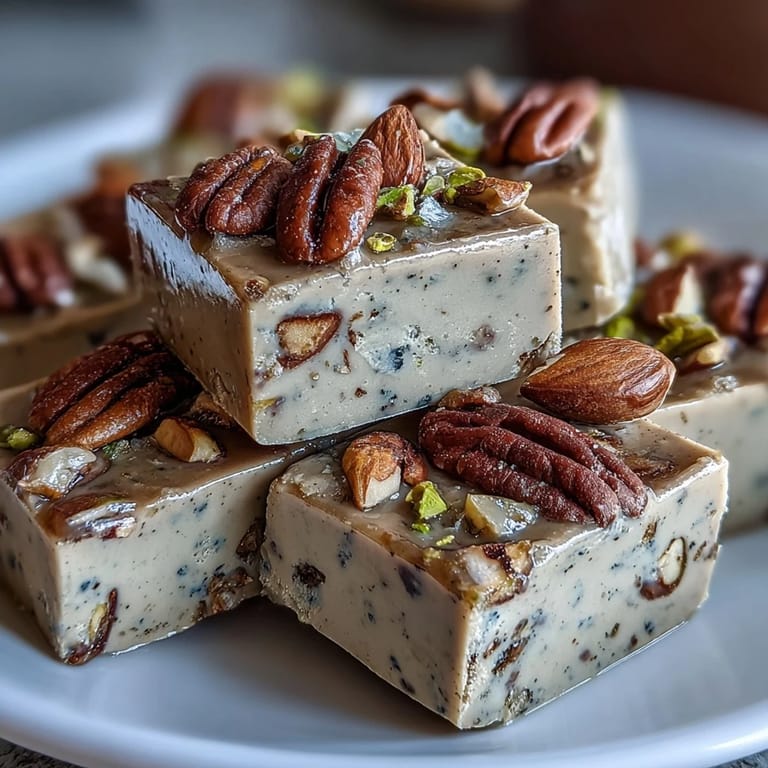
- Let it sit at room temperature for at least thirty minutes until it feels firm enough to handle but still has a slight give. Cut with a sharp knife that you've lightly oiled, wiping the blade between each cut so it doesn't drag and tear the delicate candy.
 Save
Save There's a quiet satisfaction in wrapping each piece in parchment and knowing you've created something delicate enough to gift and special enough to save for yourself. My mother now asks me to make a batch every autumn when the weather cools and hojicha tea season feels right, turning this recipe into our small annual tradition.
Why Hojicha Works So Well
Hojicha's roasted, almost coffee-like depth was made for nougat because the sweetness needs something earthy and complex to balance against. The powder dissolves directly into the mixture without any bitter notes, and it colors the candy a warm tan-brown that looks as elegant as it tastes. I've tried substituting regular matcha before and it was too sharp, but hojicha feels like it was always meant to be paired with honey and nuts.
The Science of Candy Temperature
That 140°C mark is called the soft crack stage for a reason—the sugar molecules have polymerized just enough to create structure without becoming hard and brittle. When that hot syrup meets the whipped egg whites, the heat stabilizes the proteins while the beating motion incorporates the sugar smoothly and traps air, creating that cloud-like texture. Understanding this made me less afraid of candy-making because suddenly it wasn't magic, it was chemistry I could control.
Storage and Gifting
These nougats stay fresh for about a week in an airtight container at room temperature, though they rarely last that long in my house. Individual wrapping in parchment or cellophane prevents them from sticking together and makes them feel like a real gift, the kind you'd buy from a fancy confectionery shop rather than admit you made yourself on a random Tuesday.
- Stack them in a small box lined with parchment, and suddenly you have something worthy of bringing to a dinner party or sending to someone who deserves a treat.
- Pair them with hojicha tea or even a light Japanese whisky for a moment that feels intentional and special.
- If you double the batch, keep one set for yourself and wrap the rest—they make people remember you long after they've eaten the last piece.
 Save
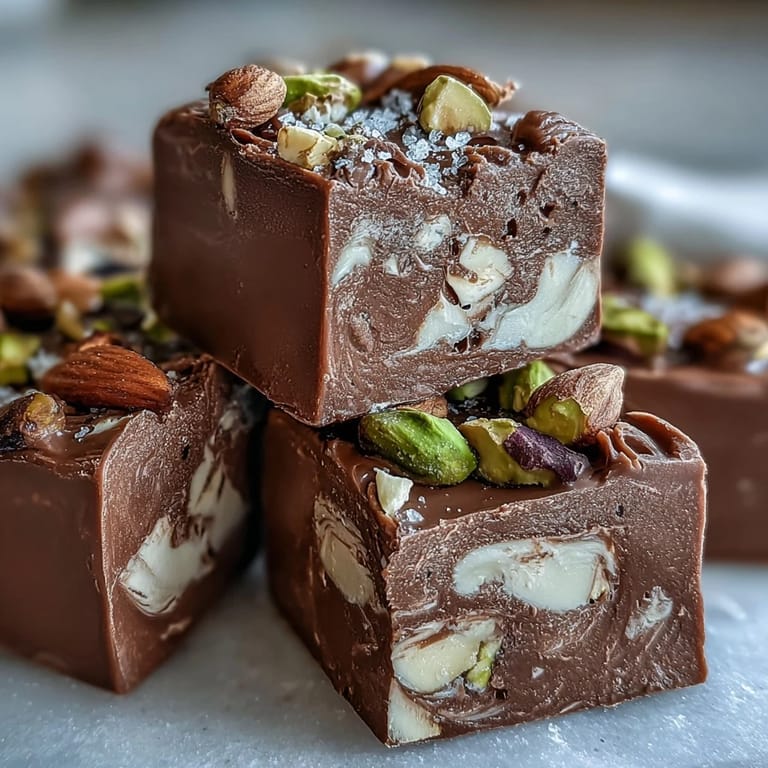
Save Making hojicha nougat taught me that elegant doesn't always mean difficult, and that sometimes the best gifts come from understanding what one flavor needs from another. Every batch reminds me why I love cooking for the people around me.
Recipe Questions & Answers
- → What makes hojicha nougat unique?
Hojicha nougat stands apart through its roasted green tea flavor, which adds earthy, toasty notes that complement the honey sweetness and nutty crunch. The Japanese-inspired tea creates a sophisticated profile unlike traditional vanilla nougat.
- → Can I substitute different nuts?
Absolutely. While almonds and pistachios provide excellent flavor and texture, you can use cashews, hazelnuts, walnuts, or macadamia nuts. Toast them lightly before adding to enhance their natural flavor.
- → Why is a candy thermometer necessary?
Reaching exactly 140°C (285°F) ensures the sugar syrup achieves the proper consistency for chewy nougat. Without accurate temperature control, the texture may become too soft, hard, or grainy rather than perfectly smooth and elastic.
- → How should I store hojicha nougat?
Keep pieces in an airtight container at room temperature, separated by parchment paper to prevent sticking. The nougat stays fresh for up to one week. Avoid refrigeration as it can make the texture overly hard.
- → What's the best way to cut nougat cleanly?
Use a sharp knife lightly coated with oil to prevent sticking. Let the nougat firm completely at room temperature before cutting. Score the surface first, then slice through firmly for clean, even pieces.
- → Can I make this without a stand mixer?
While possible with a hand mixer and considerable effort, a stand mixer is highly recommended. The mixture needs vigorous beating for several minutes to achieve the proper glossy, thick texture essential for good nougat.