 Save
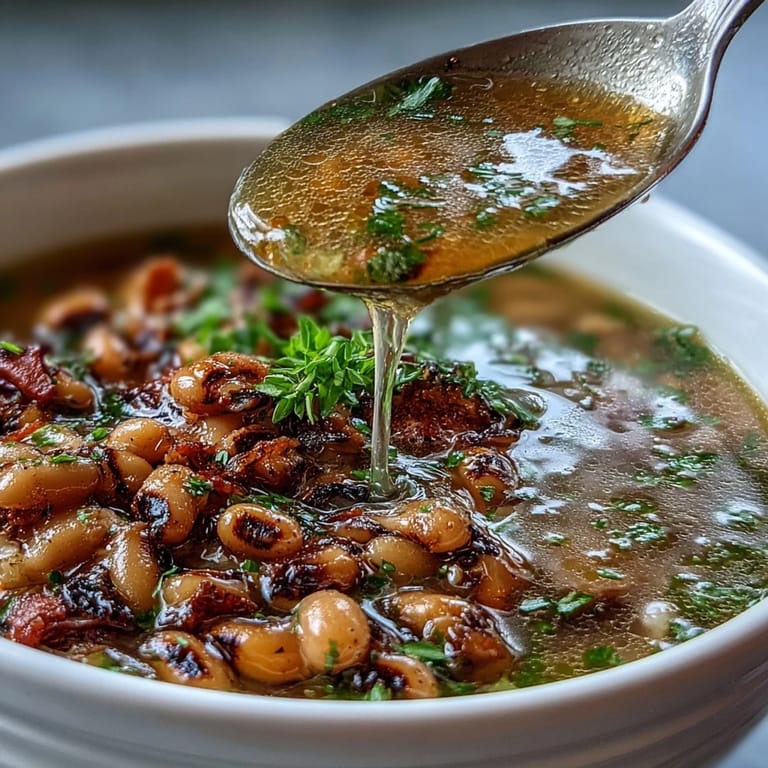
Save There's something about the sound of black-eyed peas hitting the bottom of a pot that takes me back to my grandmother's kitchen on New Year's Eve, steam rising from every burner while she hummed off-key and stirred this very soup. She swore by it, not just for the taste but for the luck it carried into the coming year, and watching her ladle it into bowls with such care made me a believer too. When I finally made it myself years later, I understood why she guarded this recipe so fiercely—the smoky ham, those tender peas, the way everything softens and deepens into something genuinely comforting. It's become my own ritual now, less about superstition and more about honoring that particular kind of kitchen magic.
I made this for my brother's first apartment dinner party, nervous and armed with a Dutch oven I'd borrowed from a friend, and it became the thing everyone asked about before they even sat down. The smell had traveled through his hallway, and people started arriving early just based on that alone, crowding into his tiny kitchen like it was a New Year's Eve party six months too late. He still texts me for this recipe whenever he wants to impress someone, which honestly feels like the highest compliment.
Ingredients
- Cooked ham, diced (2 cups): The soul of this soup—use the kind with actual flavor, not the overly processed stuff, and don't skip that ham bone if you can grab one from the butcher counter.
- Dried black-eyed peas (2 cups) or canned (3 cans): The dried ones give you better texture and control, but canned saves you the overnight soak if you're short on time.
- Onion, carrots, celery (the holy trinity): Dice them roughly the same size so they cook evenly and create that foundation every good soup needs.
- Garlic (3 cloves, minced): That one minute of cooking time matters—you want it fragrant, not burned, which changes everything about the flavor.
- Diced tomatoes with juices (1 can, 14.5 oz): The acidity balances the richness and adds brightness; don't drain them.
- Chicken broth (6 cups) and water (2 cups): The ratio matters—pure broth would be overwhelming, but the water keeps it balanced and lets the other flavors breathe.
- Smoked paprika (1 teaspoon): This is non-negotiable; regular paprika just won't give you that depth.
- Dried thyme (1 teaspoon), black pepper (½ teaspoon), salt (½ teaspoon): Layer these slowly and taste as you go; you can always add more but you can't take it back.
- Bay leaf (1) and cayenne pepper (¼ teaspoon, optional): The bay leaf rounds out all the flavors while cayenne adds a subtle heat if you're feeling bold.
Tired of Takeout? 🥡
Get 10 meals you can make faster than delivery arrives. Seriously.
One email. No spam. Unsubscribe anytime.
Instructions
- Prepare your peas the night before:
- If using dried peas, rinse them well and soak in plenty of cold water overnight—this cuts cooking time in half and makes them cook more evenly. If you forget, a quick soak for at least two hours still helps, though they'll need a few extra minutes in the pot.
- Build your base:
- Heat oil in your pot over medium heat and add the onion, carrots, and celery, letting them soften for about five minutes until they start to smell sweet and the edges of the onion turn translucent. This isn't the time to rush; those vegetables are creating the flavor foundation everything else will rest on.
- Wake up the garlic:
- Add your minced garlic and stir constantly for just one minute—you're looking for that moment when it goes from raw and sharp to mellow and aromatic. Anything longer and it turns bitter, so stay close.
- Introduce the ham:
- Stir in your diced ham and that ham bone if you have it, cooking for about two minutes just to warm everything through and let the ham's smokiness start infusing into the oil. You'll notice the smell shift immediately.
- Bring everything together:
- Add the black-eyed peas, tomatoes with their juice, broth, water, bay leaf, paprika, thyme, black pepper, salt, and cayenne if using. Stir everything well, making sure nothing sticks to the bottom of the pot, and you're ready to bring it to a boil.
- Low and slow:
- Once it reaches a boil, reduce the heat to low, cover loosely, and let it simmer for an hour if using dried peas or thirty minutes if using canned—the peas should be completely tender and starting to break down slightly at the edges. This is when your kitchen will smell absolutely incredible and your whole house gets warm.
- Final touches:
- Remove the ham bone, taste your soup, and adjust the seasoning—sometimes you need a touch more salt or a pinch more paprika depending on your broth. Serve it hot with whatever garnish speaks to you.
 Save
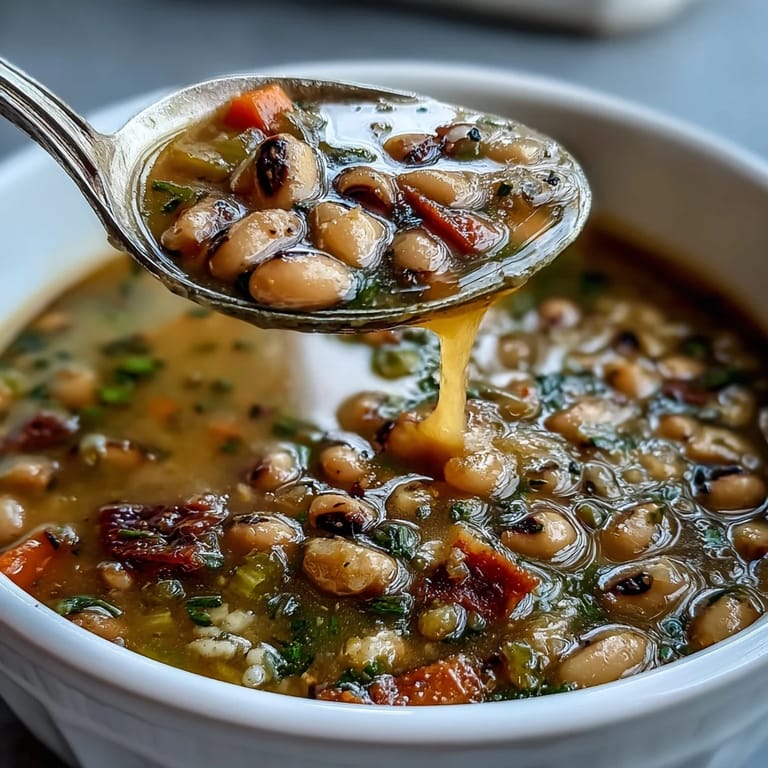
Save My neighbor knocked on my door one January morning when I was making this, drawn by the smell, and we ended up sitting at my kitchen table with bowls of it before ten in the morning, talking about nothing important but everything that mattered. That's when I realized this soup had become more than sustenance—it was an invitation, a reason to slow down, a small ritual that says to people you care about: sit with me for a minute.
Why Dried Peas Matter
There's a real difference between opening a can and planning ahead with dried peas, and I learned this the hard way after making three batches trying to figure out why one texture was perfect and the others felt mealy. The dried peas, when properly soaked and simmered, hold their shape better and develop a creamier interior while staying distinct in the soup, where canned peas can turn to mush if you're not watching closely. Your overnight soak is an investment in texture and flavor that canned versions just can't match, even the good ones.
The Ham Bone Secret
I used to throw away ham bones until a chef friend asked me what I was doing, and now I keep them in my freezer like they're made of gold. Even if your butcher doesn't have one readily available, ask—they almost always have bones they'll give you for free or a dollar or two, and that single bone transforms this soup from good to something people actually remember. It's not just about flavor either; there's something satisfying about using every part, about getting your money's worth and making the most of what the animal gave you.
Variations That Work
I've made this vegetarian for friends by swapping vegetable broth for chicken and doubling down on smoked paprika to replace what the ham contributed, and it's genuinely delicious—different, but not less-than. You can also play with additions: some people swear by a splash of apple cider vinegar at the end, others add kale or spinach in the final minutes, and one friend mashes about a cup of the peas against the pot's side to thicken everything into almost a stew. Don't be afraid to make it your own.
- Vegetarian versions need that smoked paprika doubled or even tripled to capture the depth ham provides.
- Fresh greens added in the last five minutes stay bright and tender without getting lost in the broth.
- A splash of vinegar or lemon juice at the very end wakes everything up if it tastes a little flat.
 Save
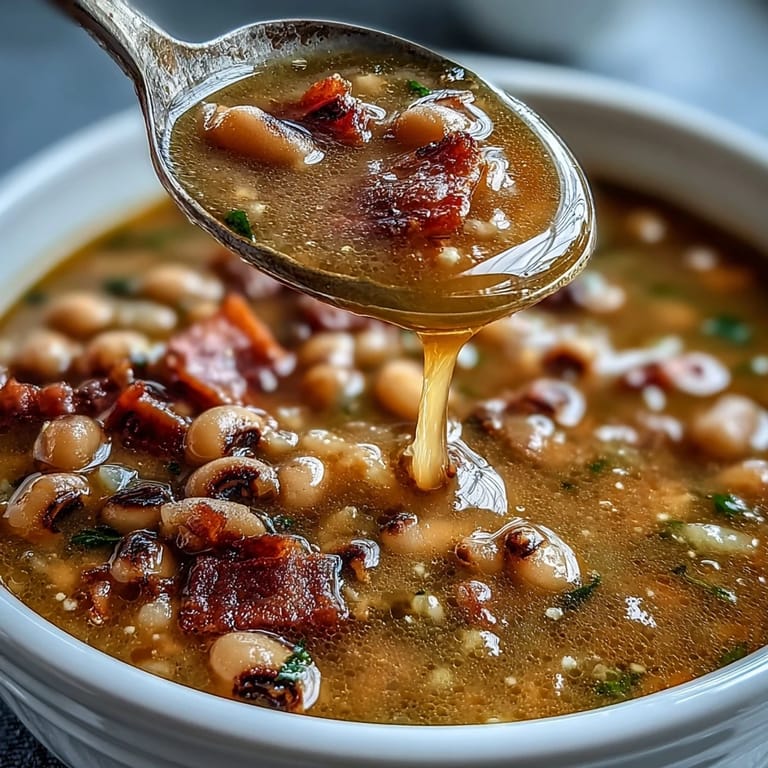
Save This soup tastes better on day three than day one, so make a double batch if you can stomach the idea of eating it multiple times. There's real comfort in knowing a bowl of this is waiting in your fridge, ready to warm you up whenever you need reminding that good things take time but are absolutely worth it.
Recipe Questions & Answers
- → Can dried black-eyed peas be substituted with canned ones?
Yes, canned black-eyed peas can be used; reduce simmering time to about 30 minutes to prevent overcooking while preserving texture.
- → What gives the soup a smoky flavor?
Smoky diced ham and smoked paprika combine to infuse the soup with a rich, smoky depth.
- → Is it possible to make this without meat?
Omitting ham and using vegetable broth with smoked paprika provides a flavorful vegetarian alternative.
- → How can I thicken the soup if desired?
Mash some cooked peas against the pot’s side during cooking or before serving to create a thicker consistency.
- → What vegetables are included in this dish?
The soup includes onions, carrots, celery, garlic, and diced tomatoes, adding layers of flavor and texture.