 Save
Save My sister called me one rainy Tuesday asking for soup advice, and I found myself describing this golden concoction I'd been making on repeat all winter. There's something about turmeric and ginger that feels less like cooking and more like a small act of care—the kind of thing you make when someone needs warmth from the inside out. She tried it that week and texted back a simple thumbs up, which somehow meant everything. Now whenever I simmer this pot, I think of that conversation and how the best recipes are the ones that travel between people.
I made this for my roommate when she came home with a cold, and she sat at the kitchen counter watching the pot bubble while we talked about everything except how awful she felt. By the time she'd finished a bowl, her shoulders had relaxed and she'd stopped sniffling quite so much. That's when I realized this soup isn't just nourishing—it's honest comfort, the kind that works on you slowly and completely.
Ingredients
- Extra virgin olive oil: Use good quality here since it's the foundation of your flavor base, and you're not cooking it aggressively.
- Yellow onion, carrots, and celery: This holy trinity builds the soup's backbone—don't skip the celery even if you're tempted, it adds a subtle depth.
- Garlic: Fresh minced is worth the extra thirty seconds; it blooms into something almost sweet when toasted in the oil.
- Ground turmeric: This is the soul of the soup, so don't cut corners with old spice cabinet dust—it should smell warm and slightly peppery.
- Ground ginger: Balances the turmeric with a gentle heat that builds rather than shouts.
- Ground cumin: Just a whisper of it, but it ties the whole spice situation together.
- Chicken broth: The quality matters more than you'd think—I've learned that good broth makes the difference between good soup and soup that tastes like home.
- Chicken breasts: Cutting them into bite-sized pieces means they cook evenly and feel less formal when you're eating.
- Egg noodles: They soften just enough without falling apart, and they absorb all that golden broth like tiny flavor sponges.
- Unsweetened coconut milk: The unsweetened part is essential—you're adding richness, not dessert.
- Kosher salt and black pepper: Season as you go, not just at the end.
- Fresh parsley: A small handful scattered on top wakes everything up with color and brightness.
Tired of Takeout? 🥡
Get 10 meals you can make faster than delivery arrives. Seriously.
One email. No spam. Unsubscribe anytime.
Instructions
- Get your aromatics going:
- Warm the olive oil in a large pot over medium heat until it shimmers—you want it hot enough that when you add the onion it immediately starts to smell incredible. Toss in your onion, carrots, and celery, stirring occasionally, and let them soften into each other for about five to six minutes until the onion turns translucent and the kitchen smells like you're doing something right.
- Bloom your spices:
- Add the minced garlic, turmeric, ginger, and cumin to the softened vegetables and stir constantly for just about one minute—this is when the magic happens and everything becomes fragrant and alive. You'll know it's ready when your kitchen smells warm and spiced but not burnt.
- Build your broth base:
- Pour in the chicken broth and stir to make sure nothing's stuck to the bottom of the pot. Add your cubed chicken, stir gently, and bring everything to a low simmer—you want lazy bubbles, not an aggressive boil.
- Let the chicken cook through:
- Cover the pot and let it simmer for fifteen to twenty minutes, until the chicken is completely cooked and no longer pink when you cut into the thickest piece. The internal temperature should hit 165°F, but honestly, you'll know by look and feel once you've done this a few times.
- Finish with noodles and cream:
- Add the egg noodles and coconut milk, stirring occasionally as it simmers uncovered for six to eight minutes until the noodles are tender but not mushy. The coconut milk will swirl into the golden broth and make everything taste like you've been thinking about this meal all day.
- Season and taste:
- Sprinkle in salt and black pepper, taste it, and adjust until it makes you smile. This is the moment where the soup becomes yours—some people want more ginger punch, others want more of that creamy coconut sweetness.
- Serve with intention:
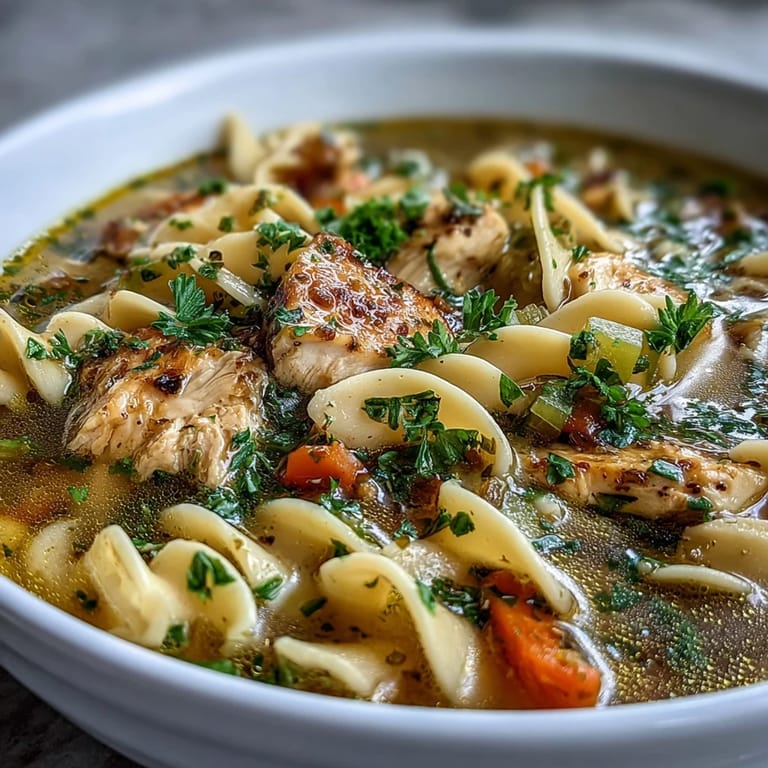
- Ladle the soup into bowls with enough noodles and chicken in each one so people feel like they're getting a real meal. Scatter fresh parsley on top and let it sit for just a moment before digging in.
 Save
Save There was a moment last February when I was making this soup and my neighbor stopped by, and the smell of it wafting down the hallway made her pause. She ended up staying for a bowl and we talked for two hours about nothing important, and I realized that's what this soup does—it invites people to stay a little longer. That's the kind of recipe worth keeping.
Why This Soup Hits Different in Winter
There's something about the combination of warm spices and creamy coconut milk that feels less like eating and more like wrapping yourself in something soft. I've made this soup in every season, but it tastes like winter—not the harsh kind, but the kind where you're inside where it's warm and someone you care about is nearby. The turmeric especially seems to glow when it's cold outside, like the soup is bringing its own light to the table.
The Science of Why Your Body Loves This
I'm not a nutritionist, but I've noticed that ginger and turmeric do something that makes you feel better in ways that go beyond just tasting good. There's research on both of them having anti-inflammatory properties, and whether or not that's the reason or just your mind relaxing into comfort, the effect is real. My yoga instructor calls this kind of soup a practice in self-care, which sounds fancy but just means you're choosing to be kind to yourself with what you put in your body.
Make It Your Own
One of the best parts about this soup is how flexible it is—I've made it with what I had on hand and it was different every time, but always good. The base of turmeric, ginger, and coconut milk stays the same, but everything else is negotiable. Think of it as a foundation you can build on rather than a rigid set of rules.
- A squeeze of fresh lemon juice at the end brightens everything and adds a dimension that makes people ask what's different about this batch.
- If you want more protein, add chickpeas alongside or instead of some of the chicken, and it becomes more substantial without feeling heavy.
- For vegetarian versions, mushrooms actually take the place of chicken better than you'd expect, and vegetable broth swaps in seamlessly.
 Save
Save This soup has become my default answer when someone asks what I'm making or what I'm eating for lunch, and I'm okay with that. It's one of those recipes that doesn't need to be fancy or complicated to be exactly what you need.
Recipe Questions & Answers
- → What spices enhance this dish's flavor?
Ground turmeric, ginger, garlic, and cumin create aromatic and earthy notes that deepen the flavor.
- → Can egg noodles be substituted?
Yes, gluten-free pasta or other noodle types can replace egg noodles for dietary preferences.
- → How long does the cooking process take?
About 30 minutes of simmering after sautéing the vegetables, ensuring tender chicken and well-developed flavors.
- → What liquids form the base of this dish?
Chicken broth combined with unsweetened coconut milk provides a savory and creamy foundation.
- → How to add extra zing to the meal?
A squeeze of fresh lemon juice brightens the dish and balances the rich spices.