 Save
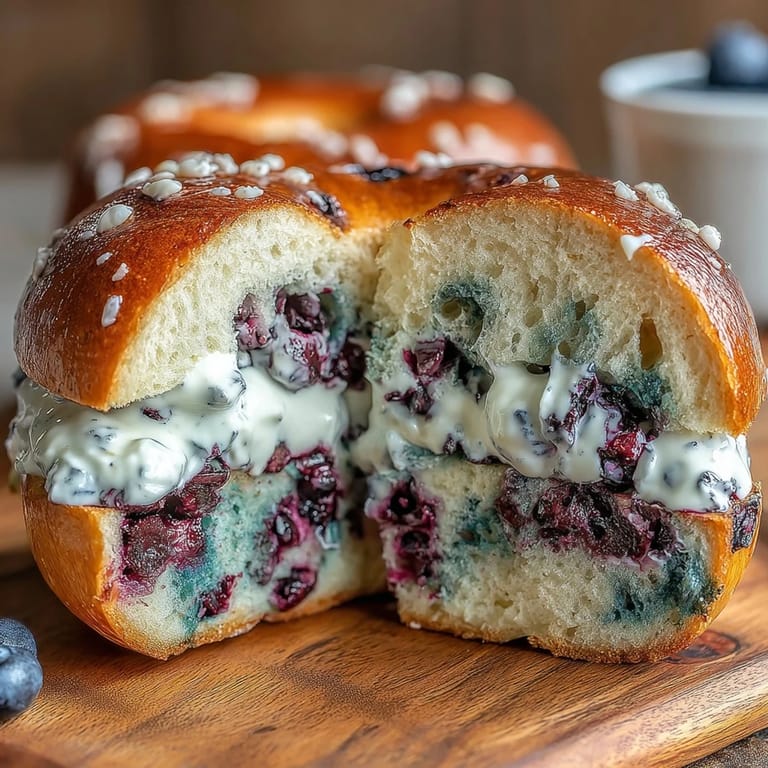
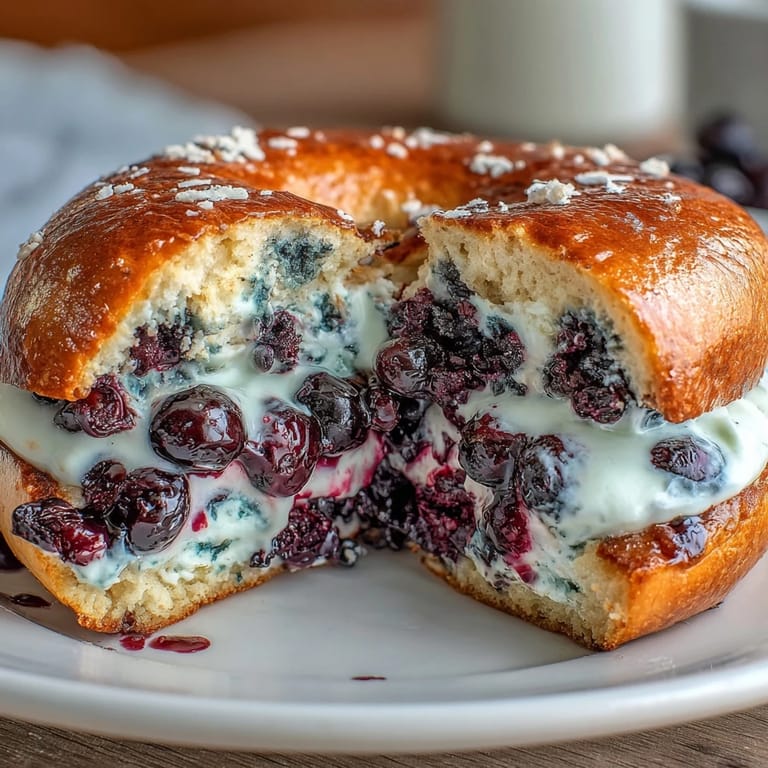
Save There's something about the smell of bagels boiling that instantly transports me back to a Sunday morning when a friend challenged me to make bagels at home—actual bagels, not the sad versions from the freezer section. I was skeptical until she mentioned stuffing them with protein powder and blueberries, and suddenly it felt less like baking and more like a delicious experiment. That first batch emerged from the oven golden and pillowy, and when I spread that tangy Greek yogurt frosting on top, I realized I'd just unlocked something special: a breakfast that tastes indulgent but actually fuels your body.
I made these for my coworkers one Friday, bringing them in still warm from the cooling rack, and watched three grown adults close their eyes after the first bite—that's when I knew they were worth the effort. One person asked if I'd started a bagel business; another just kept eating. It became the kind of recipe you make when you want someone to know you actually care, because homemade bagels say something that a bakery box never quite can.
Ingredients
- Bread flour: Use this instead of all-purpose flour because it has just enough gluten to give you that chewy, authentic bagel texture without overdoing it.
- Whey protein powder: Choose unflavored so it doesn't compete with the blueberries; it dissolves seamlessly into the dough and adds serious staying power to your breakfast.
- Instant dry yeast: This is your leavening agent, and measuring it correctly makes the difference between dense bagels and light, airy ones.
- Warm water: Too hot and you'll kill the yeast; too cold and nothing rises—aim for 110°F, which feels warm but not hot on your inner wrist.
- Fresh or frozen blueberries: Don't thaw frozen ones before adding them to the dough or they'll bleed and turn everything purple; they'll thaw during kneading and baking.
- Honey or maple syrup in the water bath: This adds subtle sweetness and helps create that signature bagel crust and chew.
- Baking soda in the boiling water: It raises the pH and creates that distinctive bagel exterior you can't fake in the oven alone.
- Greek yogurt frosting: Full-fat tastes creamier than nonfat, and a real spoonful of it is better than a huge dollop of anything artificial.
Tired of Takeout? 🥡
Get 10 meals you can make faster than delivery arrives. Seriously.
One email. No spam. Unsubscribe anytime.
Instructions
- Mix the dry ingredients:
- In a large bowl, whisk together bread flour, protein powder, sugar, yeast, and salt—this distributes the yeast evenly so your dough rises uniformly. Think of it like seasoning; you want it all through the dough, not just in clumps.
- Add the wet ingredients:
- Pour warm water and oil into the center well and stir with a spoon until a shaggy dough forms. You're looking for something that looks rough and sticky, not smooth yet—that comes next.
- Knead it smooth:
- Turn the dough onto a lightly floured surface and knead for 8 to 10 minutes, using the heel of your hand to push it away, fold it back, and rotate. You'll feel it transform from sticky to smooth and elastic, like it's finally cooperating with you.
- Fold in the blueberries:
- Gently work the blueberries into the dough until they're scattered throughout. This is delicate work because you don't want to crush them, but you do want them distributed so every bite has a burst of fruit.
- First rise:
- Place the dough in a greased bowl, cover it with a cloth or plastic wrap, and let it sit in a warm spot for about 45 minutes until it roughly doubles. A warm oven with the light on, or a sunny windowsill, works beautifully.
- Shape into bagels:
- After punching down the dough, divide it into 6 equal pieces—use a kitchen scale if you have one, otherwise eyeball it. Roll each piece into a ball, poke your thumb through the center, and stretch it into a bagel shape with a hole about 2 inches wide.
- Prepare the water bath:
- Bring 6 cups of water, honey, and baking soda to a rolling boil in a wide pot. The water bath is what makes these bagels instead of bread rolls, so don't skip it.
- Boil the bagels:
- Working one or two at a time, gently drop bagels into the boiling water and let them sink, then flip after 45 seconds and boil the other side for 45 seconds. They should feel firm but still slightly tender when you fish them out with a slotted spoon.
- Bake until golden:
- Arrange boiled bagels on a parchment-lined baking sheet and bake at 375°F for 20 to 25 minutes until deeply golden brown. The kitchen will smell absolutely incredible, and you'll be tempted to pull them out early—resist.
- Cool completely:
- Let the bagels rest on a wire rack until they're completely cool. This prevents condensation from making them soggy when you frost them, which matters more than you'd think.
- Make the frosting:
- Whisk together Greek yogurt, powdered sugar, and vanilla extract until smooth and creamy. Taste and adjust sweetness if needed—some Greek yogurts are tangier than others.
- Frost and serve:
- Spread or pipe the frosting generously on top of each cooled bagel. If you're serving them immediately, frost them right before eating; if you're storing them, frost just before serving so they stay fresh.
 Save
Save There was a moment last month when I gave these to my neighbor who'd been going through a rough patch, and she texted me later saying she'd eaten one plain the next morning while sitting in her garden, and it made her feel like things might get better. That's when I realized these bagels are more than a recipe—they're proof that you can make something that's good for your body and good for your soul at the same time.
Why the Boiling Water Bath Matters
When I first tried making bagels in the oven only, they puffed up like dinner rolls and had a soft crust—not terrible, but not bagels either. The boiling water with baking soda gelatinizes the outside of the dough, which creates that chew and that distinct crust you can't replicate any other way. It's a step that seems fussy until you realize it's the entire reason these are bagels and not something else, and then it becomes non-negotiable.
Storage and Make-Ahead Tips
I always freeze the unfrosted bagels in an airtight container or freezer bag because they thaw beautifully and taste nearly as fresh as the day I made them. They keep for up to 3 days at room temperature in a sealed container, and honestly, they're almost better on day two when the crumb has had time to set. The frosting should only be added right before you eat them, which takes 2 minutes and means you can have a fresh bagel whenever you want without the frosting getting weird.
Ways to Customize and Elevate
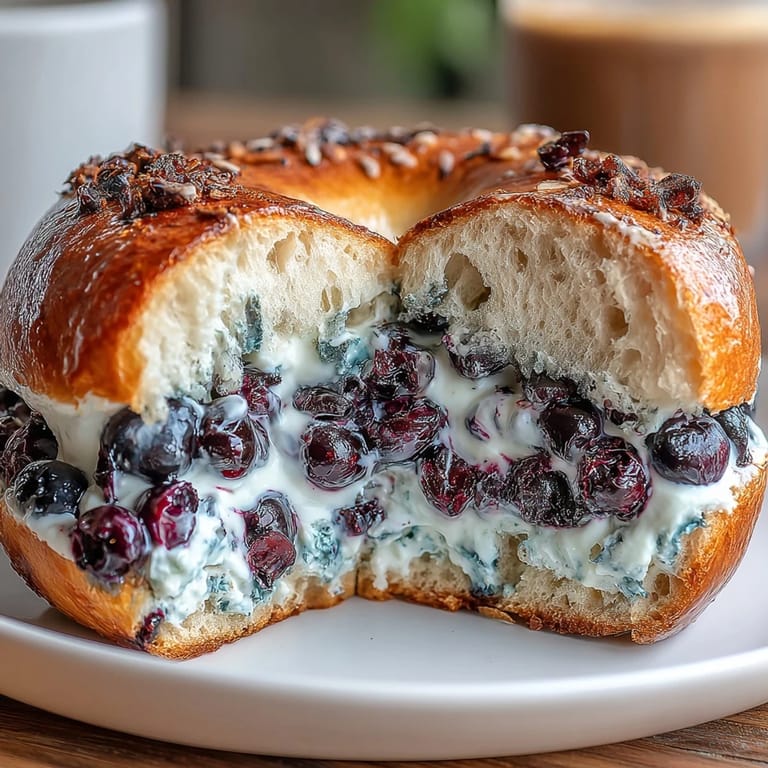
Once you've made these successfully once, you'll want to play with them—I've tried adding a tiny pinch of lemon zest to the dough, sprinkling toasted coconut on the wet frosting, and even mixing a touch of almond extract into the frosting for a completely different vibe. The base recipe is forgiving enough to handle tweaks, so feel free to experiment and find what makes you happy. Just remember that the technique is what matters most; everything else is just flavor variation.
- A sprinkle of lemon zest on top of the frosting tastes bright and unexpected.
- For extra protein in the frosting, stir in 1 tablespoon of protein powder, but sift it first so it doesn't get lumpy.
- Try crushing some freeze-dried berries on top of the frosting for extra texture and tartness.
 Save
Save These bagels have become my answer to anyone asking what I'm making for breakfast because they're impressive without being complicated, and they taste like you spent hours on them when really you just spent one. Make a batch, frost them fresh, and watch someone's face light up when they realize you actually made bagels.
Recipe Questions & Answers
- → How do blueberries affect the dough texture?
Fresh or frozen blueberries impart moisture and sweetness, creating pockets of fruity bursts while maintaining a soft, chewy dough texture.
- → What is the purpose of the water bath with honey and baking soda?
The water bath with honey and baking soda helps create a shiny crust and chewy interior by gelatinizing the dough surface before baking.
- → Can I use other types of yogurt for the frosting?
Plain Greek yogurt is preferred for its thickness and tang, but other creamy yogurts can be used for a similar frosting texture and flavor.
- → Does adding protein powder change baking times?
Protein powder enriches the dough’s nutrition without significant changes to baking time, but dough consistency might be slightly firmer.
- → How should these bagels be stored to maintain freshness?
Store unfrosted bagels in an airtight container at room temperature for up to 3 days. Frost just before serving to keep topping fresh.