 Save
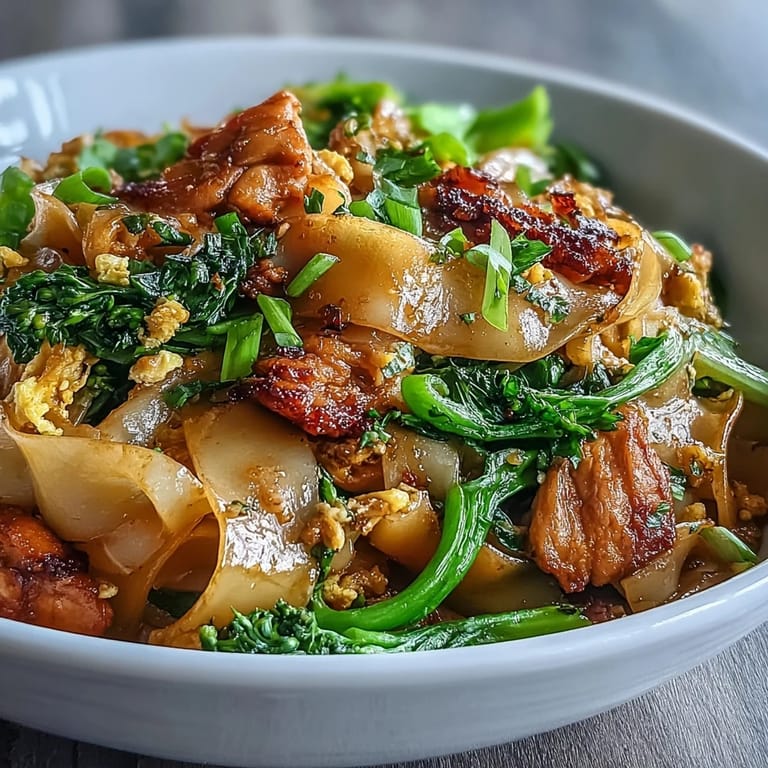
Save The steam rising from a street vendor's wok in Bangkok still haunts my cooking dreams. That smoky, sweet aroma of noodles hitting hot oil is something I've spent years trying to recreate in my tiny home kitchen. It took countless burned batches and soggy attempts to understand that Pad See Ew isn't just about ingredients, it's about fire control and having everything ready before you even turn on the stove.
My roommate in college watched me make this for the first time and laughed at how seriously I took the wok heating phase. But when she took her first bite and literally went silent for three full minutes, I knew all those失败的 attempts were worth it. Now whenever friends come over for dinner, someone always asks if I'm making those noodles.
Ingredients
- Wide rice stick noodles: The foundation of this dish, dried noodles need a 30 minute warm soak while fresh ones just need separating
- Chicken thighs: Stay tender during high heat cooking unlike breast meat which dries out quickly
- Chinese broccoli: The stems add crunch while leaves bring that slight bitterness that cuts through the rich sauce
- Egg: Creates creamy pockets throughout the noodles when scrambled in the hot wok
- Dark soy sauce: Gives that signature caramel color and deep sweetness, don't skip or substitute this one
- Oyster sauce: Brings umami richness that makes the sauce taste restaurant quality
- Garlic: Must be very finely chopped so it infuses the oil without burning
- Peanut or vegetable oil: High smoke point is essential for achieving that smoky wok flavor
Tired of Takeout? 🥡
Get 10 meals you can make faster than delivery arrives. Seriously.
One email. No spam. Unsubscribe anytime.
Instructions
- Get your noodles ready:
- Soak dried noodles in warm water for 30 minutes until pliable but still firm to the touch, then drain them well
- Whisk up your sauce:
- Combine all your sauces, vinegar and sugar in a small bowl and stir until the sugar completely disappears
- Prep your Chinese broccoli:
- Cut those stems into 2 inch pieces and keep the leaves larger since they shrink when they hit the heat
- Cook the chicken first:
- Heat up 1 tablespoon oil until it's smoking hot then toss in your sliced chicken and stir fry until just cooked through
- Give the broccoli a quick turn:
- Add another tablespoon of oil to the same wok and stir fry those stems for a minute before tossing in the leaves until they just wilt down
- Scramble your egg with garlic:
- With your last tablespoon of oil, sauté the garlic briefly then crack in the egg and scramble it quickly until just set
- Bring everything together:
- Add your noodles and pour that sauce you made over them, tossing constantly so every strand gets coated
- Finish it all together:
- Toss the chicken and broccoli back into the wok and stir fry everything for just a minute or two until it's all hot and combined
 Save
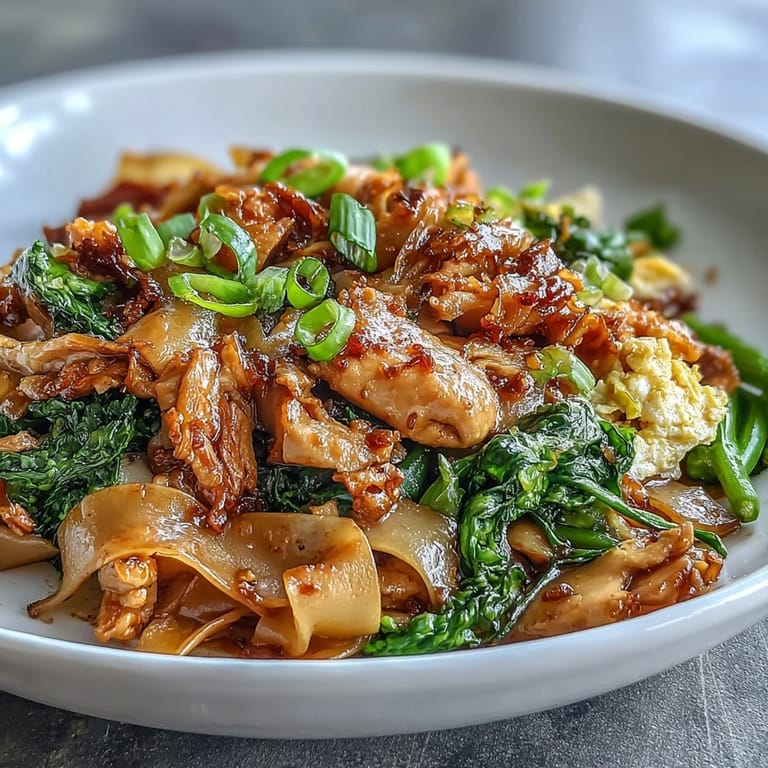
Save Last summer I made this for my dad who swore he hated Asian cuisine until he tried this specific dish. Seeing him go back for seconds and actually ask for the recipe was one of those proud kitchen moments I won't forget.
Choosing Your Noodles
Fresh wide rice noodles from an Asian market will give you the most authentic texture, but dried ones work beautifully with that 30 minute soak. Don't have wide noodles, thin rice noodles work too, just adjust the cooking time slightly since they cook faster.
Protein Swaps That Work
Thinly sliced beef or pork work just as well as chicken, or use shrimp added in the last minute of cooking. For a vegetarian version, firm tofu cubes pressed and fried until golden add a nice protein element.
Getting That Restaurant Wok Flavor
The secret is getting your wok or skillet really hot before adding ingredients, almost to the smoking point. Don't overcrowd the pan and work in batches if needed, letting each ingredient get direct contact with the hot surface for that slight char and smoky taste.
- Cold noodles from the refrigerator actually work better than room temperature ones
- Don't be afraid to let the noodles get a little crispy and browned at the edges
- Everything should be sizzling loudly when you add it to the wok
 Save
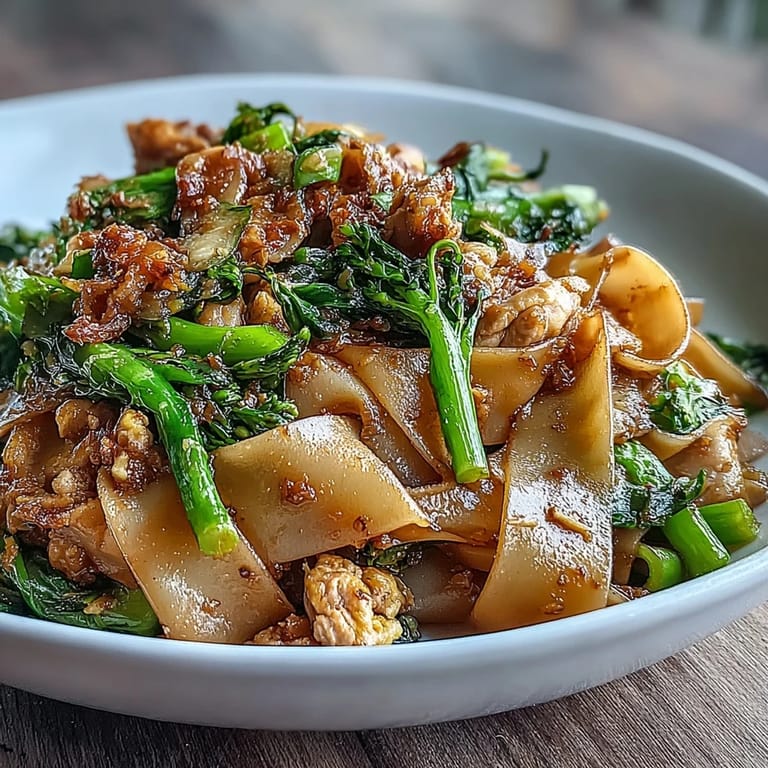
Save Squeeze some fresh lime over each serving right before eating, it wakes up all those flavors in the most beautiful way.
Recipe Questions & Answers
- → What makes Pad See Ew different from other Thai noodle dishes?
Pad See Ew features wide rice noodles stir-fried until slightly charred, creating a distinct smoky flavor and chewy texture. Unlike Pad Thai's tangy tamarind profile, Pad See Ew uses a savory-sweet sauce blend of soy sauces and oyster sauce, resulting in deeper, umami-rich notes.
- → Can I use fresh rice noodles instead of dried?
Absolutely. Fresh wide rice noodles actually yield better results and require no soaking. Simply separate the noodles gently before cooking, as they're already perfectly hydrated and will absorb the sauce beautifully while maintaining that signature springy texture.
- → What vegetables work best as Chinese broccoli substitutes?
Broccolini offers the closest match with its tender stems and mild flavor. Regular broccoli works well—use florets and peel stems into thin strips. Bok choy provides similar crunch but cooks faster, while baby bok choy adds an elegant presentation.
- → How do I achieve the characteristic smoky flavor?
The smoky essence comes from high-heat wok cooking. Ensure your wok or skillet is thoroughly heated before adding oil. Let noodles sit undisturbed briefly against the hot surface to develop charred spots before tossing. Work quickly once ingredients hit the heat.
- → Can I make this dish gluten-free?
Yes, substitute both soy sauces with certified gluten-free tamari or coconut aminos. Replace oyster sauce with mushroom-based vegetarian oyster sauce, checking labels carefully. The rice noodles are naturally gluten-free, making this an easy adaptation.
- → What protein alternatives work well in Pad See Ew?
Thinly sliced beef brisket or flank steak adds richness. Pork shoulder or loin strips offer classic sweetness. Large shrimp cook beautifully in minutes. Extra-firm tofu cubes work excellently—press first to remove excess moisture, then pan-fry until golden before adding.